10 Minute School: Bangladesh’s Leading EdTech Platform
Learn about 10 Minute School, Bangladesh's leading EdTech platform, its journey, innovative growth, and future plans to make education accessible for everyone.



Gono Bishwabidyalay (Gono University), founded by Dr Zafrullah Chowdhury's Gonoshasthaya Kendra — concept framed in 1994, formally established on 14 July 1998 — is a not-for-profit private university at Nolam, Mirzanagar, Savar, joining health sciences, social sciences, agriculture and veterinary studies, and the only private university in Bangladesh with an elected central students' union.
Table of contents [Show]
Gono Bishwabidyalay (গণ বিশ্ববিদ্যালয়, literally "People's University", abbreviated GB and also called Gono University) is a private, not-for-profit university at Nolam, Mirzanagar, in Savar, on the north-western edge of Dhaka. It was founded by the Gonoshasthaya Kendra (GK) Public Charitable Trust, the pioneering rural health organisation created by Dr Zafrullah Chowdhury, and it carries that parentage in everything it does: an unusual mix of health sciences, social sciences, agriculture and veterinary studies, fees the university says are less than half those of other private universities, and a founding mission aimed squarely at underserved rural communities rather than at the urban professional market most private universities chase. The university's own website, accessed in November 2026, counts more than 4,200 undergraduate and 500 graduate students, over 180 faculty members and more than 120 office staff. In the QS Asia University Rankings 2026 it sits in the 1301–1400 band. Its motto — "a university with a difference" — is a cliché the institution has, for once, some claim to: it is the only private university in Bangladesh that elects its central students' union.
The university's roots lie in the Liberation War. In 1971 Dr Zafrullah Chowdhury and Dr MA Mobin set up a 480-bed field hospital at Melaghar in Tripura for wounded freedom fighters, training women with no medical background to work as carers within days. After independence the team moved that work to Savar, where Gonoshasthaya Kendra was established in 1972 as a public charitable trust providing primary healthcare to the rural poor. GK grew into one of Bangladesh's best-known development organisations — it pioneered village paramedics, launched a rural health insurance scheme in 1973, founded a pharmaceutical company in 1981 and ran community schools across the country — and education was a natural extension of the model.
The concept of a GK university was first framed in 1994, under the Private University Act 1992. Gono Bishwabidyalay was formally established on 14 July 1998, accredited by the University Grants Commission (UGC) and approved by the Ministry of Education. Its early academic life was centred on health and social sciences, reflecting its parent organisation. The first convocation followed on 12 January 2011, awarding certificates to 624 graduates, and the second on 24 August 2013, with 427 graduates; a fourth convocation was held in February 2025. The university now operates from its permanent rural campus at Nolam — listed at 32 acres — a short distance from Jahangirnagar University, Savar's other well-known university.
The founder was Dr Zafrullah Chowdhury (27 December 1941 – 11 April 2023), a vascular surgeon from Raozan, in Chittagong district, who became Bangladesh's most famous public-health activist. His life's work defined the university's mission. Convinced that a poor, rural country could never train enough doctors for physician-centred medicine, he built GK around trained paramedics — mostly young rural women, each responsible for some 3,000 people — a model the government adopted nationally in 1977. GK recruited women preferentially from the start, trained them in trades from midwifery to electrical work, and treated women's advancement as a development strategy in itself, an ethos the university inherited. In 1981 GK set up Gonoshasthaya Pharmaceuticals to manufacture essential medicines cheaply, and in 1982 Chowdhury drove through the National Drug Policy, which swept away some 1,600–1,700 useless or dangerous products and helped create the local generics industry chronicled in Wiki Bangla's profile of the Bangladeshi pharmaceutical industry. GK's work won the Independence Day Award in 1978, the Ramon Magsaysay Award in 1985 and the Right Livelihood Award in 1992.
The university states its objective as building a centre of excellence "responsive to society's needs, particularly social development and human welfare", and its own summary says it was created to provide affordable, quality education in health sciences, social sciences and technology for underserved communities. Chowdhury died on 11 April 2023, aged 81, at the Gonoshasthaya Nagar Hospital he had founded in Dhaka, and was buried at the GK premises in Savar. Like BRAC, the other great Liberation-War-era development organisation to build universities, GK left its founder's institution with a social mission written into its structure rather than appended to it — but in Gono Bishwabidyalay's case the mission, and the low-fee model that serves it, depend entirely on the charitable trust that still owns it.
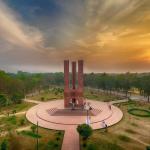
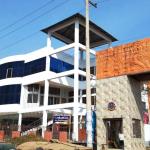
The permanent campus stands at Nolam, P.O. Mirzanagar via Savar Cantonment, Ashulia, Savar, Dhaka-1344 — a rural setting among GK's hospitals, health centres and training facilities rather than a self-contained city campus. The Central Library holds more than 32,127 volumes, the university belongs to the UGC Digital Library, and separate libraries serve the medical college and physiotherapy. Teaching is semester-based, in two six-month semesters.
Academically the university is organised into six faculties: Health Sciences; Arts and Social Sciences; Science and Engineering; Veterinary and Animal Sciences; Postgraduate Studies; and Agriculture. The combination is the point. Health sciences — the GK inheritance — sits alongside the social sciences that study the communities GK serves, and alongside agriculture and veterinary science, the two disciplines that govern rural livelihoods. The Faculty of Veterinary and Animal Sciences, launched in April 2016 with a five-year degree, was described by the then vice-chancellor in November 2017 as the only veterinary faculty at any private university in Bangladesh. Few private universities anywhere in the country attempt that health-agriculture-social science triangle, because few have a parent organisation that already works in all three.
The Faculty of Health Sciences currently comprises three departments — Pharmacy, Microbiology, and Biochemistry and Molecular Biology. Pharmacy, which the university describes as one of the oldest pharmacy departments in the private sector, offers a four-year Bachelor of Pharmacy and a one-year Master of Pharmacy. Microbiology, established in 1998, offers a four-year BSc (Honours) and a master's. Around them sit the university's other health programmes, including physiotherapy and medical physics and biomedical engineering — a field in which Gono was an early, and at first unauthorised, pioneer (see Challenges).
Beyond health, the documented programme list spans a BBA; BSc (Honours) degrees in computer science and engineering, applied mathematics and chemistry; BA (Honours) and MA degrees in English; BSS (Honours) degrees in politics and governance, in law, and in sociology and social work — the last, established in 2009, deliberately fusing the two disciplines so that sociologists learn fieldwork and social workers learn theory. Postgraduate study is coordinated through the Faculty of Postgraduate Studies.
The university's closest relative is not another faculty but Gonoshasthaya Samaj Vittik Medical College (GSVMC), GK's community-based medical college at Savar, established in 1998. GSVMC is affiliated with the University of Dhaka, its MBBS is recognised by the Bangladesh Medical and Dental Council, and it teaches through five academic hospitals — at Savar, Dhanmondi, Gazipur, Pabna and Gaibandha — in line with GK's community-based philosophy. Gono Bishwabidyalay's own curriculum carries a distinctive compulsory core: alongside their subjects, students study ethics, gender issues, the history of Bangladesh and environmental science, a combination university speakers highlighted at the first two convocations in 2011 and 2013.
The clearest measure of the student body is also its most distinctive institution. The Gono Bishwabidyalay Central Students' Union (Gucsu) is, as Vice-Chancellor Professor Md Abul Hossain put it in September 2025, the only students' union election held at a private university in Bangladesh. The union dates from 2013; its fourth election, on 25 September 2025 — the first since 2018, after a pandemic-era gap — had 4,761 eligible voters, with 66 candidates contesting 21 central and faculty posts and turnout of about 70%. Yasin Al Mridul Dewan, of the Bangla department, was elected vice-president and Md Raihan Khan, of veterinary and animal sciences, general secretary. An elected union gives Gono students a formal voice in university life that students at other private universities simply do not have.
Community service is built into the GK model rather than volunteered on top of it. GK requires its medical students and doctors to work in its network of 46 healthcare centres in remote rural areas — a requirement reported by The Daily Star in 2013 and inseparable from the "Samaj Vittik" (community-based) idea in the medical college's name. Students have also asserted themselves less constructively at times: in September 2015 they blocked the Dhaka–Aricha highway at Savar in the nationwide protests against VAT on private-university tuition. The result is a student culture closer to a public university's — politicised, organised and service-oriented — than to the career-focused quiet of most private campuses.
Gono Bishwabidyalay is governed by a Board of Trustees drawn from the GK trust, and its recent leadership is fully documented. The board's president since September 2024 is former secretary Waliul Islam, who succeeded Dhaka University professor emeritus Serajul Islam Choudhury — BoT chair for two consecutive terms from 2018 and now the board's President Emeritus — and who was still presiding over the board's 56th meeting in March 2026. The vice-chancellor is Professor Dr Md Abul Hossain, who had earlier served in an acting capacity and was presiding over the university's 20th syndicate meeting and 28th academic council meeting in January 2026; the registrar is Md Ohiduzzaman. Earlier vice-chancellors include Professor Laila Parveen Banu, who also served as principal of the medical college, and Professor Abul Kashem Chowdhury, who remains a trustee and was convocation speaker at the fourth convocation in February 2025. Since Zafrullah Chowdhury's death in April 2023, the institution has been in the hands of this second generation — a test of whether a founder-shaped charitable university can routinise its founder's mission.
The university's history with its regulator is the longest shadow over it. As early as May 2006, The Daily Star reported that Gono Bishwabidyalay was advertising and running courses without UGC approval — among them BSc degrees in biomedical engineering and medical physics — in defiance of a July 2003 government circular barring private universities from medical and paramedical fields. The university said it had launched its MBBS and BDS in 1998 without knowing separate permission was needed; the dental programme was eventually re-approved in 2004 as a community-based dental college under Dhaka University, but the episode set a pattern of the university moving first and regularising later. In December 2017 students had to protest at Savar to demand UGC recognition of the BBA programme they were already studying. In August 2019 the UGC placed Gono University on a published list of 30 private universities against whose admission it warned students and guardians, citing irregularities across the list such as unapproved programmes and campuses and trustee disputes, and disclaiming responsibility for anyone who enrolled anyway.
Governance failures have recurred in smaller ways: in December 2013 medical students vandalised their own university and hospital after a doctor's death in Patuakhali; in 2018 a land dispute over the PHA building brought clashes with protesters at the gate; and in September 2020 the registrar was dismissed over a sexual-harassment finding. The COVID-19 pandemic brought the university's most public scientific setback: its lead virologist, Dr Bijon Kumar Sil, led the GK team that produced a low-cost "Rapid Dot Blot" test kit in 2020, but the validating trial at BSMMU found it detected only 11% of infections in the first week and 40% in the second, the drug regulator never approved it, and Sil left Bangladesh that September after his work permit was not renewed. Underneath all of this sits a structural tension: a not-for-profit trust charging, by its own account, less than half the going fee cannot easily fund the laboratories, faculty and compliance machinery the UGC increasingly demands — the same low-fee mission that makes the university distinctive is what makes it fragile.
Gono Bishwabidyalay is best understood not as a conventional private university but as the educational arm of a fifty-year experiment in people-centred development. Founded in concept in 1994 and formally on 14 July 1998 by Zafrullah Chowdhury's Gonoshasthaya Kendra, it joins health sciences to social sciences, agriculture and veterinary medicine on a rural Savar campus, charges fees aimed at families other private universities ignore, embeds ethics, gender and Bangladesh's history in every curriculum, and remains the only private university in the country where students elect their own union. Its record is genuinely double-sided: the same improvisational, mission-first culture that produced village paramedics and the 1982 drug policy also produced unapproved courses, a place on the UGC's 2019 warning list and a celebrated test kit that failed validation. Whether the post-Zafrullah leadership can keep the mission while finally satisfying the regulator is the question that will define the university's next decade.