Rohingya Refugee Crisis in Bangladesh
Nine years after 740,000 Rohingya fled Myanmar in 2017, 1.2 million live in Bangladesh's camps. The aid system, Bhasan Char, repatriation and the ICJ case.



BRAC is a large, diverse organization with a vast network of programs and services. The organization operates in over 11 countries across Asia and Africa, reaching an estimated 126 million people.
Table of contents [Show]
BRAC is a development organisation based in Bangladesh that is routinely described as the largest non-governmental organisation (NGO) in the world. Founded in 1972 by Fazle Hasan Abed as a small relief committee for people returning home after the Liberation War, it grew over five decades into a multi-sector institution working in microfinance, education, health, agriculture, human rights and enterprise development in every district of Bangladesh. BRAC states that it partners with over 100 million people living with inequality and poverty, and in 2025 alone nearly 26 million people in Bangladesh — about one in every seven people in the country — received services through its programmes, according to its Annual Report 2025.
BRAC is frequently misdescribed as a business group. It is not a corporation: it is a non-profit organisation with no shareholders, governed by a governing body, and it publishes audited annual financial statements. What makes its structure unusual is that much of its work is financed not by donors but by its own economic activities — the surplus of its microfinance programme and a family of social enterprises, including the Aarong retail chain and BRAC Bank, the listed bank it founded in 2001. Since the early 2000s BRAC has also worked internationally, and its models — above all its "graduation" approach for the ultra-poor and its home-taught oral rehydration therapy — have been adopted by governments and NGOs in many countries.
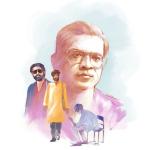
BRAC's founder, Fazle Hasan Abed, was born on 27 April 1936 in Baniachong, Habiganj. Trained as an accountant, he rose to head the finance division of Shell in Pakistan and was working in London when the 1970 Bhola cyclone and then the 1971 Liberation War convinced him to return home. He came back to Bangladesh in January 1972 and sold his London flat to finance a relief effort for refugees and displaced people returning to a devastated country.
In February 1972 he established the Bangladesh Rehabilitation Assistance Committee — the original BRAC — choosing Sulla, a remote area of Sunamganj in the Sylhet region, as its first project area because its largely Hindu population had suffered heavily during the war. The committee's first donor was Oxfam, which made a grant in March 1972, and BRAC's relief teams rebuilt some 14,000 homes in the area within about nine months. Abed concluded quickly that relief alone could not change the conditions that made people poor, and as the work shifted from emergency relief to long-term development the organisation was renamed the Bangladesh Rural Advancement Committee in 1973. In later years the acronym itself — BRAC — became the organisation's legal name. The village organisations BRAC began forming in 1977, groups of poor women who met weekly, became the platform through which almost all of its later programmes were delivered.
BRAC was among the world's earliest microfinance providers. Through its Rural Development Programme, started in 1979, village organisations gave poor members — overwhelmingly women — access to savings and small loans, and lending expanded steadily through the 1980s into a nationwide operation. By the time of Abed's death in 2019, BRAC's microfinance served about 7.1 million clients, according to The Lancet's obituary of the founder. The programme is financially self-sustaining: it covers its costs from interest income and generates a surplus which, with the approval of the Microfinance Regulatory Authority, BRAC may partly spend on social development — its executive director noted in May 2026 that around 20 per cent of the surplus can be allocated this way. Total loan disbursement rose from Tk 290 billion to Tk 485 billion over the five years to 2025, according to BRAC's Annual Report 2025.
Microfinance alone, BRAC found, did not reach the poorest households, which could not risk a loan. In the early 2000s it therefore pioneered the ultra-poor "graduation" approach: a carefully sequenced package of a productive asset, a small stipend, skills training and regular coaching over about two years. In the five years to 2025, some 312,000 ultra-poor families graduated out of extreme poverty through the programme, and nearly Tk 10 billion worth of productive assets was transferred, according to the Annual Report 2025. The graduation model has since been adapted in many countries and is one of BRAC's most influential exports.
Education became a core BRAC programme in 1985 with the Non-Formal Primary Education (NFPE) programme: one-teacher community schools, usually a single room with about thirty children, aimed at children — mostly girls — who had never enrolled in school or had dropped out. The model was designed to be cheap, local and flexible, and it grew into one of the largest non-formal schooling systems in the world; BRAC says some 14 million children have graduated through its education model over the decades. As government primary schooling expanded, BRAC's education work shifted towards pre-primary learning, support for secondary students, and skills training for young people. Its Annual Report 2025 set a target of supporting nearly 1.9 million students in overcoming learning loss over the following five years.
In 2001 Abed founded BRAC University in Dhaka, which he chaired as head of its board of trustees until July 2019. The university — known for its development studies, public health and governance institutes — is governed independently but remains part of the wider BRAC family of institutions.
BRAC's best-known health intervention began in 1980, when diarrhoea was among the biggest killers of Bangladeshi children. Through the Oral Therapy Extension Programme, BRAC workers went door to door teaching mothers to prepare oral rehydration solution from salt, sugar (or molasses) and water, and to recognise when a child needed referral. Over the following decade the programme reached more than 12 million households, and home treatment of diarrhoea became standard practice across rural Bangladesh; researchers credit the campaign as a major contributor to the sharp fall in child deaths from diarrhoeal disease in that period.
That door-to-door model became the template for BRAC's wider health work. A network of women community health volunteers, known as shasthya shebikas, sells basic health products and refers patients from their own neighbourhoods, while BRAC has long been a principal non-government partner of the national tuberculosis control programme. Health remains one of BRAC's largest programme areas, and improving maternal and newborn health was among the achievements Abed himself valued most.
BRAC began building income-generating enterprises early, both to create livelihoods and to finance its own programmes. The first was Aarong — the name means "village fair". Craft work with rural women was initiated in 1976 by Ayesha Abed, the founder's wife, and the first Aarong shop opened in Dhanmondi, Dhaka, in December 1978, giving artisans a reliable market instead of payment months after delivery. By its 40th anniversary in 2018, Aarong supported more than 65,000 artisans, most of them women, and had become one of Bangladesh's best-known retail brands.
Other enterprises followed in dairy, seeds, artificial insemination and related agricultural value chains, channelling inputs to BRAC's farmer members and returning their surpluses to the organisation. The two largest financial ventures came later. BRAC Bank, launched in 2001, was created to lend to the small and medium enterprises that mainstream banks considered too small to serve; it is listed on the Dhaka Stock Exchange, with BRAC as its founding sponsor. Its subsidiary bKash, launched on 21 July 2011 as a joint venture between BRAC Bank and the US firm Money in Motion, grew into Bangladesh's dominant mobile financial service. Together, the microfinance surplus and enterprise income have made BRAC largely self-financing — it has been described as roughly 75 per cent self-financed, with donor grants covering the remainder.
BRAC began working outside Bangladesh in the early 2000s, initially in Asia and then in Africa; by 2019 it was running projects in four other Asian countries and six in sub-Saharan Africa. Its international operations are held through Stichting BRAC International in the Netherlands, whose for-profit arm, BRAC International Holdings B.V., was set up in 2010; the holding's 2023 annual report approved expanding microfinance into Kenya. BRAC International's microfinance operates in seven countries, and in 2024 its financial services arm served over 1.47 million clients, 96 per cent of them women, according to BRAC International's Annual Report 2024. Its partnership with the Mastercard Foundation, the AIM programme, aims to reach 1.2 million adolescent girls and young women and had reached over 300,000 by 2024. Because "BRAC" figures are published by several related entities, counts of its country presence vary between reports and years — between ten and twelve countries in recent coverage — and are best read with their dates attached.
BRAC's most recent published figures give a sense of its present scale. According to its Annual Report 2025, launched on 11 May 2026, nearly 26 million people in Bangladesh received BRAC services in 2025, more than 19 million of them women and over 223,000 of them persons with disabilities; two of every three direct recipients were women. At Abed's death in 2019 BRAC employed about 100,000 people. A 2026 academic review, citing BRAC's own reporting, put its combined reach at about 145 million people across 11 countries.
BRAC's finances follow its non-profit structure. It does not report a corporate "profit": its audited annual statements record programme income — donor grants, microfinance interest and service revenue, and transfers from its enterprises — against programme expenditure. Claims sometimes repeated online of a round "$1 billion revenue" or "$100 million net income" do not come from BRAC's audited reports and should not be relied on. The verifiable financial indicators are the dated ones: Tk 485 billion in microfinance loans disbursed in the year to 2025, a self-sustaining microfinance programme whose surplus is partly recycled into social programmes, and separately audited listed subsidiaries such as BRAC Bank, whose results are the bank's own and not BRAC's income.
Abed led BRAC for 47 years, serving as its executive director and later chairperson of its governing body. In August 2019 he retired as chairperson of BRAC Bangladesh and BRAC International and became chair emeritus; he died in Dhaka on 20 December 2019, aged 83. The succession had been prepared in advance. Asif Saleh, a former Goldman Sachs banker who had joined BRAC in 2011, became executive director in August 2019 and remains in the role — it was Saleh who presented the Annual Report 2025 to the press in May 2026. The chairperson of BRAC's governing body since 2019 is Dr Hossain Zillur Rahman, an economist and former adviser to a caretaker government, who remained in the role through 2025–26. BRAC is governed by this governing body rather than by owners, and BRAC International is governed separately through its Dutch foundation structure.
The sharpest continuing debate around BRAC concerns microfinance — a debate about the whole sector that bears directly on BRAC as its largest Bangladeshi practitioner. Microfinance institutions once charged interest of 30–40 per cent; the Microfinance Regulatory Authority capped rates at 27 per cent in 2010 and lowered the cap to 24 per cent in 2019. Critics argue that effective rates still exceed the cap once compounding and fees are counted, and a Financial Express editorial in February 2026 noted that poor borrowers pay more than twice the roughly 10–12 per cent charged by banks, while discussing the new Microfinance Bank Ordinance and regulatory support for aligning microfinance-bank lending rates with commercial bank rates. A Bangladesh Institute of Development Studies study reported in October 2026 found that the poorest fifth of rural households spend about 79 per cent of their income on loan repayments, that indebted rural households rose from 36 to 42 per cent within a year, and that three of four rural loans come from MFIs and NGOs. These are sector-wide findings rather than BRAC-specific ones, but they frame the environment in which BRAC's lending model operates.
BRAC also faces the structural questions that come with its size: scholars have long debated whether very large NGOs complement or substitute for the state, and its commercial arms periodically attract scrutiny of the boundary between charity and business. Its funding environment has shifted as traditional donor grants decline, which is why its leadership emphasises self-reliance through microfinance and enterprises.
BRAC's significance lies less in any single programme than in proof, at national scale, that development interventions designed in a poor country can work: oral rehydration taught in millions of homes, a graduation model for the ultra-poor now used worldwide, one-teacher schools for children the state had missed, and a microfinance operation large enough to fund much of the rest. Abed's operating philosophy — "small is beautiful, but big is necessary" — took BRAC from fourteen thousand rebuilt houses in Sulla in 1972 to services reaching one in seven Bangladeshis in 2025. The organisation has continued under professional leadership since his death, and its stated ambitions for the five years from 2026 — one million jobs created, 20 million people brought under financial services, and 200 new financial service centres in chars, haors, the Chittagong Hill Tracts and coastal areas — suggest it intends to keep growing on the same self-financing model.