Agriculture in Bangladesh: Output, Farm Structure and Food Security
Agriculture in Bangladesh employs 45% of workers and grows 40.6 million tonnes of rice — its output, tiny farms, subsidies, imports and climate risks.


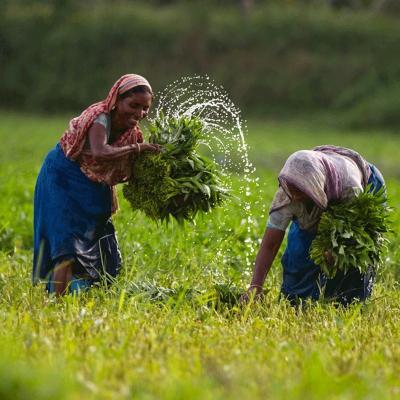
Agriculture in Bangladesh employs 45% of workers and grows 40.6 million tonnes of rice — its output, tiny farms, subsidies, imports and climate risks.
Bangladesh's national fish supplies most of the world's hilsa and about 1% of GDP — its production, conservation bans, Chandpur trade and India exports.
Read MoreMigration and remittance now rival garments as Bangladesh's economic engine: record inflows, the world's highest migration costs, and the risks workers face.
Read MoreThe government has approved Tk 260 crore in support for over 20 lakh potato farmers, cancelling its plan to procure 50,000 tonnes through TCB. An additional Tk 110 crore will be sent directly to growers via mobile accounts to offset losses as production exceeds demand and market prices fall below the cost.
Read MoreExplore why Bangladesh was named The Economist's "Country of the Year 2024" for its remarkable democratic transition and peaceful political reform. From the removal of Sheikh Hasina to the rise of a technocratic government led by Nobel laureate Muhammad Yunus, this article dives into the student-led protests, economic stabilization, and challenges ahead.
Read MoreThe Padma Bridge is Bangladesh's longest bridge — a 6.15 km two-level steel truss carrying a four-lane highway and a railway across the Padma River. Built entirely with the government's own funds after the World Bank withdrew in 2012, it opened to road traffic on 25 June 2022 and to trains in 2023. This article covers its design, cost, tolls, traffic and economic impact.
Read More