Eastern Bank PLC: A Leading Commercial Bank in Bangladesh
Eastern Bank continues to pursue a strategy of organic growth and strategic partnerships, to generate long-term value for its customers and shareholders.


Table of contents [Show]
Dutch-Bangla Bank PLC (DBBL) is a private commercial bank in Bangladesh best known as the country's technology pioneer. It was set up as Bangladesh's first joint venture bank with a European partner: local sponsors led by M Sahabuddin Ahmed joined with the Netherlands Development Finance Company (FMO), which took a 30 percent stake. The bank was incorporated on 31 May 1995 and began operations on 3 June 1996. Rather than competing mainly through branches, DBBL built its franchise on electronic banking — it became the first fully automated bank in Bangladesh in 2003, operates one of the country's largest ATM and Fast Track networks, issues Nexus cards, and in March 2011 launched Rocket, the country's first mobile financial service. Its NexusPay app, launched in 2018, is among the most widely used banking apps in Bangladesh.
The model has produced scale and, recently, record profits. At the end of 2025 the bank held deposits of Tk 66,257 crore and loans and advances of Tk 41,691 crore, and it earned a record net profit after tax of Tk 964.77 crore for 2025, with a capital to risk-weighted assets ratio (CRAR) of 17.1 percent. Dutch-Bangla Bank is listed on the Dhaka and Chittagong stock exchanges, and its head office is at DBBL Bhaban, 75 Motijheel Commercial Area, Dhaka.
Dutch-Bangla Bank was the brainchild of M Sahabuddin Ahmed, a textile industrialist who had experienced the limitations of conventional banking while financing his mills and who had dealt with FMO since the early 1980s. The bank was incorporated in 1995 under the Bank Company Act 1991 and the Companies Act 1994, with FMO as international sponsor; ABN-AMRO Bank of the Netherlands provided technical assistance during the first year of operations, and the bank opened its first branch in July 1996. It listed on the Dhaka and Chittagong stock exchanges in 2001.
From the start, the bank invested in technology on a scale unusual for Bangladesh. It created an Electronic Banking Division in 2002 and completed full automation of its banking operations in 2003, the first bank in the country to do so, bringing card-based and electronic banking to the mass market. In 2010 it launched the Nexus Payment Gateway, the country's first internet payment gateway. A year later came the bank's most consequential innovation: on 31 March 2011 it launched the country's first mobile banking service, initially through the Citycell and Banglalink networks — a service rebranded as Rocket in 2016. Agent banking followed in January 2015, with DBBL among the first movers, and in 2018 the bank launched the NexusPay app.
The Dutch connection that gave the bank its name ended in 2019, when FMO sold its remaining shares (see Ownership and Leadership). In 2023 the bank adopted the name Dutch-Bangla Bank PLC in line with the amended Companies Act.
FMO originally held 30 percent of the bank. In keeping with its practice of exiting investments once they mature, the Dutch institution gradually reduced its holding to about 1 percent and sold the rest in late October 2019, through the Dhaka Stock Exchange's block market, to Horizon Associates, an investment firm associated with the founder chairman's family interests; Horizon thereby held about 12.12 percent of the bank. Press coverage at the time noted questions about the Bank Company Act's 10 percent ceiling on a single shareholder's holding. As of 2026, sponsor-directors held 83.56 percent of the bank's shares, institutions 8.00 percent, the general public 8.40 percent and foreign investors just 0.04 percent — an unusually concentrated ownership structure for a listed bank. Paid-up capital stood at Tk 1,015 crore at the end of 2025.
The founder, M Sahabuddin Ahmed, was the bank's founding chairman and remains a central figure in its ownership; he also chairs the Dutch-Bangla Bank Foundation. Sadia Rayen Ahmed has chaired the board of directors since June 2023; she presided over the bank's 30th annual general meeting in June 2026 and its fifth extraordinary general meeting in October 2026.
Executive leadership changed in early 2026. Abul Kashem Md Shirin, who had led the bank as managing director and chief executive officer for about eight years, left on reaching the mandatory age limit on 6 February 2026. He was succeeded by Md Ahteshamul Haque Khan, an insider who had served nearly six years as deputy managing director and chief business officer and who took charge on 7 February 2026; he remained in post through late 2026.
DBBL offers a full range of commercial banking services. Its business segments comprise corporate banking — its largest source of revenue — retail banking, SME banking, financial inclusion activities, treasury operations and an offshore banking unit serving exporters and non-resident Bangladeshis. Deposit products include savings, current and special notice accounts and a school saver account for students. Lending covers corporate and trade finance, including letters of credit, as well as retail products such as home and personal loans and SME credit.
The bank's card business operates under its own Nexus brand — debit, credit and prepaid cards running on DBBL's own switch — alongside Visa and MasterCard products. Nexus cards are accepted across the bank's ATM, CRM and point-of-sale estate and through the Nexus Payment Gateway, which allows merchants to accept card payments online. Retail customers can also bank through branches, sub-branches, Fast Track centres, agent banking outlets, internet banking and the NexusPay app, while Rocket provides mobile financial services to customers with or without a bank account.
DBBL's physical network is built less around conventional branches than around machines and agents. According to its Annual Report 2025, at the end of 2025 the bank had 243 branches and 334 sub-branches, but 4,151 ATMs, 4,887 cash recycling machines (CRMs), 1,511 Fast Track centres, 5,631 agent banking outlets and 20,366 point-of-sale merchants. The ATM and CRM estate is the largest of any bank in Bangladesh and for years handled a dominant share of the country's card transactions.
Fast Track centres are the bank's signature format: staffed booths housing several ATMs and CRMs, with an officer on site from morning to evening to resolve problems such as jammed cards or cash shortages. In recent years DBBL has been replacing older single-machine ATM booths with these larger centres — a model its management acknowledges costs more to open and operate, but which it credits with better reliability and security. Agent banking, begun in January 2015, extends the network into rural areas through local agents offering account opening, deposits, withdrawals and remittance services; by December 2016 DBBL accounted for about 68 percent of all agent banking accounts in the country.
The bank's audited results for 2025 were its strongest on record. Total assets reached Tk 81,779.76 crore at 31 December 2025, up 20.3 percent from Tk 67,987.55 crore a year earlier. Deposits grew to Tk 66,257 crore and loans and advances to Tk 41,691 crore. Operating profit for 2025 was Tk 2,704 crore, profit before tax Tk 1,591.16 crore and net profit after tax Tk 964.77 crore — a record, and up from Tk 801.74 crore in 2024. Earnings per share were Tk 9.98 and net asset value per share Tk 62.14. The CRAR stood at 17.1 percent under Basel III, comfortably above Bangladesh Bank's 12.50 percent minimum. Shareholders approved a 30 percent dividend for 2025 — 25 percent cash and 5 percent stock — at the annual general meeting in June 2026, following a 20 percent dividend for 2024.
Asset quality has historically been a relative strength: classified loans were Tk 1,862.8 crore, or 4.81 percent of loans and advances, at the end of 2023, well below the levels at many local banks. Profitability continued into 2026: net profit after tax reached Tk 442 crore in the first half of 2026 (earnings per share of Tk 4.35, up sharply on restated figures for the same period of 2025) and Tk 624.29 crore in the first nine months of the year.
Technology is the core of DBBL's strategy. The bank runs its operations on its own core banking platform and card switch, which support real-time online banking across all branches and channels. Its record of firsts includes full automation in 2003, the country's first internet payment gateway in 2010 and the Nexus card scheme, one of the largest domestic card networks in Bangladesh.
Rocket, launched on 31 March 2011, was Bangladesh's first mobile financial service. It operates on a bank-led model in which a Rocket account is treated as a bank account rather than a simple wallet, and it offers cash-in and cash-out through agents, person-to-person transfers, merchant and utility bill payments, salary and government allowance disbursement, remittance receipt and cash-out at DBBL ATMs and Fast Tracks. It had 39.63 million registered accounts at the end of 2025. Unlike bKash, which operates as a subsidiary of BRAC Bank, Rocket is run as a division of Dutch-Bangla Bank itself rather than as a separate company.
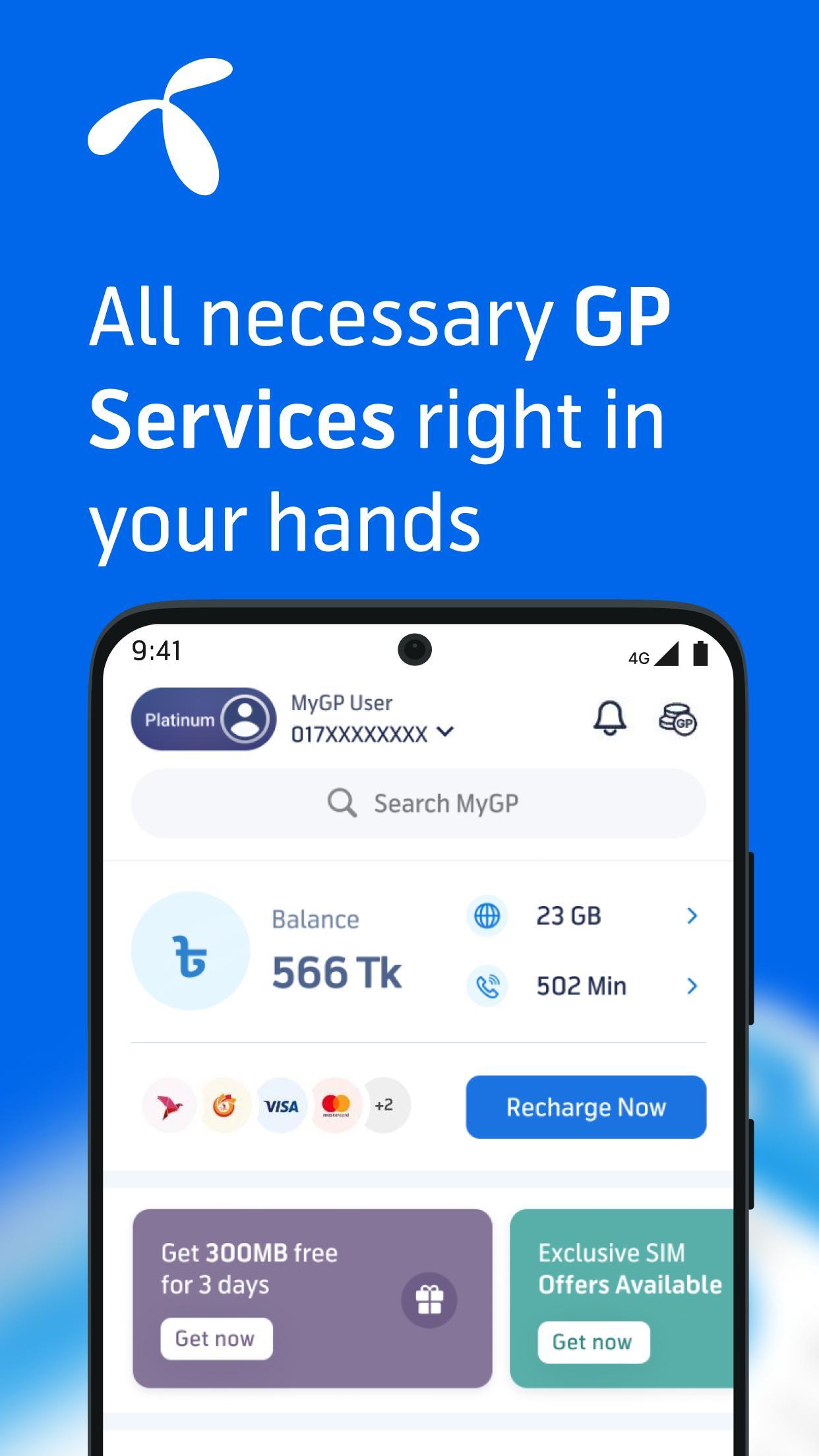
The NexusPay app, launched in 2018 and described by the bank as the country's first fully cardless banking solution, brings Nexus, Visa and MasterCard cards — including cards issued by other banks — together with Rocket and agent banking in a single app, supporting QR and NFC payments, fund transfers and bill payments. It has the largest user base of any banking app in Bangladesh: 7.8 million users in April 2025, 9.1 million at the end of 2025 and 9.45 million by March 2026.
DBBL operates in a banking system in crisis. After Bangladesh Bank tightened loan classification rules in late 2024 and asset quality reviews exposed years of hidden defaults, the sector's classified loans reached 30.60 percent of total loans at the end of 2025 and 32.78 percent by June 2026. DBBL has not been untouched: the auditor of its 2025 financial statements included an Emphasis of Matter drawing attention to management's explanation of how the statements comply with Bangladesh Bank's classification and provisioning rules. Earnings quality is a related question — as at many Bangladeshi banks, a large share of recent profit growth has come from treasury and investment income rather than core lending, leaving results exposed to interest-rate movements.
Rocket's trajectory is the bank's most visible strategic disappointment. Despite inventing mobile banking in Bangladesh, Rocket has fallen to third place behind bKash and Nagad in a market that now moves nearly Tk 6,000 crore a day; it draws largely on DBBL's existing customer base, and its former managing director himself observed that Rocket, as an in-house division, lacked the single-minded focus of a dedicated subsidiary such as bKash. Regulation may force change: draft e-money issuer regulations published by Bangladesh Bank in November 2025 would require existing operators, Rocket included, to apply for fresh licences under a new framework.
Capital is a further pressure point. Bangladesh Bank's May 2026 rules require paid-up capital of at least Tk 2,000 crore for a bank to declare cash dividends from the end of 2026; DBBL's paid-up capital of Tk 1,015 crore leaves a shortfall of Tk 985 crore. In response, shareholders approved increasing authorised capital from Tk 1,500 crore to Tk 3,500 crore in October 2026, paving the way for large bonus or rights issues. The bank's premium service model also carries costs: Fast Track centres are expensive to run, and maintaining thousands of ATMs and CRMs through periods of cash shortages and security concerns is a continuing operational burden. Finally, the bank's concentrated sponsor ownership — over 83 percent of shares — periodically draws governance scrutiny, as it did when Horizon Associates' stake rose above the 10 percent single-shareholder ceiling in 2019.
DBBL is consistently among the largest corporate donors in Bangladesh. Its CSR is channelled through the Dutch-Bangla Bank Foundation, established in June 2001, which the bank has historically funded with 5 percent of its gross profit each year. According to Bangladesh Bank's CSR reports, the bank spent Tk 61 crore in the first half of 2023 — the most of any bank — and Tk 94 crore in 2023 as a whole, the second-highest total in the sector.
Education is the flagship cause. The bank's scholarship programme, running since the early 2000s, is described as the largest in the country's private sector: by April 2016, a cumulative 38,563 students at higher secondary and graduation levels had received scholarships, and in its current cycle the bank has allocated Tk 13.04 crore, supporting among others 834 higher secondary students with monthly stipends of Tk 2,500 plus annual allowances for books and clothing. The bank has also funded research infrastructure, donating more than Tk 10 crore to Dhaka University for a centre for advanced research in arts and social sciences.
In health, the Foundation's "Smile Brighter" programme has provided free plastic surgery to poor children with cleft lips since 2003 — more than 3,000 operations had been completed by 2009 — and a free clubfoot treatment programme followed. The bank donated Tk 9.36 crore to Ibrahim Cardiac Hospital for a catheterisation laboratory and operation theatres. Bangladesh Bank's sustainability rating for 2024 placed DBBL among the country's top ten sustainable banks. The bank is also a long-standing patron of cricket: it sponsored Bangladesh's debut Test match and was title sponsor of the Bangladesh Premier League in 2025.
DBBL enters its fourth decade under new executive leadership and with a stated strategy — set out at its Managers' Conference in January 2026 — of expanding retail and SME business by leveraging its Fast Track, CRM and ATM network, Rocket, agent banking, point-of-sale estate and NexusPay. Analysts see structural advantages: CAL Bangladesh named the bank among its five top picks in the sector in October 2026, citing its low-cost deposit base and distribution network as capacity to turn surplus liquidity into loans as weaker rivals retrench.
The constraints are equally clear. The bank must roughly double its paid-up capital to protect its ability to pay cash dividends under the new rules, defend Rocket's position in a mobile money market dominated by two rivals, and sustain earnings as treasury income normalises and the sector works through its bad-loan overhang. Even so, DBBL remains one of Bangladesh's most profitable and best-capitalised private banks, and its technology infrastructure — built over three decades — remains a genuine differentiator in a market where digital channels increasingly decide which banks grow.