Rokomari: Bangladesh’s Leading Online Bookstore | A Success Story
Explore the history, challenges, and success of Rokomari, the first and leading online bookstore in Bangladesh. Learn about its growth, international expansion, and future prospects.


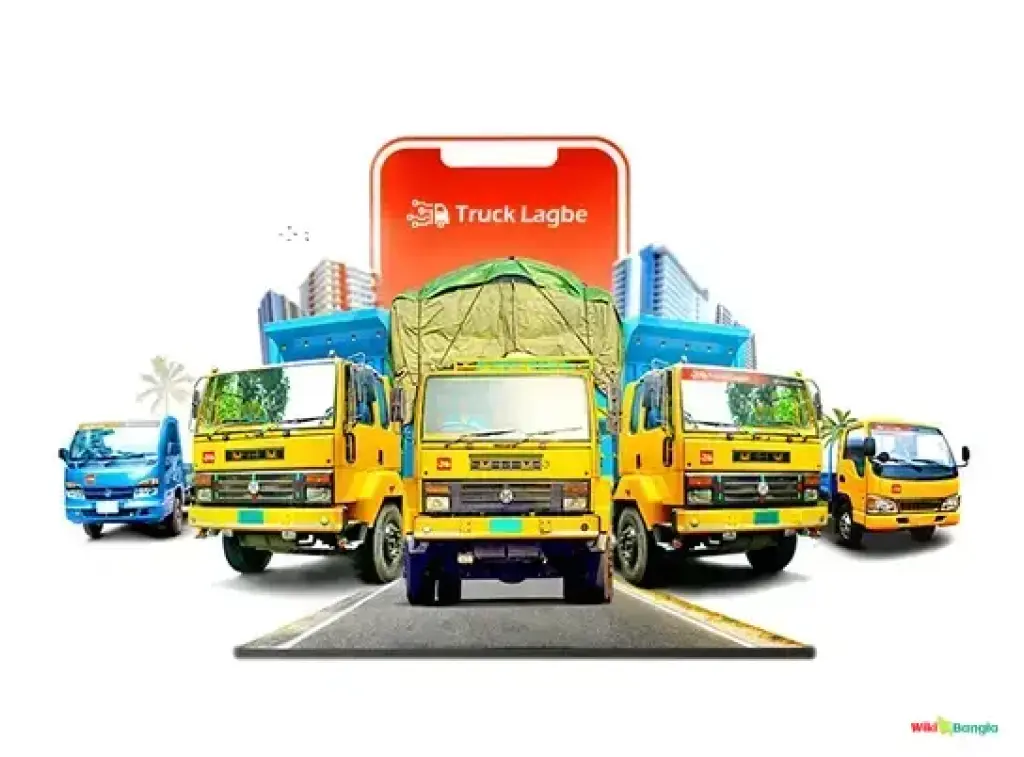
Truck Lagbe is reshaping Bangladesh's logistics and freight transport industry by providing a digital platform that connects truck owners and shippers. Discover how this innovative app reduces transportation costs, ensures timely deliveries, and enhances efficiency across the country.
Truck Lagbe is a Bangladeshi digital freight marketplace that connects people and businesses who need to move goods with the truck owners who can move them. Through its app, a shipper posts a trip and truck owners bid for the job — replacing the phone calls, brokers and guesswork that have traditionally governed how freight moves in Bangladesh. Founded in 2017 by school friends Anayet Rashid and Mir Hossain Ekram, the company became one of the country's best-known logistics startups, winning backing from the International Finance Corporation and Singapore's PSA International. Reporting in August 2026 put its network at more than 80,000 registered trucks and 150,000 customers.
Table of contents [Show]
The idea was planned from December 2016 and grew out of Anayet Rashid's experience in fast-moving consumer goods, where arranging delivery trucks was a recurring ordeal. Prices for the same route could be quoted at wildly different levels by different owners — Rashid's standard example in interviews is a load from Dhaka to Jashore quoted at Tk 8,000 by one truck owner and Tk 35,000 by another. Much of the variance had a structural cause: a truck that carried goods one way often returned empty, so owners priced the uncertainty of the return trip into the first quote, and a fragmented market of small owners and middlemen gave shippers no way to see a fair price.
The traditional alternative offered no remedy. Trucks were hired at physical stands and through brokers whose commissions rewarded opacity; a shipper outside the trade had no reference price, no record of the transaction and no recourse if a truck arrived late or not at all. For manufacturers moving goods every day, the cost was not only the inflated quotes but the management time burned on arranging transport that should have been routine.
Rashid and Ekram — Rashid as chief executive, Ekram as chief operating officer — built an app to make that market visible. The young company won first place in the ICT Division's Startup Challenge 2017, released a trial version of the app in July 2017 with what the company says were just 25 trucks, and commercially launched the service in September 2017 at an event at ICT Tower in Dhaka. Early usage concentrated in the industrial belt around the capital — Dhaka, Chittagong, Gazipur and Narayanganj — where factory freight was densest.
The model is a bidding marketplace. A shipper enters a trip — pick-up point, destination, type and size of load — and nearby truck owners respond with price bids; the company says bids typically arrive within about thirty minutes, after which the shipper chooses. Trucks and drivers on the platform are verified, and a separate app serves the owner side of the market, letting drivers and fleet owners find return loads instead of running empty.
That second side is the economic engine of the model. An owner who can see paid work for the journey home can bid more keenly on the outward trip, which is how a marketplace attacks the empty-backhaul problem that made quotes so erratic in the first place. The shipper, in turn, gets competing prices for the same job within the hour — the reference price the offline market never provided — plus a digital record of the booking instead of a broker's verbal promise.
Around that core, the service has widened. As of late 2026 the company's website lists full-day truck rental, round-trip ("up-down") bookings, multi-stop trips, a loading-labour service, round-the-clock rental, and a house-shifting service for households moving home. For companies with regular freight, a dedicated business offering — Truck Lagbe for Business — packages the marketplace into an ongoing transport arrangement rather than one-off bookings.
Truck Lagbe's growth is best read as a dated series, because the company's own published figures have shifted over time and do not always agree with each other. In November 2020 the company said that more than one million trips had been completed through the app since the 2017 trial launch. A year later, when the International Finance Corporation invested in September 2021, coverage put the platform at more than 43,000 registered shippers and 20,000 registered trucks, with service across all 64 districts of Bangladesh. By July 2023, Rashid stated that registered trucks had passed 80,000 — a figure The Daily Star repeated in August 2026, alongside 150,000 customers.
The physical business grew with the network: the company launched a new version of its app in November 2020, and by then had moved from its four-person beginnings into a three-storey office in Mohakhali, Dhaka, according to UNB's profile of the period.
The company's own website, checked in November 2026, headlines 11,000 or more businesses served, over 1.8 million app downloads and more than 700,000 successful trips, while its business page separately lists 300,000-plus trips posted and 1.6 million tons transported. That the same company can publish both "one million trips" (in 2020) and "700,000 successful trips" (in 2026) is a useful caution: these are platform-reported numbers, not audited ones. What is not in doubt is the direction of travel — from 25 trucks at the 2017 beta to a nationwide network counted in the tens of thousands, in a market that still books most of its freight offline.
Unlike many Bangladeshi startups of its generation, Truck Lagbe attracted institutional foreign capital early. Its seed-stage funding totalled US$1.75 million from Hong Kong-based Mount Parker Ventures and Aria Group, including a US$1 million pre-Series A round in April 2019; other early backers reported in company histories include Betatron Venture Group, Seedstars and Falcon Network.
The defining round came in 2021. Truck Lagbe closed a US$4 million Series A, announced in September 2021, led by the International Finance Corporation — whose own equity investment was US$2.5 million — and co-led by IDLC Venture Capital Fund I, the venture arm of IDLC Finance. (The company had been reported in February 2021 to be raising up to US$5 million; the round that closed was US$4 million.) IFC's involvement brought a development-finance rationale: the institution cited estimates valuing Bangladesh's transport and logistics market at US$15 billion, around 6.8 percent of GDP.
In July 2023 the company closed a further round, a Series A+ led by PSA International — the Singapore-based global port and supply-chain group — with participation from Startup Bangladesh Limited, the government's venture capital fund, and IDLC Venture Capital Fund I. The amount was not disclosed. PSA's arrival was strategically suggestive: a port operator's investment linked Bangladesh's road-freight marketplace to the container terminals where much of the country's import and export cargo begins and ends its journey. Across its disclosed rounds up to that point — the US$1.75 million of seed funding and the US$4 million Series A — Truck Lagbe had raised about US$5.75 million, with the Series A+ taking the true total higher by an undisclosed amount.
Although individual shippers can book a single truck, the commercial centre of gravity is business freight. The company's website displays a client list that includes Arla (Dano), Unilever, Walton, Pepsi, Marico, Square, Rangs and Minister, and states that some of its business clients save up to 17 percent on their transport costs — a company claim, but a notably more modest one than the sector's usual marketing. For manufacturers and distributors moving goods daily, the pitch is less the saving on any single trip than visibility: posted prices, verified trucks and a record of every booking.
Formal recognition has followed the same arc. Truck Lagbe received the "Best Technology Innovation" award at Bangladesh Brand Forum's awards in October 2018, a year after launch. In October 2023 it was named ICT Startup of the Year at the eighth BRAC Bank–The Daily Star ICT Awards, sharing the category with the mental-health platform Moner Bondhu — a sign that by then the company was being counted among the established names of Bangladeshi tech rather than its newcomers.
The prize is large. The Daily Star's August 2026 trucking supplement estimated Bangladesh's freight and logistics market at US$31.97 billion in 2025, with road transport carrying an estimated 70 to 80 percent of inland freight — yet the country ranked only 88th in the World Bank's Logistics Performance Index for 2023. Most freight still moves the old way: through brokers at truck stands, by phone, in cash, with prices set by negotiation and availability rather than by any visible market.
Truck Lagbe belongs to the wave of Bangladeshi startups that tried to digitise pieces of that informal economy — the same generation as Pathao, co-founded by Hussain M Elius, which applied the marketplace model to ride-hailing and parcels. In freight, it now competes with the international platform Lalamove — which the Daily Star put at roughly 20,000 registered drivers and 80,000 customers in Bangladesh — and with local rivals such as Loop Freight and Goods in Motion. The structural problems the model attacks remain only partly solved: empty return trips, port and highway congestion, and a trucking fleet owned in tiny fragments, often one or two vehicles at a time.
What digitisation changes, even before it changes prices, is visibility. A booking made in an app produces data — routes, rates, seasonal patterns, reliable owners and unreliable ones — in a sector that previously generated almost none. That data is what allows a platform to quote a business customer a predictable rate, to match return loads systematically rather than by luck, and to show lenders and insurers a legible business where they once saw only informal cash transactions. It is also why the sector attracted development finance: for IFC, formalising freight is not merely a commercial opportunity but part of lowering the cost of trade for the small manufacturers and traders who make up most of the economy.
As of late 2026, Truck Lagbe remains the best-known name in Bangladesh's digital freight market: a nationwide truck network, more than eleven thousand businesses served by its own account, institutional backing from IFC and PSA International, and a business product aimed at the manufacturers and distributors who generate the country's freight. The composition of its cap table tells its own story — a World Bank Group member, a global port operator and the Bangladeshi state's own venture fund are not investors a company attracts without a durable position in its market. Its published numbers should be read as company-reported rather than audited, and the market it set out to organise in 2017 is still overwhelmingly offline. But the company's core insight — that the price of moving goods should be discovered by a market, not negotiated in the dark — has moved from a startup pitch to an ordinary feature of how a growing share of Bangladesh's freight is booked.