Grameen Bank: Microcredit Pioneer Owned by Its Borrowers
Grameen Bank lends small, collateral-free loans to 10.8 million members — 96.7 percent of them women — who together own 90 percent of the bank itself.


Table of contents [Show]
National Bank PLC, widely known by its initials NBL, is one of the oldest private commercial banks in Bangladesh and holds a distinctive place in its financial history: it was the first private sector bank fully owned by Bangladeshi nationals. Founded in 1983, it grew from a single Dilkusha branch into a nationwide institution with 221 branches and a large remittance franchise. The bank is listed on the Dhaka Stock Exchange and has its head office at 116/1, Kazi Nazrul Islam Avenue, Banglamotor, Dhaka.
That heritage, however, now sits alongside one of the most severe crises ever faced by a Bangladeshi bank. After years of deterioration under the control of the Sikder Group, National Bank has recorded losses every year since 2022, accumulating nearly Tk 9,000 crore in losses over four years. By the end of 2025, 59.69 percent of its loans were non-performing, according to its annual report, and in October 2026 the bank could only restore full withdrawal services after an emergency, government-guaranteed liquidity package arranged by Bangladesh Bank. Its board has been dissolved by the central bank three times since December 2023. Its story is therefore twofold: a pioneer of private banking in Bangladesh, and a cautionary tale of concentrated ownership and weak governance.
National Bank began its journey at a moment of transition in Bangladesh's financial sector, when the government was first opening banking to private ownership. The bank was launched by a group of 18 sponsor directors, among them Zainul Haque Sikder, Khalilur Rahman and Moazzam Hossain. Its first branch, at 48 Dilkusha Commercial Area in Dhaka, started commercial operations on 23 March 1983, and the bank was formally inaugurated five days later, on 28 March 1983, by the then President of Bangladesh, Justice Ahsanuddin Chowdhury. A second branch followed within weeks, opening on 11 May 1983 at Khatunganj, Chittagong, signalling the new bank's ambition to serve the country's trading community beyond the capital.
Through the 1980s and 1990s the bank expanded steadily and built an early specialisation in foreign remittance, entering the remittance business in 1985 and becoming the first domestic bank to establish an agency arrangement with Western Union, connecting it to the growing number of Bangladeshis working abroad. It opened a representative office in Yangon, Myanmar, in 1996 and later set up money-transfer subsidiaries in Singapore, Malaysia, the Maldives and Greece. The bank marked its 43rd anniversary in April 2026.
For much of this period National Bank was regarded as one of the stronger first-generation private banks, respected in trade finance and remittance. The turning point came in 2009, when the Sikder Group took over the bank's ownership and management — a change whose consequences would define the institution for the next decade and a half.
From 2009 until late 2023, National Bank was controlled by the Sikder family. Zainul Haque Sikder, the group's chairman, took control of the board in 2009. After his death in February 2021, his wife Monowara Sikder became chairman, and the removal of sponsor director Moazzam Hossain and his son in August 2022 left the family in near-absolute control, even as the late chairman's children — Ron, Rick and Parveen Haque Sikder — disputed the family empire. The Anti-Corruption Commission filed a case against seven people, including Ron and Rick Haque Sikder, accusing them of laundering Tk 71 crore, and The Daily Star and other outlets documented a pattern of loans approved in breach of banking rules during these years.
The regulator's response came in stages. On 21 December 2023, Bangladesh Bank dissolved the bank's board on the recommendation of the Bangladesh Securities and Exchange Commission; its order, as reported, cited loan approvals in violation of regulations, interference in management, concentration of the bank's shares within one family and financial irregularities. Professor Syed Ferhat Anwar became chairman — the first person from outside the Sikder family to hold the post since 2009. When that board split over a central-bank proposal to merge National Bank with United Commercial Bank, Bangladesh Bank dissolved it again on 5 May 2024 and installed sponsor director Khalilur Rahman as chairman; Parveen Haque Sikder's removal ended the family's presence on the board. Following the fall of the Awami League government in August 2024, the board was dissolved a third time, on 20 August 2024, with Governor Ahsan H Mansur's order stating that the board had failed in its policy decisions and acted against depositors' interests. A new seven-member board elected Abdul Awal Mintoo, one of the bank's founding sponsors, as chairman on 22 August 2024, with Moazzam Hossain as vice-chairman.
Leadership has continued to change since then. Managing director Touhidul Alam Khan resigned in January 2025; after a period under an acting managing director, Adil Chowdhury, previously President and Managing Director of Bank Asia, took over on 7 July 2025. Mintoo stepped down as chairman after being elected to parliament and becoming Minister for Environment, Forest and Climate Change, and at the board's 539th meeting on 28 February 2026 the directors elected Professor Dr Melita Mehjabeen, a professor at the Institute of Business Administration of the University of Dhaka who had served as an independent director, as chairman. Bangladesh Bank added two further directors, Tabith Awal and Nazneen Ahmad, on 31 March 2026. Chowdhury resigned as managing director in July 2026; the bank was represented by an acting managing director, Zahidul Haque, during its October 2026 negotiations with the central bank, and the board then moved to appoint Mohammad Abu Jafar — a former managing director of Premier Bank — to the post, an appointment the bank subsequently announced. As of late 2026, National Bank is thus chaired by Professor Dr Melita Mehjabeen, while its chief executive's office has turned over repeatedly in two years.
National Bank offers the full range of conventional commercial banking services. Its retail deposit line includes savings and current accounts, the long-running Monthly Savings Scheme, benefit-linked term schemes such as the Double Benefit and Triple Benefit accounts, the Kotipoti and Millionaire deposit schemes, the Century Deposit Scheme, the "Aamar Account", school-banking accounts for students and a retirement scheme marketed as "Nischinto Oboshor". Retail lending covers consumer credit, housing loans and credit and debit cards.
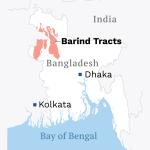
For businesses, it provides corporate banking, trade finance, treasury services and offshore banking units. Its small-business range includes the NBL Small Business Loan, festival and weavers' loans, lease and auto finance, and the Nari Jagaran loan for women entrepreneurs, while its agriculture and rural credit programme has historically included collateral-free small loans to farmers in the Barind region of Rajshahi. The bank's group structure includes two domestic subsidiaries, NBL Securities Ltd and NBL Capital and Equity Management Ltd, alongside its overseas money-transfer companies.
Remittance has long been the bank's signature business. Beyond its own branches, remittances can be collected through roughly 2,556 outlets of the NGO ASA, and since February 2026 money sent through National Bank can be credited directly to beneficiaries' Nagad wallets under an agreement with the mobile financial service. The bank received the government's Remittance Award 2024 for its collections in the 2023–24 financial year and was recognised in 2024 as the second-highest receiver of remittances sent from the United States.
Despite its troubles, National Bank retains one of the larger physical networks among first-generation private banks. According to its 2025 annual report, the bank operated 221 branches and SME centres and 65 sub-branches spread across Bangladesh, employing 4,535 people at the end of 2025. Reporting in October 2026 put its ATM booths at 53. The head office is at Banglamotor in Dhaka, though the bank's identity remains closely associated with Dilkusha, where its first branch opened in 1983.
The network matters for two reasons. It gives National Bank a deposit-gathering reach into rural and semi-urban areas that many newer banks lack, including through its remittance payout arrangements with ASA; and it means the bank's distress is felt directly by households in every district — which is why the central bank has treated its survival as a matter of public interest rather than an ordinary corporate failure.
National Bank's recent financial record is stark. The bank swung to a consolidated net loss of about Tk 3,260 crore in 2022, followed by losses of roughly Tk 1,497 crore in 2023, Tk 1,722 crore in 2024 and Tk 2,430 crore in 2025 — four consecutive years in the red, totalling nearly Tk 9,000 crore, and it paid no dividend for 2024 — its fourth straight year without one. As defaults mounted, the bank could not book interest income on a growing share of its loan book, while its borrowing costs rose.
The balance sheet shrank and weakened at the same time. Deposits fell from Tk 42,611 crore at the end of 2023 to about Tk 37,000 crore at the end of 2024, against loans and advances of about Tk 43,424 crore — the bank had lent considerably more than it held in deposits. Total assets declined from Tk 57,298 crore at the end of 2024 to Tk 50,520 crore at the end of 2025. Net asset value per share, Tk 1.15 at the end of 2024, had turned negative by September 2025, at minus Tk 3.38 per share on a consolidated basis.
Asset quality is the core of the problem. The bank's non-performing loan ratio stood at 59.69 percent at the end of 2025, according to its annual report. Bangladesh Bank data for the end of June 2026 showed classified loans of Tk 28,277 crore — 65.74 percent of total loans of Tk 43,016 crore — together with a provision shortfall of Tk 23,326 crore and a capital shortfall of Tk 9,032 crore. By 12 October 2026 deposits had fallen further, to Tk 33,515 crore, against loans of Tk 43,230 crore, pushing the advance-to-deposit ratio to 132 percent, far above the 87 percent regulatory ceiling. The central bank had by then extended Tk 10,568 crore in support to the bank, and its cumulative borrowings, including guaranteed funds, were reported at roughly Tk 26,000 crore.
National Bank's digital offering is built around its "NBL Apps" mobile application and internet banking, through which customers can view accounts, transfer funds, pay utility bills, recharge mobile phones and lock or unlock their cards. The bank connects to the national payment rails — NPSB, BEFTN and RTGS — and supports Bangla QR payments.
Technology has featured in the bank's efforts to defend its strongest franchise: in November 2025 it launched a "Remittance Cash Payment Automation" system to speed up collection of foreign remittances at any branch or sub-branch, and the February 2026 Nagad agreement extended remittance delivery to mobile wallets. These channels were fully restored, alongside counter and ATM services, when normal banking resumed on 15 October 2026 after the liquidity rescue.
National Bank's difficulties are not primarily the product of a single bad year. Reporting by The Daily Star and others traces the deterioration to the period of Sikder Group control from 2009 onwards, when, according to Bangladesh Bank's dissolution order, loans were approved in violation of rules, the board interfered in management, shares were concentrated within one family and irregularities occurred despite the board's knowledge. The consequences — a loan book in which roughly two-thirds of loans had turned non-performing by mid-2026, a provision shortfall above Tk 23,000 crore and a negative net asset value — are the measurable residue of that era. An older episode also shadows the bank's reputation: in 2015, the collapse of its under-construction head-office tower site at Karwan Bazar caused a neighbouring building and a road to cave in.
The human consequence arrived in 2026: for months the bank could not honour withdrawal requests in full, about 11,000 depositors were pressing to withdraw, and some petitioned the High Court. The October 2026 resolution was a state-engineered rescue: after a meeting with Governor Md Mostaqur Rahman on 8 October, the bank signed a memorandum of understanding with Bangladesh Bank on 12 October under which state-owned Sonali Bank lent it Tk 7,000 crore for three months at 10 percent interest, central-bank guaranteed and tied to 11 conditions, including paying depositors first and reporting weekly on the use of the money. Full services resumed on 15 October 2026.
A merger has been debated since April 2024, when Bangladesh Bank proposed combining the bank with United Commercial Bank; the board declined, and under the resolution framework created by the Bank Resolution Ordinance 2025 — used in December 2025 to merge five distressed Shariah-based banks into Sammilito Islami Bank — National Bank has so far been handled through liquidity support and imposed governance change instead. Governance itself remains under scrutiny: the board's chosen managing director in 2026, Mohammad Abu Jafar, was appointed while facing an Anti-Corruption Commission investigation into allegations from his tenure at Premier Bank — allegations that remain unproven and of which he has not been convicted, but which illustrate how difficult the bank's rehabilitation remains.
National Bank institutionalised its social work early. The National Bank Foundation, established in 1989, runs the National Bank Public School & College at Moghbazar in Dhaka and supports scholarships and other educational institutions, including support connected with the Asiatic Society of Bangladesh's Banglapedia project. Its wider CSR has traditionally covered disaster relief after floods and cyclones, medical assistance, and sponsorship of sports and cultural activities. In its present financial condition the scale of such activity is necessarily limited, but the Foundation and its school remain the most visible permanent legacy of the bank's better years.
National Bank's immediate future depends on whether the October 2026 rescue can be converted into a durable recovery. The elements of a turnaround are visible: a regulator-installed board chaired by an independent academic, repeated changes of chief executive in search of credible management, a still-substantial branch and remittance franchise, and a central bank that has shown it will supply liquidity rather than let the bank fail abruptly. Set against those are the hard numbers — an NPL ratio near two-thirds of the loan book, provision and capital shortfalls measured in tens of thousands of crore, negative net assets and a deposit base that shrank by roughly a fifth in under three years. Recovery of defaulted loans, above all from the large borrowers of the Sikder era, will decide whether the recapitalisation the bank plainly needs can come from its own balance sheet or must be supplied by the state, shareholders or a merger partner.
National Bank opened in March 1983 as the first private bank owned entirely by Bangladeshi nationals, pioneered modern remittance banking and served generations of traders, farmers, small businesses and expatriate families. Its collapse into state-supported distress is one of the defining banking stories of modern Bangladesh; whether it is remembered mainly as a pioneer or mainly as a warning will depend on the credibility of the clean-up now under way.