Overview
BEXIMCO — short for Bangladesh Export Import Company — is one of Bangladesh's largest and most diversified business groups. It was founded in 1972, just after independence, by two brothers, Ahmed Sohail Fasihur Rahman (A S F Rahman) and Salman F Rahman, and grew from a small commodities trading firm into a conglomerate best known for textiles and garments, pharmaceuticals and ceramics. Its three listed companies are the flagship Bangladesh Export Import Company Ltd (BEXIMCO Ltd), Beximco Pharmaceuticals Ltd and Shinepukur Ceramics Ltd, and its corporate motto is "Taking Bangladesh to the World".
Since August 2024 the group has also been at the centre of Bangladesh's post-uprising corporate reckoning. Salman F Rahman, its vice-chairman and the deposed prime minister's private industry and investment adviser, was arrested on 13 August 2024 and remains in jail facing a series of financial-crime cases. The group's textile factories — long its largest employer — have closed with the loss of tens of thousands of jobs, its bank debts have been laid bare in court, and in 2026 regulators rebuilt the boards of all three listed companies without him — while its pharmaceutical arm kept growing. BEXIMCO today is a two-speed group: a profitable, export-oriented drug maker on one side, and a debt-laden textile empire struggling to restart on the other.
History
The Rahman family's business roots lie in jute. Sohail Rahman took over a debt-laden family jute mill in Dhaka in 1966 and nursed it back to health, but the mill was nationalised after Bangladesh's independence in 1971. The brothers responded by founding the Bangladesh Export Import Company in 1972, exporting seafood and crushed bones to pharmaceutical buyers in Europe — and, rather than taking cash, importing medicines in return. That barter pointed to the group's future: in 1976 they set up Beximco Pharmaceuticals, which began production in 1980 making products under licence from Bayer of Germany and Upjohn of the United States, moved into its own formulations in 1983, listed on the Dhaka Stock Exchange in 1985 and began exporting in 1992.
Through the 1980s and 1990s the family regained ground under privatisation. The group built the Beximco Industrial Park at Sarabo, Kashimpur, in Gazipur into one of South Asia's largest vertically integrated textile complexes, and diversified into ceramics, jute, information technology, media, real estate, energy and financial services. Beximco Pharmaceuticals listed its GDRs on London's AIM market in 2005, the first Bangladeshi company to list in London, and in June 2015 it became the first Bangladeshi drug maker to win approval from the US Food and Drug Administration, beginning exports to the United States the following year.
The pharmaceutical arm also made the group's two documented acquisitions, which earlier versions of this profile never named. In April 2018 Beximco Pharma completed its first acquisition, buying 85.22 percent of Nuvista Pharma, a hormone and steroid specialist formerly owned by the Netherlands' Organon. In October 2021 it completed the largest acquisition in the history of Bangladesh's pharmaceutical industry, buying Sanofi's 54.6 percent majority stake in Sanofi Bangladesh for Tk 480 crore; the company was renamed Synovia Pharma in April 2022 and continues to make and market Sanofi products.
Salman F Rahman's political ascent ran in parallel. He became private industry and investment adviser to Prime Minister Sheikh Hasina, a member of parliament, and, from 2015, chairman of IFIC Bank. When the Awami League government fell on 5 August 2024, that ascent ended in arrest within eight days, and the group's affairs became a matter for the courts, the central bank and the securities regulator.
Ownership and Leadership
BEXIMCO is a family-founded, sponsor-controlled group. A S F Rahman, the elder brother, is chairman of the group and of its listed companies. Salman F Rahman was vice-chairman until his arrest in August 2024. In the flagship BEXIMCO Ltd, sponsor-directors held 33.11 percent of shares as of May 2026; institutional investors held 32.59 percent, general investors 33.36 percent and foreign investors 0.94 percent.
The events of 2024–26 progressively stripped Salman of his corporate positions. His son Ahmed Shayan Fazlur Rahman lost his IFIC Bank directorship on 13 August 2024 over loan defaults, and on 4 September 2024 Bangladesh Bank dissolved IFIC's board altogether, ending his nine-year chairmanship. The securities regulator then appointed independent directors to the three listed Beximco companies under orders issued at the end of 2024, which the group challenged in court; the litigation paralysed board meetings at Beximco Pharmaceuticals for over a year. The dispute was settled in 2026 on terms that formalised Salman's exit. On 29 September 2026 the BSEC cleared a reconstituted nine-member board for Beximco Pharmaceuticals — A S F Rahman as chairman, with fellow sponsor directors Osman Kaiser Chowdhury and Iqbal Ahmed, a director nominated by IFIC Bank, four independent directors and the managing director — from which Salman is absent. In October 2026 it approved new boards for BEXIMCO Ltd and Shinepukur Ceramics as well, again chaired by A S F Rahman, with Osman Kaiser Chowdhury as managing director of the flagship.
Day-to-day leadership now sits with professional executives. Osman Kaiser Chowdhury leads BEXIMCO Ltd. At Beximco Pharmaceuticals, Iqbal Ahmed was managing director by the time the company's long-delayed annual results were published in June 2026, succeeding Nazmul Hassan, the former MP who had led the company through the Nuvista and Sanofi acquisitions. A S F Rahman remains chairman, although he is himself an accused in the CID money-laundering cases and was reported in November 2025 to be abroad.
Businesses and Subsidiaries
The flagship, BEXIMCO Ltd, runs the group's textile and garment businesses — spinning, yarn, denim, knitwear, woven garments and washing — concentrated at the Gazipur industrial park, together with the jute division (New Dacca Industries), trading and other interests. Its factories supply global apparel brands, and the company describes its textile operation as one of South Asia's largest vertically integrated textile businesses.
Beximco Pharmaceuticals is the group's most valuable business. Based at Tongi, it manufactures generic formulations and active pharmaceutical ingredients across a wide range of therapeutic areas, and its facilities hold approvals from regulators in the United States, Europe, Australia, Canada and elsewhere. The company says its products reach more than 50 countries. Its subsidiaries are Beximco Pharma API, Nuvista Pharma (the hormone and steroid maker acquired in 2018) and Synovia Pharma, the former Sanofi Bangladesh, in which Beximco Pharma holds 54.6 percent and the Government of Bangladesh 45.4 percent.
Shinepukur Ceramics, the third listed company, produces porcelain and bone china tableware, much of it for export. Beyond the listed trio, the wider group spans information technology (Beximco Computers and Bangladesh Online), media (Independent Television), direct-to-home satellite television (Akash DTH), real estate and construction, petroleum and LPG distribution, power generation, the Yellow fashion retail chain, marine foods and trading. Its financial-services presence was historically exercised through the Rahman family's role at IFIC Bank rather than through a group-owned bank.
Scale and Operations
The group's physical heart is the Beximco Industrial Park at Sarabo, Kashimpur, Gazipur, where 32 textile and apparel units stood before the 2024 shutdowns — the largest single concentration of the group's manufacturing. Beximco Pharmaceuticals operates its main plants at Tongi, and Shinepukur Ceramics manufactures at its own facilities near Dhaka.
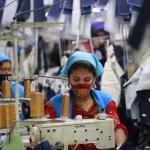
On employment, precision matters, because the group's size was long a marketing claim. BEXIMCO's corporate materials described it for years as the largest private-sector employer in Bangladesh, with over 70,000 employees worldwide — a figure that was never dated or independently audited, and which the earlier version of this profile repeated in reduced form ("over 30,000 employees") without any source at all. What can be documented is the contraction: roughly 30,000 workers across 16 units were laid off in late 2024 as orders and banking facilities dried up, and a further 8,000 or so across five more units on 4 February 2025. No reliable group-wide employment total has been published since the closures, so none is given here.
Financial Performance
The group's two halves have diverged sharply. The flagship BEXIMCO Ltd earned net profits of Tk 1,254 crore in the year to June 2022 and Tk 709 crore in the year to June 2023, but swung to a net loss of Tk 35.88 crore in the year to June 2024 as political turmoil disrupted operations. In the first half of the following year (July–December 2024), with production almost shut because banks would not open letters of credit, the loss deepened to Tk 356 crore. The company has published no financial statements since December 2024, and as of July 2026 it was among 36 listed companies that had still not filed their annual accounts for the year ended June 2025 — a transparency blackout that leaves minority shareholders without audited numbers.
Beximco Pharmaceuticals, by contrast, remained profitable throughout. Its audited results for the year ended 30 June 2025 — published only in June 2026, after the board dispute was settled — show consolidated net revenue of Tk 4,912 crore, up 10.7 percent, with export sales rising 37.7 percent to Tk 407 crore, and profit after tax of Tk 699.9 crore, up 19.3 percent, giving earnings per share of Tk 15.56.
The group's debts are the central financial fact. Press reporting in February 2025 put its total bank loans at more than Tk 40,000 crore, including Tk 28,544 crore borrowed by the 32 textile and apparel subsidiaries. In the High Court proceedings of March 2025, Bangladesh Bank documents put the group's total obligations at about Tk 53,000 crore, of which roughly Tk 23,120 crore was already defaulted. The largest single lender is state-owned Janata Bank: Beximco owed Janata Tk 25,000 crore at the end of June 2024, and about 72 percent of that exposure had been classified as defaulted.
Challenges and Controversies
Salman F Rahman was arrested on 13 August 2024 at Sadarghat in Dhaka, alongside former law minister Anisul Huq, as the two allegedly tried to leave the capital by boat; police recovered foreign currency in several denominations from them. He has remained in jail ever since, and faces cases including over killings during the July 2024 uprising. In the foreign-currency case arising from the arrest, a charge sheet was filed in November 2025 and the charge-framing hearing was set for 19 November 2026.
The financial cases have accumulated steadily, and all remain allegations awaiting trial. In September 2024 the Criminal Investigation Department filed 17 money-laundering cases against 28 people — including Salman, his brother, his son and his nephew — alleging that about Tk 1,000 crore (some US$97 million) was laundered abroad under cover of export trade; charge sheets were approved in November 2025 and properties worth about Tk 250 crore attached. The Anti-Corruption Commission has filed case after case: Tk 1,174 crore allegedly embezzled from IFIC Bank (June 2025); five cases over Tk 1,939 crore from Janata Bank (November 2025); Tk 136.67 crore in a further Janata Bank case (January 2026), by which time the ACC said he stood accused in 18 of its cases; a Tk 538 crore IFIC prosecution decision in September 2026, part of a wider probe into Tk 7,129 crore allegedly taken through 14 shell companies; and, most recently, three cases approved on 2 November 2026 over Tk 1,121.49 crore allegedly embezzled from Janata Bank through three newly formed apparel firms. Separately, in July 2025 the securities regulator fined Salman Tk 100 crore and his son Tk 50 crore and banned both from the capital market for life, finding that the "IFIC Amar Bond" — a bond of Sreepur Township Ltd marketed under IFIC Bank's name — had misled investors. IFIC's own post-2024 chairman has said businesses associated with the group benefited from around Tk 10,000 crore in loans from that bank alone.
The state also intervened directly in the group's management. On 5 September 2024 the High Court directed Bangladesh Bank to appoint a receiver over the Beximco companies and attach their properties; the central bank installed its executive director Ruhul Amin on 10 November 2024, the governor saying the aim was to keep Beximco afloat. The Appellate Division exempted Beximco Pharmaceuticals within days, and on 12 March 2025 the High Court annulled the receivership as legally unfounded, returning the companies to their own management under strict regulatory supervision while directing the central bank to recover the defaulted loans.
For workers, the crisis was not legal but immediate. Factories at the Gazipur park were vandalised and burned in the unrest of August 2024; banking facilities were withdrawn; and after months of protests over unpaid wages, 14 textile and garment units were formally closed on 26–27 February 2025. The government provided Tk 525.46 crore to settle the wages and dues of those units' workers and staff — the obligations of the group to its own employees ultimately met from public funds.
Corporate Social Responsibility
The group's best-documented social contributions date from the COVID-19 pandemic. On 21 May 2020 Beximco Pharmaceuticals became the first company in the world to launch a generic version of the antiviral remdesivir, under the brand name Bemsivir, and donated it free of charge to government-designated COVID-19 hospitals in Bangladesh, as well as supplying it to other countries on humanitarian grounds. The group supplied protective equipment to healthcare workers, and the pharmaceutical company won the CPhI Pharma Award 2020 for innovation in response to COVID-19. In 2021 Beximco Pharma also handled the import, storage and distribution of the Oxford–AstraZeneca vaccine supplied by the Serum Institute of India under the national programme. Set against that record, however, is the events of 2025 described above, in which the wages and statutory dues of the group's own laid-off textile workers had to be paid by the government.
Outlook and Conclusion
BEXIMCO's future now depends less on its founders than on whether its factories can be restarted and its debts worked out. A first attempt came in July 2025, when an inter-ministerial decision approved a tripartite arrangement for Japan's Revival Project to lease and reopen the textile plants against orders from Inditex, aiming to restore about 25,000 jobs; in September 2025 the company confirmed the reported Japanese and American investment to the stock exchange and forecast a return to profit by December 2026 if operations resumed. In October 2026 British and Chinese firms were reported to be proposing US$23 million to restart one unit, Prefix Fashions, as the first step, potentially from the first half of 2027, subject to regulatory approvals — with more than 30,000 jobs said to be recoverable if all 16 closed units reopen.
The pharmaceutical business gives the group a growing, cash-generative core that has survived the crisis largely intact, and the 2026 board settlements have, for the first time, put its listed companies formally beyond Salman F Rahman's control. Against that stand an unaudited flagship, bank obligations measured in tens of thousands of crores, and criminal proceedings against the group's founders that are still at the allegation and charge-sheet stage. Whether BEXIMCO emerges as a smaller, professionally governed group built around pharmaceuticals — or remains hostage to its debts and its founders' legal fate — will be decided by the factory restarts and the courts over the coming years.