Overview
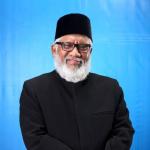
Sufi Mohammed Mizanur Rahman (born 12 March 1943), known across Bangladesh simply as Sufi Mizan, is the founder and chairman of the PHP Family, the Chittagong-based conglomerate whose name stands for its motto, Peace, Happiness and Prosperity. From a bank clerk's desk in the 1960s and a trading business started with capital of Tk 1,483, he built one of Bangladesh's largest family-owned industrial groups: more than 30 companies in steel, float glass, ship recycling, automobiles, textiles, power and financial services, which reported a turnover of about Tk 5,000 crore in 2020.
His public identity rests on three pillars: the industries he founded, including Bangladesh's first float glass plant and its first green ship-recycling yard; a programme of philanthropy that the state recognised with the Ekushey Padak, the country's second-highest civilian honour, in 2020; and his faith, he is a practising Sufi whose charitable foundations and oft-quoted philosophy of giving have shaped both the group's name and its culture. Remarkably, he remains chairman at 83, still presiding over group events in late 2026, while his sons run the businesses and his grandsons begin to join them.
Early Life and Background
Sufi Mohammed Mizanur Rahman was born on 12 March 1943 at Kanchan in Rupganj, Narayanganj, into a pious Muslim family. His father, after whom he would later name a hospital in the village, was Sufi Mohammed Daemuddin. He was educated in Narayanganj, at Government Tolaram College, and after passing his intermediate examinations he went to work, first, briefly, for a private company, for a salary of about Tk 100 a month. The job that set his course came in 1965, in the port city of Chittagong: a post at the National Bank of Pakistan.
From Banking to Business
The National Bank of Pakistan, the institution that after independence became Sonali Bank, paid the young Mizanur Rahman Tk 163 a month in 1965. He made a career of banking for the rest of the decade: he graduated, earned a diploma in banking, and moved to the Eastern Mercantile Bank, the institution now known as Pubali Bank. Banking taught him how money and credit moved through the economy of the port city; it also, by his own later account, left him impatient to build something of his own.
After Bangladesh's independence in 1971 he left banking and went into trade, importing commodities in bulk. The capital he started with has become part of Bangladeshi business folklore: Tk 1,483. In 1972 he obtained financing of US$4,000 and, by the account he later gave The Daily Star, turned it into roughly three times that amount in profit. The PHP group dates its founding to 1969, the year from which the ventures that became the group are traced, and the initials he eventually gave it came from the motto he chose for it: Peace, Happiness and Prosperity.
Building PHP Family
The trading business became an industrial one step by step. Ship-breaking and recycling, still a signature PHP business today, began in 1982 on the Sitakunda coast north of Chittagong. An edible-oil refinery followed in 1985. In 1988 his plant at Madhabdi, near Narayanganj, began producing corrugated iron sheets, the seed of the steel interests that grew into the cold-rolling and galvanising mills at the core of today's group, part of the wider growth of Bangladesh's steel industry.
Diversification accelerated in the 2000s. In 2003 he sponsored a private university in Dhaka, the University of Information Technology and Sciences. In 2005 PHP Float Glass began commercial production, the first float glass ever made in Bangladesh; the plant's capacity was doubled to 300 tonnes per day in 2019, and it produced about 91,000 tonnes of glass in 2022. His ship-recycling yard became, in October 2017, the first in the country certified as compliant with the Hong Kong Convention for safe and environmentally sound recycling, the result of an upgrade programme on which the group spent about Tk 35 crore from 2015, and in 2025 it received the government's Green Factory Award. The group announced its entry into car assembly in 2015, and from May 2017 locally assembled Proton cars reached customers; in 2024 the automobile business switched its Malaysian partner to Perodua. In August 2018 the group took 500 acres at the Mirsarai Economic Zone for an integrated steel plant of about Tk 31,600 crore, a project that, as of late 2026, remains unbuilt, the one grand design of his career that has not been realised.
Around those flagships sits the rest of the house he assembled: textile and spinning mills, power generation, a petro refinery, a stockbrokerage, agro-business and fisheries, latex and rubber products, a cold storage business and property development, a spread typical of the founding generation of Bangladeshi conglomerates, in which a successful trader-industrialist moved into almost every sector the young economy opened up. Almost all of it was built by acquisition of opportunity rather than by plan: a coast suited to ship-breaking, a market importing every sheet of glass, a state handing out industrial land at Mirsarai.
The group he chairs is entirely family-owned and unlisted; no PHP company has ever been floated on a stock exchange, and it publishes no consolidated accounts. Its scale can therefore only be given in dated figures: The Daily Star counted 34 businesses in 2016, and the group today counts more than 30 companies; employment was put at about 11,000 by the chairman in 2013 and around 10,000 in 2021; and reported turnover was about Tk 4,000 crore in the mid-2010s and Tk 5,000 crore in 2020. Like the other great Chittagong houses, such as the Karnaphuli Group, PHP grew out of the port economy, but it remains more completely identified with a single founder than any of its peers.
PHP's founding year is told three ways, and each date means something different. The group traces its origins to 1969. Sufi Mizanur Rahman's own trading business began in 1972, after independence. The businesses were formally established under the PHP name in 1999, the name standing for Peace, Happiness and Prosperity.
The Green Yard: A National First
In October 2017, PHP Ship Breaking and Recycling Industries received a Statement of Compliance with the Hong Kong Convention for Safe and Environmentally Sound Recycling of Ships from the Italian classification society RINA. It was the first ship recycling yard in Bangladesh to achieve the standard, after an investment of about Tk 35 crore in safer, cleaner facilities.
In 2018 the yard brought in Bangladesh's first green vessel for recycling, the Ore Vitoria from the Brazilian mining company Vale, purchased for about Tk 100 crore. The yard recycles about 150,000 tonnes of scrap a year.
Faith, Philosophy and Philanthropy
Mizanur Rahman's public identity is inseparable from his faith. A practising Sufi, he is known throughout the country simply as Sufi Mizan; he chairs the Sufi Mizan Foundation and the Mizanus Salam Institute, and heads the Bangladesh branch of the Society of Al-Azhar Graduates. His philosophy, which he has repeated in interviews for decades, is a doctrine of giving: "In fact, the spirit of living is the spirit of giving. It is the purpose of human life," he told The Daily Star in 2016. The group's motto, Peace, Happiness and Prosperity, is the corporate form of the same outlook.
The giving has been institutional as well as personal. In 1996 the group founded the Alhaj Sufi Mohammed Dayemuddin Hospital at Kanchan, his birthplace, named after his father. In Chittagong the group jointly funded a ten-bed paediatric intensive care unit at Chittagong Medical College Hospital, at a cost of around Tk 3 crore. The University of Information Technology and Sciences, which he chairs as head of its board of trustees, was founded in 2003 as a non-profit and as Bangladesh's first IT-based private university, with an explicit mission of low-cost, values-based education. The group's recorded CSR expenditure stood at Tk 15 crore in 2015, and in 2016 it was recognised at the Standard Chartered-Financial Express CSR Awards. Through his foundations he supports religious and educational charity, including, in August 2026, a reception he presided over for 25 Bangladeshi students leaving to study at Al-Azhar University in Egypt.
In 2020 the state formally recognised this record: Sufi Mohammed Mizanur Rahman received the Ekushey Padak, Bangladesh's second-highest civilian honour, for his contribution to social work.
Difficulties and Controversies
A career of this length has not been free of trouble. The group's expansion around Sitakunda has repeatedly drawn environmental enforcement: a Department of Environment list reported in December 2019 named PHP Float Glass among companies fined for hill destruction, and on 4 March 2022 the department filed a case against PHP Float Glass Industries, accusing it of damming a waterfall and razing hills at Barabkunda to water a company mango orchard; the accused were the group's managing director, the orchard's project manager and its head of human resources. No verdict or final outcome of that case has been reported in the reputable press as of late 2026.
In May 2025 he faced a different kind of exposure: he was one of 201 people named as accused in an attempted-murder case arising from the injury of a madrasa student during the protests in Dhaka on 4 August 2024 that preceded the fall of the Sheikh Hasina government, in which the deposed prime minister was the prime accused. The case was one of many broadly drawn cases filed after the July 2024 uprising, and no outcome concerning him has been reported.
The giving is measured as well as described. In the two years before June 2016 he contributed Tk 37 crore to building and developing schools and madrasas, and in 2015 he donated Tk 3.6 crore to the Paediatric Intensive Care Unit of Chittagong Medical College Hospital. The group's 30-bed Mount Hospital treats its employees free of charge.
Family and Succession
Sufi Mizanur Rahman and his wife, Tahsina Rahman, have eight children. His seven sons hold senior positions across the group. Below the chairman, the vice-chairman is Mohammed Mohsin, who signed a healthcare cooperation agreement on the group's behalf in September 2026, and the managing director is Iqbal Hossain, one of the founder's sons.
Day-to-day control has passed to that second generation, and the family has said publicly that it intends the business to remain in family hands for generations. The succession is being managed gradually rather than by handover: the third generation began entering the group in January 2025, when his grandson Nuved Mizan Iqbal joined after completing his studies, and another grandson, Victor Mizan Mohsin, has been reported in 2025-26 as a management intern, while the founder himself, at 83, remains in the chairman's office.
The third generation has begun entering the business under a stated family rule: start at entry level and earn promotion. Mohammed Mizan Victor Mohsin, son of Vice-Chairman Mohammed Mohsin, joined as a management trainee in 2021 and was promoted to Deputy Managing Director of PHP Glass and PHP Aluminium in November 2025. Nuved Mizan Iqbal, son of Managing Director Mohammed Iqbal Hossain, joined at entry level in January 2025.
Public Role and Legacy
That he is still in that office is itself unusual. In August and September 2026 he presided over group events in Chittagong in his role as chairman, a reception for the Al-Azhar-bound students, and a healthcare partnership signing at which he was chief guest, in May 2025 he was still speaking publicly as the group's chairman on investment policy, and that same year he personally inaugurated the group's rooftop solar generation at its Kumira factory, a project the group had begun in September 2024 with panels across its textile and steel mills. There has been no retirement announcement, and the obituaries that some profiles of men of his generation require have no occasion here: as of late 2026, Sufi Mizan remains the active head of the house he founded.
His legacy is the template he set for a certain kind of Bangladeshi business life. He began as a bank clerk on Tk 163 a month and started trading with Tk 1,483; he built first-in-the-country industries in glass and green ship recycling; he kept his group private, family-held and formally committed to a motto drawn from his faith; and he converted a substantial share of the proceeds into hospitals, a university and religious education. The open questions are those of any founder-shaped house: whether the Mirsarai steel plant is ever built, how the environmental cases attached to the group's expansion are resolved, and whether the second and third generations, for all their gradual preparation, can hold together a group whose identity has been, for more than five decades, one man's name and philosophy.
Frequently Asked Questions
What does PHP stand for?
PHP stands for Peace, Happiness and Prosperity, the motto Sufi Mohammed Mizanur Rahman gave the group he founded.
When did Sufi Mizanur Rahman receive the Ekushey Padak?
He received the Ekushey Padak, Bangladesh's second highest civilian honour, in 2020, for social welfare.
What was Sufi Mizanur Rahman's first job?
He joined the National Bank of Pakistan in Chittagong as a junior clerk in 1965, on a salary of Tk 163 a month, before leaving banking after independence to start trading with Tk 1,483.