The Bangla Academy Literary Award, in Bengali the Bangla Academy Shahitya Purashkar, is the premier literary honour of Bangladesh. Given by the Bangla Academy since 1960, it recognises creative genius and overall contribution to Bengali language and literature, and for more than six decades its annual list of winners has read as a roll call of the writers who shaped modern Bengali letters. Poets, novelists, short story writers, essayists, researchers, translators, dramatists, writers for children and scholars of folklore and the Liberation War have all received it, usually at the opening ceremony of the Amar Ekushey Book Fair in Dhaka, in front of the largest gathering of readers and publishers in the country.
The award is not the same thing as the institution that gives it, and the distinction matters. The Bangla Academy is a permanent national body for the Bengali language, with its own history, buildings, research programmes and publishing work. The Literary Award is one honour among its activities, an annual judgement about individual writers. This article is about the award itself: where it came from, how its categories and selection have changed, what its winners receive, who has won it across the decades, and what happened in its two most recent and most debated rounds, the awards for 2024 and for 2025.
An Award, Not the Academy Itself
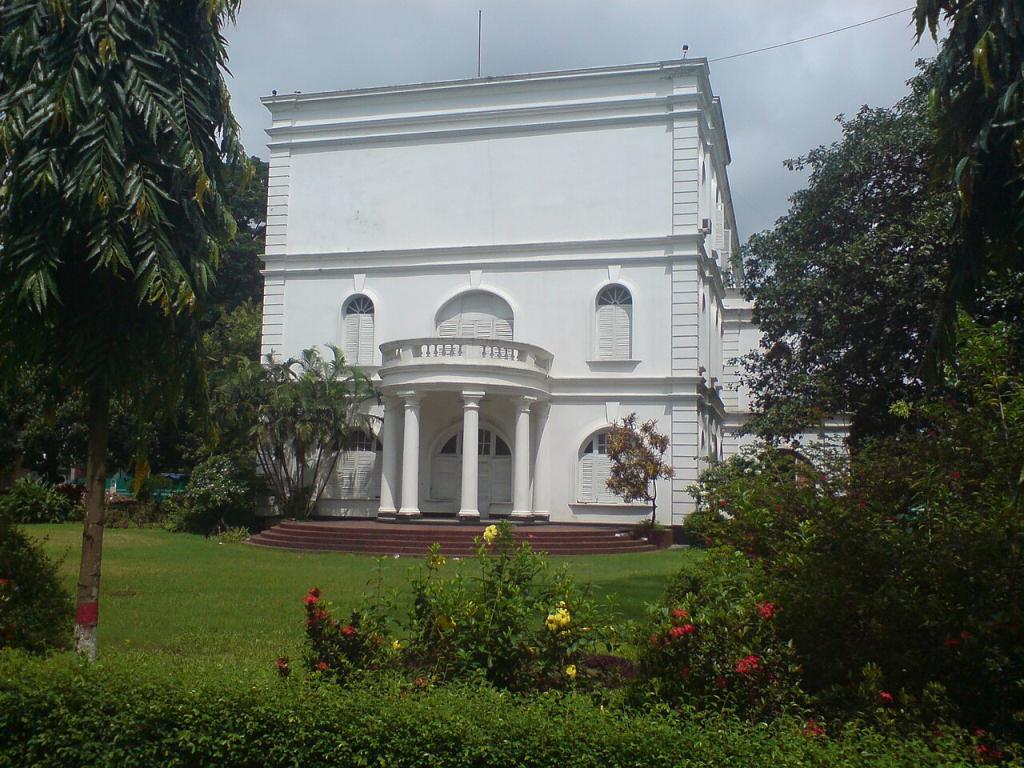
The Bangla Academy was established on 3 December 1955, when the Chief Minister of East Bengal, Abu Hussain Sarkar, inaugurated it at Burdwan House in Dhaka. The demand for such a body had been voiced by the linguist Dr Muhammad Shahidullah as early as 1948 and was written into the 21 point programme of the United Front before the 1954 provincial election. Housed in the historic Burdwan House on Kazi Nazrul Islam Avenue, beside the University of Dhaka and Suhrawardy Udyan, the academy became the official regulatory body for the Bengali language in Bangladesh: it researches the language and its literature, sets rules of usage, publishes dictionaries, books and journals, and organises the month long Ekushey Book Fair every February.
The Literary Award sits inside that wider mission as its best known act of recognition. Where the academy works all year on language and scholarship, the award speaks once a year about people. It is a civilian honour for individual achievement, judged writer by writer and category by category. A writer does not apply for it, and receiving it says nothing automatic about the academy as an institution, just as the academy itself is much more than the award that carries its name into the headlines each winter.
Origins: 1960 and the First Winners
The award was introduced in 1960, five years after the academy was founded. Its first list, for 1960, named seven recipients and already showed the breadth the honour would keep. Farrukh Ahmad received it for poetry, the first poet to do so, Abul Mansur Ahmed for the short story, Abul Hashem Khan for the novel, Abdullah Hel Kafi and Mohammad Barkatullah for essay and research, Askar Ibne Shaikh for drama, and Khan Mohammad Moinuddin for juvenile literature. These were senior figures of the Bengali Muslim literary world of East Pakistan, and honouring them together announced that the young academy intended to define a canon, not merely to reward a season of books.
At the start the award recognised six fields: poetry, novels, short stories, essays, juvenile literature and translation. The lists of the 1960s show how quickly it became the honour that marked a generation. Syed Waliullah won for the novel in 1961, Sufia Kamal for poetry and Munier Choudhury for drama in 1962, and Alauddin Al Azad for the short story in 1965. In 1966 Syed Shamsul Haque received it for the short story at the age of 31, the youngest recipient in its history. Al Mahmud followed for poetry in 1968 and Shamsur Rahman for poetry in 1969. By the end of its first decade the award had already recognised many of the names on which the literature of independent Bangladesh would later rest.
Categories: Then and Now
The category set has never stood still. The original six fields of 1960 covered poetry, the novel, the short story, the essay, juvenile literature and translation. Beginning in 1985, two more awards were introduced to recognise overall contributions to Bengali language and literature, a sign that the honour was shifting from single books toward lifetimes of work. In later decades the published lists were grouped in three broad fields: poetry, novel and short story; research, essay and science; and translation, drama and juvenile literature. Newer categories then grew around the concerns of the state and the reading public, among them literature on the Liberation War, folklore, biography and travel writing, science writing and research on Bangabandhu Sheikh Mujibur Rahman.
In practice the number and naming of categories varies from year to year, and readers should treat any single list as the shape of one round rather than a permanent rule. The 2023 award, announced in January 2024, was given in 11 categories to 16 people, with some categories shared jointly. The 2025 award, announced in February 2026, was trimmed to eight categories: poetry, fiction, essay and prose, children's literature, translation, research, science and Liberation War writing, with drama and folklore left out that year. Across recent rounds the recurring core has been:
- Poetry
- Fiction, covering the novel and the short story
- Essay and prose, often joined with research
- Research, as its own category in several recent rounds
- Children's literature, also called juvenile literature
- Drama and dramatic literature
- Translation
- Science writing, sometimes joined with environment
- Liberation War literature and research
- Folklore, biography and travel writing in the years they are included
How Winners Are Chosen
There is no entry form and no application. Reporting on recent rounds, drawing on the academy's own statements, describes a three stage process. First, a proposal committee, drawn from the fellows of the Bangla Academy, puts forward names in each category; accounts of the process describe a body of up to about thirty proposers. Second, a smaller Bangla Academy Literary Award Committee, described in press reporting as a seven member body of eminent writers, educationists and researchers together with the Director General and two members of the Executive Council, settles the recommended list from the names proposed to it. It cannot add names of its own. Third, the Executive Council of the academy gives the final approval, after which the Director General announces the winners, usually in January or February, shortly before the Ekushey Book Fair opens.
The award is generally treated as a once in a lifetime honour for a writer, which is part of why each annual list attracts such close reading. It is also why the process itself periodically becomes news. After the disputed 2024 round, discussed below, the Cultural Affairs Adviser publicly criticised the nomination method, arguing that the award committee had too little time and too little material before it to judge the nominees properly, and a reform committee for the academy was announced. That debate belongs to the award's recent history, and it underlines a simple point: in Bangladesh the question of who chooses the winners is considered almost as important as the winners themselves.
What Recipients Receive
Each recipient receives a cash prize of Tk 300,000 (three lakh taka), together with a crest and a certificate; reports of the February 2026 ceremony also describe a medal and the cheque being handed over together. The cash value has risen over the decades as the award grew in standing: the prize stood at Tk 100,000 in the mid 2010s, and the three lakh taka figure has been reported consistently from the rounds at the end of that decade onward.
The presentation is part of the prize. By long standing practice the head of government hands the awards to the winners in person at the inauguration of the Amar Ekushey Book Fair on the Bangla Academy premises. Prime ministers performed the ceremony for many years; the 2024 awards were presented at the fair's opening in February 2025 during the interim government period, and Prime Minister Tarique Rahman presented the 2025 awards on 26 February 2026. For a writer, receiving the honour on that stage, at the start of the country's book month, is a form of public recognition that no cheque alone could give.
Notable Winners Across the Decades
More than 300 poets and writers had received the award by 2020, and the roll reaches into almost every corner of modern Bengali writing. The 1970s lists include Hasan Azizul Haque, honoured for the short story at the start of that decade and later regarded as one of the masters of the form in Bangladesh. In 1980 Selina Hossain received the award, early recognition for a novelist who would go on to lead the academy itself as its president. In 1981 the novel category went to Humayun Ahmed, then at the start of the career that would make him the most widely read Bangladeshi novelist of his generation. Humayun Azad followed in 1986, recognised for his contribution to Bengali linguistics alongside his poetry and fiction.
The pattern continued in later decades. Syed Manzoorul Islam was honoured in 1996 and Sanjida Khatun in 1998, and in the 2000s the science category recognised Muhammed Zafar Iqbal, whose science writing and science fiction had built a new young readership for Bengali books. Some names return across the whole story of the award. Syed Shamsul Haque, the youngest winner of 1966, remained a central figure of Bangladeshi letters for fifty years, writing in nearly every branch of literature. Shamsur Rahman, the poetry winner of 1969, became the defining poet of independent Bangladesh. To read the full winners lists decade by decade is to watch the country's literature change hands from the generation of the Language Movement to the writers of the present day.
The Most Recent Awards: 2024 and 2025
The 2024 award and its revised list
The 2024 round became the most contested in the award's recent history. On 23 January 2025 the academy announced ten winners: Masud Khan (poetry), Selim Morshed (fiction), Subhasish Sinha (drama), Salimullah Khan (essay and prose), Faruk Nawaz (children's literature), G. H. Habib (translation), Muhammad Shahjahan Mia (research), Rezaur Rahman (science), Mohammad Hannan (Liberation War) and Syed Jamil Ahmed (folklore). Two days later, after public criticism of some names on the list, the academy suspended it. An Executive Council reevaluation meeting on 29 January 2025 then finalised a revised list of seven winners: Masud Khan, Salimullah Khan, G. H. Habib, Subhasish Sinha, Muhammad Shahjahan Mia, Rezaur Rahman and Syed Jamil Ahmed. The names of Selim Morshed, Faruk Nawaz and Mohammad Hannan did not appear in the revised list. The seven awards were presented at the inauguration of the Amar Ekushey Book Fair 2025.
The 2025 award
The 2025 round was announced on 23 February 2026, later in the season than usual because the book fair itself opened late that year. Nine writers were named in eight categories: Mohon Raihan (poetry), Nasima Anis (fiction), Syed Azizul Haque (essay and prose), Hasan Hafiz (children's literature), Ali Ahmad (translation), Mustafa Majid and Israil Khan (research, shared), Farseem Mannan Mohammedy (science) and Moidul Hasan (Liberation War). Prime Minister Tarique Rahman presented the awards at the inauguration of the Amar Ekushey Book Fair 2026 on 26 February 2026. Eight recipients received the award at the ceremony: the poetry award to Mohon Raihan was withheld amid allegations, as reported by The Daily Star on the day of the ceremony, so his name stands in the announced list but not among those who were handed the prize that day.
The Award and the Ekushey Book Fair
The award cannot be separated from the fair at whose opening it is given. The Amar Ekushey Book Fair began in a small way in 1972, when the publisher Chittaranjan Saha of Muktadhara set out books on the academy premises in memory of the martyrs of the 1952 Language Movement. The Bangla Academy took over the organisation of the fair in 1978, and in 1984 it received its present name. It now runs through February on the academy premises and the adjoining Suhrawardy Udyan, and it is the centre of the Bangladeshi publishing year, the month when most new Bengali books appear.
Presenting the Literary Award at the fair's inauguration joins the country's highest literary judgement to its largest literary gathering. The same ceremony that opens a month of book selling also names the writers the academy considers the year's standard bearers, and publishers, journalists and readers take the list as a guide to reputations. A place on the list can return a writer's older books to print and to the fair's stalls, which is one reason the announcement, and any dispute about it, is followed so closely.
Its Place in Bengali Literary Life
Within the wider system of national awards of Bangladesh, the Bangla Academy Literary Award holds a specific position. The Ekushey Padak and the Independence Award are state honours across many fields, given by the government. The Bangla Academy award is narrower and, for writers, more personal: it comes from the country's own house of language and literature, it is confined to Bengali letters, and it has been given every year since 1960, through the Pakistan period, the Liberation War era and the decades of independent Bangladesh. For most Bengali writers it is the first of the great national honours to arrive, and often the one that confirms a career.
Its authority is argued about precisely because it matters. The suspension and revision of the 2024 list, and the withheld poetry award of 2025, drew criticism and defence in equal measure, and both episodes are now part of the record this article has set out with their dates. Through all of it, the basic fact has not changed since Farrukh Ahmad and Abul Mansur Ahmed headed the first list in 1960: to be named a Bangla Academy Literary Award winner is to be written into the official memory of Bengali literature, in the company of the poets, novelists and scholars who made that literature what it is.