Khulna University of Engineering and Technology, known to everyone in Bangladesh as KUET, is the public engineering university of the country's south-west. It stands on a green, largely residential campus at Fulbarigate, on the north-western edge of Khulna city, beside the highway that runs north towards Jessore and Dhaka. From this campus it trains most of the engineers who build the roads, embankments, power systems and water supplies of Khulna Division and the coastal belt, a region defined by rivers, cyclones and salt water.
KUET's history is longer than its title suggests. It began in 1967 as Khulna Engineering College, opened its classrooms in 1974, spent seventeen years as the Bangladesh Institute of Technology (BIT), Khulna, and became a full university on 1 September 2003, growing from 120 students and nine teachers into an institution of around twenty departments and three research institutes. Its recent history has also been turbulent: violence in February 2025 closed the university for more than five months, the longest shutdown in its history, before regular teaching resumed.
From Engineering College to University
The institution was established in 1967 as Khulna Engineering College, under the University of Rajshahi, to meet the demand for professional engineers in the southern districts of what was then East Pakistan. The college's foundation was laid in the Pakistan period, but its academic life began after independence: teaching started on 3 June 1974, with a first intake of 120 students and nine teachers, and the college awarded its degrees through Rajshahi University. Its first principal was Professor Abul Kalam Azad.
Its teachers, students and professional bodies argued that an affiliated college, dependent on a distant university for degrees and budgets, could not develop as the region needed. Through a collective campaign by the country's four engineering colleges, that argument prevailed: on 1 July 1986 the college was converted by ordinance into an autonomous degree-awarding institution, the Bangladesh Institute of Technology (BIT), Khulna, one of four BITs created at the same time.
BIT autonomy proved a halfway house: the institutes awarded their own degrees but remained governed through a central board, and through the 1990s their teachers and students campaigned for full university status. Under an act of Parliament, BIT Khulna became the Khulna University of Engineering and Technology on 1 September 2003, the same day its sister institutes were raised to universities in Chittagong, Rajshahi and Dhaka. The parallel story of the oldest of those institutions is told in the profile of Bangladesh University of Engineering and Technology (BUET). Professor Dr Md Nawsher Ali Moral became KUET's first vice-chancellor, in an acting capacity in its first year.
University status widened what KUET could teach. New departments opened in fields the old college had never offered: Urban and Regional Planning and Leather Engineering in 2010, Textile Engineering in 2012 and Building Engineering and Construction Management in 2014, followed by programmes in biomedical engineering, materials science, chemical engineering, mechatronics and energy science. Postgraduate study expanded into a substantial school of master's and doctoral research. The first of September is still marked each year as the university's founding anniversary.
The Fulbarigate Campus
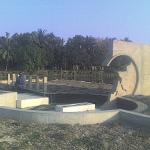
KUET occupies a single planned campus at Fulbarigate, in the Teligati area north-west of Khulna city, roughly 11 to 15 kilometres from the city centre depending on the route measured. Sources also differ on its area: the university has long described about 101 acres, while more recent listings give about 117 acres. Its layout is planned in functional zones: student housing, housing for teachers and staff, an academic zone of departmental buildings, laboratories and workshops between them, and a cultural and recreational zone.
Within the boundary are the facilities of a small self-contained town: departmental buildings, an administrative building, a central library, a computer centre, an auditorium, a central mosque, a medical centre, a bank, a post office, shops and playing fields. The main gate on KUET Road, giving onto the Khulna to Jessore highway, is the campus's best known landmark.
The setting matters to the university's work. Khulna is the gateway city to the south-western coastal belt and the Sundarbans, and the campus sits among the tidal rivers of the delta. The problems visible from its gates, saline groundwater, embankments holding back tidal rivers and cyclone exposure, are the problems its departments study.
Faculties, Departments and Study
Teaching is organised in three engineering faculties, supported by a Faculty of Science and Humanities whose departments (Mathematics, Chemistry, Physics, and Humanities and Business) teach the basic sciences and run postgraduate programmes. Sources differ on how the structure is counted. The clearest current picture comes from admissions: for 2025-26 KUET admitted students into sixteen undergraduate departments under its three engineering faculties, while reporting in July 2025 described activity across twenty departments under four faculties in total.
The Faculty of Civil Engineering covers Civil Engineering, Urban and Regional Planning, Building Engineering and Construction Management, and Architecture, the last a five-year programme where the engineering degrees run for four years. The Faculty of Electrical and Electronic Engineering groups Electrical and Electronic Engineering, Computer Science and Engineering, Electronics and Communication Engineering, Biomedical Engineering and Materials Science and Engineering. The Faculty of Mechanical Engineering, with seven departments, is the largest: Mechanical Engineering, Industrial Engineering and Management (whose undergraduates take the Industrial and Production Engineering degree), Leather Engineering, Textile Engineering, Energy Science and Engineering, Chemical Engineering and Mechatronics Engineering. For 2026-27 the university's admission guidance lists seventeen undergraduate departments, adding a new Department of Artificial Intelligence and Cyber Security. Any single count therefore needs its date: sixteen admitting departments in 2025-26, seventeen listed for 2026-27, and about twenty departments in all once science and humanities are included.
Alongside the departments sit three institutes: the Institute of Information and Communication Technology, the Institute of Disaster Management, and the Institute of Environment and Power Technology. Degrees run from the bachelor's through the master's to the PhD, and KUET is counted among the small group of Bangladeshi engineering universities that award doctorates in engineering and technology. Teaching and examinations are conducted in English.
Admission and Student Numbers
Admission to KUET is by a competitive written test, and for three sessions it was not KUET's alone. From the 2021-22 session, KUET, the Chittagong University of Engineering and Technology (CUET) and the Rajshahi University of Engineering and Technology (RUET) held a combined cluster admission test, under which a single examination served all three universities. That arrangement ended after the 2023-24 session. For 2024-25 each of the three universities returned to its own test, and KUET has run its own admission process since, a position confirmed by its 2025-26 and 2026-27 admission circulars. Any description of KUET admission through a combined engineering cluster is therefore out of date.
For the 2025-26 session, KUET's own test was held on 15 January 2026, at centres on its own campus and at BUET in Dhaka. Of 11,713 candidates, 10,465 sat the examination, an attendance rate of 89.35 per cent reported by the state news agency BSS. The university admitted 1,065 students across its sixteen departments: 120 seats each in Civil, Electrical and Electronic, Mechanical and Computer Science and Engineering; sixty each in seven departments including Electronics and Communication, Leather, Textile, Urban and Regional Planning and Materials Science; forty in Architecture; thirty each in Biomedical, Energy Science, Chemical and Mechatronics Engineering; and five reserved seats for candidates from small ethnic communities and the hill districts of Chittagong Division. For 2026-27 the university has announced a larger intake of 1,105 seats across seventeen departments, with its test scheduled for January 2027.
Total enrolment figures vary by source and year. Recent reference listings put the student body at about 7,900, roughly 5,900 undergraduates and 1,800 postgraduates; reporting from the campus in July 2025 spoke of more than 7,000 students. An institution that opened with 120 students now admits more than a thousand new undergraduates every year.
Research for a Saline South-West
KUET's research identity follows its geography. The south-west is Bangladesh's salinity frontier: tidal rivers push salt water inland, groundwater around Khulna carries high salinity and iron, and cyclones, flooding and river erosion repeatedly displace coastal families. The Institute of Disaster Management works directly on these questions: its researchers have studied community-based adaptation in agriculture and drinking water across six south-western sub-districts, measuring soil and pond water salinity, and have examined climate-induced migration into Khulna city, finding cyclones, flooding, erosion and salinity among its principal drivers. The university's International Conference on Civil Engineering for Sustainable Development (ICCESD), whose eighth edition was held at KUET in February 2026, gives this coastal research a regular international platform.
Water research is practical as well as academic: studies of the campus's own water supply have assessed the treatment plant serving the residential campus, in a city where safe drinking water is a standing problem. Civil, planning and architecture researchers work on embankments, drainage, housing and the planning of Khulna itself; mechanical and energy researchers on renewable energy for coastal populations; and the leather and textile departments on two signature export industries, including the effluent problems of tanneries and dyeing. Consultancy and testing for government and industry tie much of this work to real projects in the region.
Student Life and Halls
KUET is a substantially residential university, and hall life is the centre of its student culture. There are seven halls of residence, six for men and one for women. They include Amar Ekushey Hall, named for the martyrs of the Language Movement; Fazlul Haque Hall, named for Sher-e-Bangla A. K. Fazlul Huq; Lalan Shah Hall; Khan Jahan Ali Hall, named for the saint associated with Khulna's founding; Dr M. A. Rashid Hall; and Begum Rokeya Hall, the women's hall. The seventh hall, long known as Bangabandhu Sheikh Mujibur Rahman Hall, was renamed Shaheed Smrity Hall in November 2024. Each hall is run by a provost with assistant provosts, and provides a dining room where lunch and dinner are served on a monthly prepaid basis, a library and reading room, a prayer room, and common rooms with television, newspapers and magazines. Most undergraduate rooms house four students; Amar Ekushey Hall also has two-seat rooms used by graduate students.
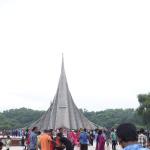
Beyond the halls, the campus supports inter-hall and inter-department sport, cultural and debating societies, departmental festivals and student clubs that include an active photographic society. The inter-university chess competition hosted at KUET in May 2026, drawing players from nineteen universities, is a recent example of the campus returning to its normal calendar. For many students from the south-west, KUET is also the first institution of national standing within reach of home.
KUET and the Khulna Region
Khulna Division has long needed its own engineers. Its economy rests on the port of Mongla, the Khulna Shipyard, jute and shrimp processing, fisheries, agriculture on saline land, and the road, bridge and embankment networks that hold a delta region together. The opening of the Padma Bridge in 2022, tying the south-west directly to Dhaka, raised the premium on exactly the skills KUET teaches: civil engineers for new transport corridors, planners for growing towns, industrial engineers for port-led development around Mongla, and water specialists for a coastline under climate pressure.
KUET supplies that workforce and much of the region's technical advice: its graduates staff the public works, water, power and local government engineering offices of the south-west and the private firms building its infrastructure. It also anchors Khulna's claim to be a complete education city alongside Khulna University, the general public university at Gollamari: between them, the two give the south-west both a broad university and a specialist engineering university.
Crisis and Closure: 2025 and After
After the fall of the Awami League government in August 2024, Vice-Chancellor Professor Mihir Ranjan Halder resigned on 12 August 2024 amid student protests. Professor Muhammad Mashud, a KUET professor of mechanical engineering, was formally appointed vice-chancellor on 5 September 2024 for a four-year term.
On 18 February 2025, clashes broke out on and around the campus between KUET students and activists of Jatiyatabadi Chhatra Dal, the student wing of the BNP, joined according to reporting at the time by people from outside the university, in a dispute centred on demands to ban student politics at KUET. Injury figures in reliable reporting vary, from more than fifty to over one hundred and fifty hurt; what is consistent is that the violence was serious and many students were injured. Students accused the administration of failing to protect them, locked academic and administrative buildings, and demanded a ban on student politics and the resignation of the vice-chancellor, the pro-vice-chancellor and the director of student welfare. On 25 February 2025 the university suspended academic activities indefinitely and closed the halls, beginning the longest closure in its history.
The deadlock lasted months. Students re-entered the closed campus in mid-April 2025; a syndicate meeting temporarily expelled 37 students in connection with the February violence; and from 22 April students held a hunger strike demanding the vice-chancellor's removal. On 25 April 2025 the Ministry of Education relieved Vice-Chancellor Muhammad Mashud and Pro-Vice-Chancellor Sheikh Shariful Alam of their duties (some reports date the decision to 26 April). Professor Md Hazrat Ali of CUET was appointed acting vice-chancellor on 1 May 2025, but resigned on 22 May under pressure from KUET teachers. Only with the appointment on 24 July 2025 of Professor Dr Md Maksud Helali, a retired BUET professor of mechanical engineering, who assumed office on 25 July, did the university find a path back: classes resumed on 29 July 2025, after a closure of about 160 days. A government-formed investigation reported in February 2026 alleged financial and appointment irregularities by the former vice-chancellor in connection with a German-funded research project; he rejected the findings as biased and fabricated. This article records those allegations only as disputed claims, not as established fact.
On 16 March 2026 the Education Minister announced that Professor Muhammad Mashud had been reappointed as vice-chancellor, returning to the post from which he had been relieved the previous April. He was in office through 2026, inaugurating university events as vice-chancellor in May 2026, and as of November 2026 he remains KUET's vice-chancellor. The university is still absorbing the closure's costs in lost teaching time and trust.
KUET Today
A college that opened in 1974 with 120 students is now the engineering university of the south-west: about twenty departments, three institutes, more than a thousand undergraduate admissions a year, a doctoral school, and a research agenda written by its coastline, salinity, cyclones, port and industries.
Its unfinished business is equally clear. The 2025 closure cost students more than five months, and the questions behind it, about campus politics, student safety and governance, have been managed rather than permanently settled. As of November 2026, under Vice-Chancellor Professor Muhammad Mashud, reappointed on 16 March 2026, KUET's task is to make its teaching and research, rather than its crises, the reason the country talks about Fulbarigate.