Rajshahi University of Engineering and Technology, known everywhere in Bangladesh by its acronym RUET, is the engineering university of the country's north. From a green campus at Kazla in Rajshahi, it has trained engineers for more than six decades, first as a small college teaching three subjects to classes of about 120 students, and today as a PhD-granting public university admitting well over a thousand new students a year. Its motto, "Heaven's Light is Our Guide", sits above a history that tracks the wider story of technical education in Bangladesh: a college founded under a general university, an institute created in the 1980s drive for administrative reform, and a full university since 2003. RUET remains the only full-fledged engineering university in the northern part of the country, and its graduates staff the roads, power, water and industry projects of the entire Rajshahi and Rangpur region.
Origins: Rajshahi Engineering College, 1964
Before independence, the Government of East Pakistan faced a growing shortage of professional engineers for its development programmes. Its answer in the north was Rajshahi Engineering College, established in 1964 as a faculty of engineering under the University of Rajshahi. It was only the second engineering college founded in what was then East Pakistan, after the Ahsanullah Engineering College in Dhaka, the institution that later became BUET.
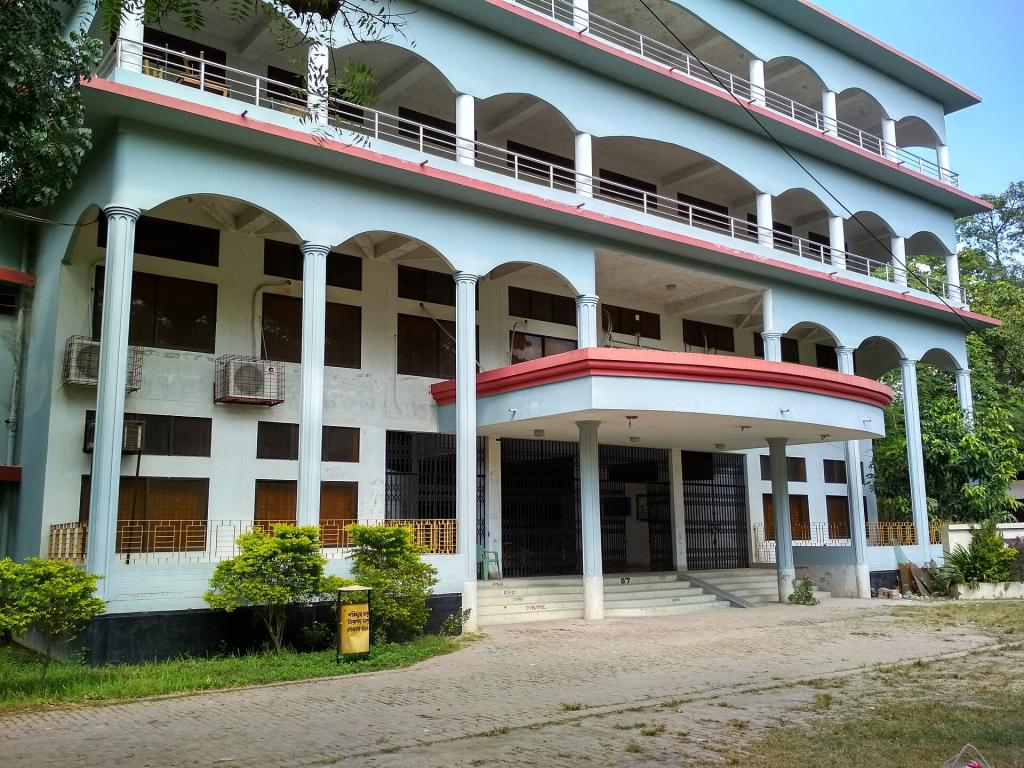
The college began modestly. It opened with just three departments, Civil Engineering, Electrical and Electronic Engineering, and Mechanical Engineering, offering bachelor's degrees only. Its first class, in the academic session of 1964-65, numbered about 120 students, and the second class a year later was of a similar size. The campus at Kazla, on the eastern edge of Rajshahi city, gave the young institution room to grow: workshops, laboratories and halls of residence rose alongside the academic buildings on what is now a campus of about 152 acres.
The Liberation War of 1971 and the birth of Bangladesh changed the country around the college, and through the 1970s and early 1980s a series of education committees and commissions reviewed how technical education should be organised. Their common conclusion was that the engineering colleges needed greater autonomy and a clearer administrative structure if they were to expand and improve.
The BIT Rajshahi Years, 1986 to 2003
Acting on those recommendations, the government converted Rajshahi Engineering College in 1986 into the Bangladesh Institute of Technology, Rajshahi, universally shortened to BIT Rajshahi. Rajshahi was one of several engineering colleges given the same treatment in this period, and the change was meant to raise the quality and efficiency of technical education by freeing the institution from some of the constraints of its earlier status.
The BIT years were a period of consolidation rather than dramatic expansion. The institute continued to teach its core engineering disciplines, developed its laboratories and workshops, and built the academic base on which a university could later stand. Yet the BIT structure was always understood as a step along the way. Staff and students pressed for full university status, which would bring degree-granting independence, a stronger research mandate and the power to open new departments as the economy demanded them.
University Status and the Modern RUET
That status arrived in September 2003, when BIT Rajshahi was upgraded to a full-fledged public university and renamed the Rajshahi University of Engineering and Technology under the Rajshahi University of Engineering and Technology Act, 2003. RUET is an autonomous statutory body, funded by the government through the University Grants Commission of Bangladesh.
University status unlocked steady growth. New departments were added around the founding three, postgraduate teaching expanded to master's and PhD level, and the intake grew from a few hundred students a year to more than a thousand. The university's leadership has changed with the times. The current Vice-Chancellor is Professor S. M. Abdur Razzak, a professor of the Department of Electrical and Electronic Engineering who has taught at RUET since 1999 and previously served as head of his department and as dean of the Faculty of Electrical and Computer Engineering. He was appointed on 27 October 2024 by order of the President and Chancellor, and assumed office on 28 October 2024 for a four-year term, after his predecessor Professor Jahangir Alam resigned on 31 August 2024. In January 2026 Professor Razzak was also elected president of the Bangladesh University Council, the association of public university vice-chancellors.
Campus and Location
RUET stands at Kazla in the Motihar area of Rajshahi, about five kilometres east of the city centre, on the northern side of the Rajshahi to Natore to Dhaka highway. Its postal address, Rajshahi 6204, is known to generations of applicants. Rajshahi itself is one of Bangladesh's oldest centres of learning, a divisional city on the Padma River famous for mangoes and silk, and RUET shares the Motihar educational quarter with its parent institution, the University of Rajshahi.
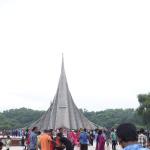
The campus covers about 152 acres and is laid out in distinct functional zones: an academic zone of classroom buildings, laboratories and workshops; residential zones for students; housing for teachers and staff; and cultural, social and recreational space. It is a notably green campus, planted with mango, litchi, coconut and other trees, and its facilities include a central library, an auditorium complex, a central mosque, a medical centre, a gymnasium and playing fields, and the university's own Shaheed Minar. For a residential engineering university drawing students from every district, the self-contained campus is a large part of the RUET experience.
Faculties and Departments
RUET today has 18 departments under four faculties. Fourteen of the departments award undergraduate degrees; the other four are teaching departments that support the engineering programmes and run postgraduate study in the basic sciences and humanities.
The Faculty of Civil Engineering covers the built environment: Civil Engineering, Urban and Regional Planning, Architecture, and Building Engineering and Construction Management. The Faculty of Electrical and Computer Engineering brings together Electrical and Electronic Engineering, Computer Science and Engineering, Electronic and Telecommunication Engineering, and Electrical and Computer Engineering. The Faculty of Mechanical Engineering is the largest by number of departments, with Mechanical Engineering, Industrial and Production Engineering, Mechatronics Engineering, Materials Science and Engineering, Chemical Engineering, and the department long known as Glass and Ceramic Engineering, now listed in admission documents as Ceramic and Metallurgical Engineering. The Faculty of Applied Science and Humanities houses Mathematics, Physics, Chemistry and Humanities, which teach the foundational subjects and offer postgraduate degrees only.
Alongside the bachelor's programmes, the departments run Master of Science, Master of Engineering and PhD programmes, and the university also hosts interdisciplinary institutes described below. Seat numbers underline where demand is concentrated: Civil Engineering, Electrical and Electronic Engineering, Computer Science and Engineering and Mechanical Engineering each admit 180 students a year, the largest intakes in the university.
Admission and Students
Admission to RUET is among the most competitive in Bangladesh. For several years the university admitted students through the combined engineering cluster test shared with Chittagong University of Engineering and Technology (CUET) and Khulna University of Engineering and Technology (KUET), a system meant to spare applicants repeated journeys and examinations. That cluster has now ended. All three universities withdrew from it for the 2024-25 admission cycle, KUET first and RUET last, and each now runs its own test. RUET's Vice-Chancellor explained at the time that once the other members had chosen independent tests, RUET had little option but to follow.
Under its own system, RUET shortlists applicants on their Higher Secondary Certificate results in mathematics, physics, chemistry and English, and then holds a written admission test. For the 2025-26 session, applications ran in December 2025 and the test was held on 22 January 2026. Candidates apply in two groups: Group Ka for engineering and Urban and Regional Planning, and Group Kha for those who also seek Architecture, which adds a freehand drawing test. In total, RUET offered 1,235 seats across its 14 undergraduate departments for 2025-26, including a small number of reserved seats, and roughly 19,000 shortlisted candidates were expected to compete for them.
Published totals for the whole student body vary between sources and years, but with an annual intake above 1,200 undergraduates plus its postgraduate cohorts, RUET's total enrolment is in the region of six to seven thousand students. What is not in doubt is the direction of travel: a college that began with 120 students in a single class now adds that many students roughly every five weeks of an admission year.
Research and Institutes
Research at RUET is organised through its departments, a Research and Extension unit, and two established interdisciplinary institutes. The Institute of Information and Communication Technology (IICT) supports advanced work and training in computing and communications. The Institute of Energy and Environmental Studies (IEES), approved by the university syndicate in October 2016, runs postgraduate programmes up to PhD level in energy and environmental engineering, with research spanning renewable energy, energy efficiency and auditing, waste to energy conversion and environmental sustainability. IEES is a natural fit for its region: northern Bangladesh combines strong solar resources with acute questions about groundwater, energy access and climate resilience.
Departmental research follows the same practical bent. Electrical engineers work on photovoltaic systems, smart grids and power control; civil engineers study flood risk, riverbank erosion and urban drainage in the northern districts; mechanical and chemical engineers work on turning agricultural and organic waste into useful products. The university has pushed in recent years to tie this work more tightly to national and social needs. In February 2026 the Vice-Chancellor opened a two-day seminar reviewing ongoing research projects for the 2025-26 fiscal year with a call for research with clearly defined goals, and in April 2026 he used a campus competition on industrial energy and green transition to argue that Bangladesh must ensure energy security from alternative sources rather than ever greater pressure on fossil fuels. In May 2026 it was reported that the B.Sc. programmes in Civil Engineering, Electrical and Electronic Engineering and Computer Science and Engineering had received six-year accreditation from the Board of Accreditation for Engineering and Technical Education (BAETE), valid from January 2026 to January 2032.
Student Life and Halls
RUET is a predominantly residential university, and the halls of residence are the centre of student life. The university's own programme literature lists seven halls with a combined capacity of about 2,100 students, among them Shahid Lt. Selim Hall, Shahid Shahidul Islam Hall, Shahid Abdul Hamid Hall, Shahid President Ziaur Rahman Hall and the women's hall, alongside the Tin Shed Hall extension. Hall capacity covers only part of the student body, around 40 per cent on the university's own accounting, and every non-resident student is formally attached to a hall so that the welfare system reaches them too. Students who cannot be housed on campus live in the neighbourhoods around the gates, in Kazla, Talaimari and Binodpur, which together form an extended student quarter of messes and rented rooms.
Daily life runs through the Directorate of Students' Welfare, the central cafeteria, the auditorium and the playing fields. Cultural programmes, debates, sports competitions and club activities fill the calendar between laboratory sessions, and the Shaheed Minar at the heart of the campus anchors the commemorations of Language Martyrs' Day and Independence Day. For many students from the northern districts, RUET is also the first big city institution they have belonged to, and the hall communities are where its strong alumni networks begin.
RUET and the North-West
RUET's importance is easiest to see on a map. North of the Padma and Jamuna rivers, it is the region's only dedicated engineering university, the place where the north-west produces its own civil, electrical, mechanical and computer engineers instead of importing them from Dhaka. Its graduates build and maintain the roads, bridges, power distribution networks, irrigation and drainage systems and municipal services of Rajshahi and Rangpur divisions, and they staff the government engineering departments and development bodies that serve the Barind tract and the northern char lands.
The fit between the university's expertise and its region is close. The dry Barind area needs exactly the skills RUET teaches: water management, drought-resilient infrastructure, agricultural mechanisation, food and agro-processing, and planning for fast-growing district towns. Its ceramics and materials work speaks to a region of brickfields, silk and small manufacturing; its energy institute speaks to a region where solar power and efficient irrigation pumping matter daily. Through consultancy, testing and the everyday presence of thousands of students and staff, the university is also one of Rajshahi city's major institutions and employers.
Challenges and Recent Developments
RUET's challenges are those of a growing public university on a fixed site. Housing is the most visible: hall places for only about two students in five leaves the majority to the private market around the campus. Research funding and laboratory modernisation must compete with the costs of a much larger student body than the campus was built for, and the end of the cluster admission system has returned the burden of separate national admission tests to applicants and universities alike. Like other Bangladeshi engineering schools, RUET also watches many of its strongest graduates leave engineering for the civil service or for careers abroad, a flow the university publicly celebrates in its BCS successes even as it raises questions about where scarce technical talent does the most good.
Recent developments point to an institution widening its offer. Beyond the reported BAETE accreditation of its three largest programmes and the Vice-Chancellor's election to lead the Bangladesh University Council, the university decided in October 2026 to establish a Foreign Language Centre, initially offering German and Japanese courses to support students aiming at higher study, scholarships and careers in those countries. Six decades after it opened as a three-department college, RUET is still doing the job it was founded for, supplying the north with engineers, while steadily adding the research institutes, accreditations and international links of a mature university.