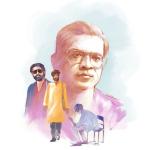
Brojen Das (9 December 1927 – 1 June 1998) was a Bangladeshi swimmer who, competing for Pakistan in the years before Bangladesh existed, became the first Asian to swim the English Channel. Between 1958 and 1961 he crossed the Channel six times, a tally no swimmer before him had reached, and on his final crossing, in September 1961, he set the world record for the France-to-England swim. Open-water swimming records list him as "King of the Channel" from 1960 to 1974. A sprinter from the river country of Bikrampur who trained in the Buriganga, Das also did much to build organised swimming in Dhaka, and after independence he helped to run the Bangladesh Swimming Federation. Bangladesh honoured him with its National Sports Award in 1976 and, a year after his death, with its highest civilian award, the Independence Day Award.
Early life and education
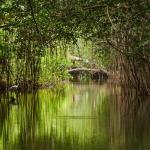
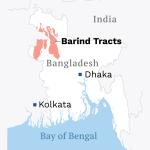
Brojen Das was born on 9 December 1927 in Kuchiamora village in Bikrampur, in what is now Sirajdikhan, Munshiganj district, the son of Harendra Kumar Das. Bikrampur, the historic region south of Dhaka, is a land of rivers and ponds, and Das was an adept swimmer from boyhood, making the Buriganga River his training ground. He had his primary education in his native village, passed his matriculation in 1946 from K. L. Jubilee High School in Dhaka, and went on to take his Intermediate and Bachelor of Arts degrees from Vidyasagar College in Kolkata, according to Banglapedia's entry on him.
A champion in home waters
Das first made his name as a sprinter. He was an inter-school champion in the mid-1940s and an inter-college champion in 1948–49, and he first dazzled Dhaka crowds in the 100, 200 and 400 metres as a member of the Kashipur Swimming Club of Narayanganj. In 1952 he won the West Bengal championship in the 100 metres freestyle. Through the mid-1950s he dominated East Pakistan swimming, holding the provincial titles in the 100, 200, 400 and 1500 metres freestyle between 1953 and 1956, and in 1955 he also became Pakistan national champion in the 100 and 400 metres freestyle. It was on his initiative that the East Pakistan Sports Federation introduced an annual swimming competition in Dhaka, first held in 1953 — an early sign of the organiser he would later become. His endurance was as notable as his speed: he is recorded as having completed a non-stop 48-hour swim covering about 60 miles in a Dhaka swimming pool, besides long pool swims of 12 and 26 miles.
His ambitions, though, were Olympic. According to a detailed profile in Pakistan's The News, Das had hoped to be selected for Pakistan's team at the 1956 Melbourne Olympics, but an injured arm cost him his place, and the disappointment turned him towards long-distance sea swimming instead. (Some family-maintained lists describe him as a member of the 1956 Olympic team; the profile's account of a near-miss is followed here.)
The road to Dover
In 1958 Das received an invitation to take part in the English Channel Swimming Competition, and accepted. His preparation was done entirely in home waters. He trained in the Shitalakshya and in the most turbulent part of the lower Meghna — the great rivers of Bangladesh were his training pool — and as a final test he swam from Narayanganj to Chandpur, a distance of about 46 miles that took a steamer roughly two and a half hours. On the way to England he stopped in Italy, where in July 1958 he took third place in the 33-kilometre Capri-to-Naples race in the Mediterranean, a swim that gave him his first experience of open-sea conditions. He arrived in England in June 1958 — Banglapedia's chronology places the Italian race immediately before the Channel contest — the only South Asian entrant in the field.
1958: the first Asian across the Channel
The 1958 crossing was made as part of the Billy Butlin Cross Channel race, which began at midnight on 18 August 1958. Thirty-nine competitors from 23 countries started; fatigue and the cold forced 21 of them to abandon the attempt. The fastest swimmer on the day was Denmark's Greta Andersen, but among the men Das finished first, touching the English shore the following afternoon to become the first Asian ever to swim the English Channel. Contemporary reports describe him dragging himself ashore beneath the white cliffs at Dover, 47 minutes ahead of the leading English contestant, Ronald Tarr — this on a preparation, at Dover, of only two to three hours in the water a day. Race-result records give his time as 14 hours 52 minutes; in his own later memoir of his Channel years, Das recalled the swim as 14 hours 25 minutes. Before the race he had told the Pakistan High Commissioner in London, in words he later quoted himself, that if he did not succeed "he will have to drag out a dead Brojen Das from the Channel" — a measure of how completely he had staked himself on the attempt.
1959–1960: both directions, and a fourth crossing
Das returned to the Channel in each of the next two seasons, and each time went further into its record books. In 1959 he swam the Capri–Naples race again, improving his time by over an hour, and crossed the Channel from France to England in August in 13 hours 53 minutes. A month later he crossed in the opposite direction, from England to France, in 13 hours 26 minutes; according to The News, he was the first swimmer to cross the Channel in both directions within a single calendar year, and the first to complete three long-distance competition swims in one year. His fourth crossing came in August 1960, again from France to England. It was his slowest, at 14 hours 44 minutes — he wrote afterwards that it had dragged him "down to the bottom of the ladder" — but it made him, as the Channel Swimming Association's records note, the first person ever to complete four crossings of the Channel.
1961: the world record
By 1961 Das had one goal left: the France-to-England world record, which had stood since 1950, when Egypt's Hassan Abdel Rehim had crossed in 10 hours 50 minutes. His first attempt that September fell short. Entering the water on 8 September, he finished the next morning in 11 hours 48 minutes, beaten, as he later wrote, by the seasickness that troubled him throughout his career. Twelve days later, on 21 September, in near-perfect weather, he tried again, piloted as usual by Captain Len Hutchinson in the escort boat Envictor, with the Channel Swimming Association's honorary secretary, J. U. Wood, aboard as official observer. He came ashore at 4:35 in the morning of 22 September 1961, and the time recorded in Channel record lists compiled from Channel Swimming Association data is 10 hours 35 minutes — the 11-year-old record broken by a full 15 minutes, exactly as Das himself described it. Even then he believed he had left time in the water: he wrote afterwards that a feeding stop had cost him minutes, and that without it he might have finished inside 10 hours 15 minutes. (Some Bangladeshi reference works give his time as 10 hours 30 minutes; the record lists, the Hall of Fame's account and his own memoir all support 10 hours 35 minutes.) The swim set two records at once: the fastest France-to-England crossing, and a sixth successful crossing, more than any swimmer had ever made; he was also the first to cross the Channel twice within twelve days. The feats were entered in the Guinness Book of World Records, and his France-to-England record stood until 1964. East Pakistan's governor, Lt. Gen. Azam Khan, sent his congratulations — "Pakistan is proud of him" — and after the swim Das was received by Queen Elizabeth The Queen Mother. He then retired from competitive swimming, his work in the Channel done.
Honours and recognition
The honours accumulated across four decades. Dhaka University recognised him in 1956. In 1959 the Government of Pakistan awarded him the Pride of Performance, presented by President Ayub Khan; The News notes that he remains the only swimmer to have received it. In 1965 he was inducted into the International Marathon Swimming Hall of Fame as an Honour Swimmer, an honour Bangladeshi tributes describe him as the first Asian to receive. In 1964, during a visit to the United States, he was received by President Lyndon B. Johnson. He was a life member of both the Channel Swimming Association and the Royal Life Saving Society of the United Kingdom. Bangladesh gave him the National Sports Award in 1976. In 1986 the Channel Swimming Association presented him with the Letona Trophy, its "King of the Channel" trophy — a title the open-water records show he had in effect held since 1960, when his four crossings first put him ahead of every other Channel swimmer, and which he kept until 1974.
After the Channel
Das settled in Bangladesh after 1970, and after independence he turned to building the sport he had adorned. He was, in the words of the Daily Star's obituary, "instrumental in organizing the swim federation" in the new country, and he served as general secretary of the Bangladesh Swimming Federation; he was also a vice-president of the World Long Distance Swimming Association. Those who knew him in Dhaka remembered a teacher as much as an administrator: in his farewell tribute, the actor Aly Zaker recalled how "Laddoda", as he was affectionately called, taught neighbourhood boys their strokes at a pond near Ganderia railway station, drilling them in freestyle technique for hours on end.
Death
Cancer was detected in Das in June 1997, and he travelled to Kolkata for treatment. He died there, at a clinic in the city, on 1 June 1998, aged 70. His funeral was held at the Postagola cremation ground in Dhaka on 3 June 1998, after mourners had paid their last respects at the National Sports Council premises, where the State Minister for Youth and Sports announced that a proposed new swimming pool at Fatullah would be named after him.
Legacy
A year after his death, in 1999, Bangladesh awarded Brojen Das the Independence Day Award, the country's highest civilian honour, posthumously. Even in the week of his death, a Daily Star editorial had proposed that Olympic-standard swimming pools be built to commemorate him. His own account of the 1961 record swim, written for Dhaka's Morning News in October 1961, has had a long second life: an abridged version, "On Crossing the English Channel", is read by Bangladeshi schoolchildren in National Curriculum and Textbook Board English textbooks. The BBC World Service's Sporting Witness retold his story in 2016, and in 2025 the national swimming pool at the National Stadium Complex in Paltan, Dhaka — long known as the Ivy Rahman Swimming Pool — was renamed the Brojen Das Swimming Pool. The Daily Star has called him "easily the finest swimmer ever to come out of South Asia"; what is beyond argument is the record itself. A boy who learned his sport in the Buriganga became, for more than a decade, the most prolific Channel swimmer alive — and no swimmer from Bangladesh has yet approached what he did between 1958 and 1961.