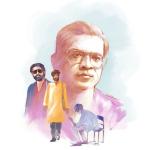
In July 1947, weeks before Pakistan came into existence, the question of its state language was already being argued over — and the most consequential answer came not from a politician but from a sixty-two-year-old professor of Bangla. Dr Ziauddin Ahmed, a former vice-chancellor of Aligarh Muslim University, had proposed that Urdu, the language of India's Muslims, should become the state language of the new country. Writing in the Daily Azad, Muhammad Shahidullah replied that if English was to be abandoned because it was a foreign language, there was no logic against making Bangla a state language of Pakistan — and that to use Urdu or Hindi instead of Bengali in the law courts and universities of Bengal "would be tantamount to political slavery". With that article, the Language Movement acquired its scholarly manifesto, written by the man who had spent four decades studying where the Bengali language came from.
Shahidullah (1885–1969) was, quite simply, the scholar who gave Bangla its documented history. He traced the language's origins, produced the standard edition and translation of its oldest surviving texts, wrote its first modern scholarly histories, and headed the Bangla department of the University of Dhaka. Contemporaries called him Jvantapas — one ardently desirous of attaining knowledge — and credited him with command of more than twenty languages. When the political argument over language finally came, no one in Bengal could match his authority to settle it.
Early life and education
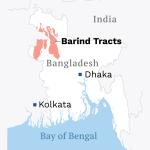
Muhammad Shahidullah was born on 10 July 1885 in the village of Peyara in the 24 Parganas district of Bengal — today in India's West Bengal — and was named Muhammad Ibrahim at birth; his mother later renamed him Shahidullah. His father, Mafizuddin Ahmad, was the warden of the shrine of Pir Gorachand, and the boy's first education reflected that devout household: Urdu, Persian and Arabic at home, and Sanskrit at school. It was an unusual combination, and it set the pattern of a lifetime spent moving between the classical languages of Islam and those of India.
He passed his Entrance examination in 1904 from Howrah Zila School and his FA in 1906 from Presidency College, Calcutta, then studied at Hooghly College before illness interrupted his studies. He recovered to take a BA with Honours in Sanskrit from City College, Calcutta, in 1910, and an MA in Comparative Philology from the University of Calcutta in 1912 — the discipline that would define his career. A law degree (BL) followed in 1914. His early working life was restless: he taught at Jessore Zila School in 1908–09, served as headmaster of Sitakunda High School in Chittagong district in 1914–15, practised law at Basirhat and was elected vice-chairman of its municipality.
The turn towards scholarship came in 1919, when he became the Sharatchandra Lahiri Research Fellow at the University of Calcutta, working under Dinesh Chandra Sen, the great pioneer of Bengali literary history. Two years later, in 1921, he joined the newly founded University of Dhaka as a lecturer in Sanskrit and Bangla — the appointment that would anchor the rest of his life.
Tracing the origins of Bangla
Shahidullah's central scholarly question was deceptively simple: where does the Bengali language come from, and how old is it? In 1925 he presented his answer — that Bangla had developed from Gaudi Prakrit, the spoken language of the ancient Gauda region, through its Apabhramsha stage, and that the language had emerged as a distinct tongue as early as the seventh century. It was a direct challenge to the view associated with Suniti Kumar Chatterji and Sukumar Sen, who derived Bangla from Magadhi Prakrit and dated its emergence to around the tenth century. The disagreement was never merely technical: an older, distinctively Bengali lineage gave the language a pedigree independent of the Magadhan mainstream, and later scholars, among them A. B. Keith, found evidence supporting Shahidullah's earlier dating.
To settle such questions he needed the tools of European philology. In 1926 he went to Paris and Freiburg, studying Vedic and Buddhist Sanskrit, comparative philology, Tibetan, ancient Persian, Khotanese and Prakrit. In 1928 the Sorbonne awarded him his doctorate for research on the dialects of the Charyapada, the collection of Buddhist mystical songs that is the earliest surviving specimen of the language; his thesis was published in French as Les chants mystiques de Kanha et de Saraha. Banglapedia records him as the first Indian Muslim to receive the doctorate. The same year he took a Paris diploma for his research in phonetics.
The Charyapada remained his life's thread. Shahidullah was the first scholar to argue that the songs are written completely in Bangla — a claim that anchored the language's antiquity in a physical text — and his Buddhist Mystic Songs (1960) gave readers an edited translation of them. Alongside the philology came the great syntheses: Bangla Sahityer Katha, his history of Bengali literature (volume I in 1953, volume II in 1965), and Bangala Bhashar Itibritta (1959), his history of the Bangla language itself, together with a Bengali grammar, translations of Hafiz, Iqbal and Omar Khayyam, and an edition of the dictionary of Bengal's regional dialects.
His curiosity ranged well beyond the seminar room. He took a serious scholarly interest in Bengal's folk literature, wrote and edited for children — including Angur (1920), the first children's magazine of Muslim Bengal — and filled his books with the proverbs, tales and devotional songs of ordinary Bengali speakers. The regional dialect dictionary he edited late in life was built on the same conviction that had driven the Charyapada work: that the true archive of the language lay not only in courtly manuscripts but in the speech of its villages. It is one reason his scholarship, for all its technical apparatus, was always read as a national project and not merely an academic one.
The Dhaka University years
From 1921, Shahidullah's career and the University of Dhaka grew up together. He was resident teacher of Salimullah Muslim Hall in the university's earliest years (1921–25) and later provost of Fazlul Huq Muslim Hall (1940–44), taught part-time in the Law Department, and — when the combined department of Sanskrit and Bangla was divided — became the first head of the independent Bangla Department in 1937, retiring in 1944. Retirement changed little. He served as principal of Bogra Azizul Huq College until 1948, then returned to Dhaka as a supernumerary professor, once again heading the Bangla Department and serving as Dean of the Faculty of Arts; in the 1950s he also taught French to international relations students, and from 1955 to 1958 he headed the department of Bangla and Sanskrit at the young University of Rajshahi.
His institution-building reached well beyond one campus. He had been secretary of the Bengal Muslim Literary Society as early as 1911 and presided over literary conventions across Bengal for four decades; UNESCO sent him to its seminar on traditional culture in Madras, where he was elected chairman. In his seventies he edited dictionary and encyclopaedia projects for Karachi and Dhaka, and in 1963–64 he chaired the Bangla Academy's almanac committee. The calendar reform that committee proposed — fixing the lengths of the Bangla months and the leap-year rule — was adopted by the government for official use in 1988 and still governs the Bengali calendar followed in Bangladesh today. Few professors leave their signature on the dates printed on every official document of a nation; Shahidullah did.
The intellectual groundwork of the Language Movement
All of this explains why his intervention of 1947 carried such weight. When Shahidullah argued in the Daily Azad that Bangla deserved state-language status, he was not making a sentimental plea. He was the country's foremost historian of the language, and his case was demographic and scholarly at once: Urdu was the mother tongue of no province of Pakistan, while Bangla was the language of its majority and possessed a literature a thousand years old. As he put it, "If a language is to be considered for acceptance as a state language in addition to Bangla, then it is obligatory to consider the Urdu language for that purpose" — Urdu, in other words, could only ever be the second claim on the state, never the first.
Two months later, on 15 September 1947, he presided over the Dhaka symposium of Tamaddun Majlish, the cultural organisation founded by Dhaka University physicist Abul Kashem, on the day it published its landmark booklet Pakistaner Rashtra Bhasha: Bangla na Urdu? — "Pakistan's State Language: Bengali or Urdu?" Banglapedia credits Shahidullah as the first to establish the reasons why Bangla, rather than Urdu, should be a state language of Pakistan. The argument he framed in 1947 — majority, history, and the absurdity of ruling Bengal in a language its people did not speak — became the intellectual scaffolding of the Language Movement that students and politicians carried into the streets in 1948 and, fatefully, in February 1952. Shahidullah, by then in his late sixties, was the movement's elder and its conscience rather than its organiser; but every demand the movement made had first been made, in print and with evidence, by him. The demand he framed was eventually conceded: Pakistan's Constituent Assembly accepted Bangla as a state language in 1954, and the constitution of 1956 recognised Bengali and Urdu together — a settlement unimaginable without the case first constructed in 1947.
Later life and legacy
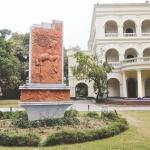
Honours gathered in his final decade. Pakistan had awarded him the Pride of Performance in 1958; in 1967 the University of Dhaka made him Professor Emeritus, and the French government named him a Chevalier of the Order of Arts and Letters — a fitting return from the country where he had taken his doctorate forty years earlier. That same year serious illness confined him to bed, and he died in Dhaka on 3 July 1969, a week short of his eighty-fourth birthday. He was buried on the campus of the university he had served for nearly half a century, beside the residential hall that was renamed Dr. Muhammad Shahidullah Hall in his honour. In 1980 the government of Bangladesh awarded him the Independence Award in Education, posthumously, and in 2004 a BBC Bangla listener poll placed him sixteenth among the greatest Bengalis of all time.
His legacy works on three levels. As a scholar, his history of the language and his Charyapada studies remain foundations on which Bengali philology still builds, even where later research has revised his dates. As a teacher and institution-builder, he shaped the Bangla departments of two universities and the calendar on every Bangladeshi desk. And as a public intellectual, he demonstrated in 1947 that a philologist's evidence could become a nation's argument. Linguist Pabitra Sarkar judged him one of the finest scholars of linguistics South Asia has produced. The state language he defended is today the national language of Bangladesh and the reason the world marks International Mother Language Day — an outcome that began, in no small part, with an elderly professor insisting that the history of his language entitled it to a state.