Two generations ago, a Bangladeshi family that wanted a refrigerator bought an imported one, if it could afford one at all. Televisions arrived in crates from Japan, Korea and Singapore, and as late as 2016 every mobile phone sold in the country was imported. Today the picture is reversed. Industry estimates cited in The Financial Express in May 2026 put the value of electronics and electrical goods supplied by local manufacturers at more than US$4 billion a year, meeting close to 90 percent of domestic demand. Roughly nine in ten televisions sold in Bangladesh are now made or assembled locally, along with about 80 percent of refrigerators and 70 to 75 percent of air conditioners, according to industry figures reported for 2024. It is the country's second great import substitution story after the ready-made garment industry, and the first in which Bangladeshi brands, led by Walton, rather than foreign buyers, set the pace. This article traces how that happened, who the players are, and what still holds the industry back.
From imports to assembly lines
The industry's oldest names began as traders. Singer has sold sewing machines, and later appliances, in the region since 1905. Through the 1980s and 1990s, consumer electronics in Bangladesh meant imports: Japanese and Korean brands arrived through local distributors such as Rangs Electronics, Sony's partner since 1984, and Esquire Electronics, which handled Sharp. Local participation stopped at marketing, distribution and after-sales service.
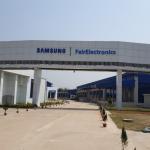
The break came from policy and one determined local firm. From the 2010-11 fiscal year onwards, the government progressively cut duties and taxes on inputs for domestic consumer electronics production while keeping imports of finished goods expensive. That inverted the economics of the trade: assembling and then manufacturing inside Bangladesh became cheaper than importing finished products. Walton, whose founder had traded in electronics since 1977 through Rezvi and Brothers, moved first and furthest, but it was soon joined by a wave of local brands. Minister grew out of MyOne, founded in 2002. Vision, from the PRAN-RFL Group, followed in 2013, and Jamuna Electronics in 2014. Foreign brands then made the same calculation. LG began making televisions with the Butterfly Group in 2018, Samsung's partner Fair Electronics built its complex at Shibpur in Narsingdi, and in 2019 Turkey's Arcelik bought control of Singer Bangladesh, the clearest signal that global appliance makers now saw Bangladesh as a place to manufacture, not merely to sell.
Walton: the flagship
Walton is the industry's flagship by a wide margin, and its history is the industry's history in miniature. The group's roots lie in Rezvi and Brothers, founded by S. M. Nazrul Islam in 1977 as a trading business. Walton Hi-Tech Industries was incorporated on 17 April 2006, built a large plant at Chandra in Kaliakair, Gazipur, and began commercial production in 2008, starting the first manufacture of refrigerators and freezers in Bangladesh. In April 2017 it commissioned the country's first refrigerator compressor plant, a decisive step from assembly into a core component, and one that made Bangladesh one of a small number of countries able to make compressors at all. In April 2022 Walton bought three European brands, ACC, Zanussi Elettromeccanica and Verdichter, from Italia Wanbao-ACC, together with a compressor production line, lifting its compressor capacity to 4.8 million units a year.
The scale is best shown in dated figures rather than slogans. In 2023 Walton held about 75 percent of the refrigerator market and roughly half of all television sales in Bangladesh, by industry estimates. The Business Standard reported in 2025 that Walton's Gazipur hub had an annual refrigerator production capacity of 3.5 million units, that the group employed more than 30,000 people at home and abroad, and that, according to its financial report for FY2023-24, it had exported 355,000 refrigerators over the previous five years. Its product range now covers refrigerators and freezers, televisions, air conditioners, compressors, washing machines, mobile phones, computers, lifts and a long tail of home and electrical appliances, sold under the Walton and Marcel brands. The Daily Star, profiling the company in October 2025, noted that Walton itself meets between 60 and 70 percent of local refrigerator demand in a typical year, and that it now sells in around 50 countries. Exports remain a small share of its revenue, a point its own reporting makes plain, but no other Bangladeshi manufacturer exports branded consumer electronics at comparable scale.
Refrigerators, televisions and air conditioners
Refrigerators built the industry. Rising rural electrification and purchasing power turned the refrigerator from a luxury into a first major appliance purchase for millions of households, and local makers captured that demand almost completely: by the early 2020s, industry estimates put the local share of the refrigerator market at above 90 percent, and Walton's own annual reporting has put local production at over 80 percent of demand. The Daily Star reported in October 2025 that the television market is worth around Tk 5,000 crore a year, with average local demand of over 10 lakh (one million) units, and that locally manufactured and assembled televisions now hold about 90 percent of it, a complete reversal of the import dependence of a decade earlier. Air conditioners are the newest and fastest upgrading segment: local production meets roughly 70 to 75 percent of demand, and the leading makers have shifted much of their range to inverter models and newer refrigerants. Washing machines followed the same path: Singer Bangladesh, for example, began manufacturing them at its Savar plant, built under the supervision of its parent Arcelik, with a capacity of 420,000 units a year.
The mobile phone transformation
If refrigerators built the industry, mobile phones showed how fast policy could build one. Until 2017 every handset sold in Bangladesh was imported, about 31 million units in 2016 alone. In August 2017 the Bangladesh Telecommunication Regulatory Commission (BTRC) issued guidelines for handset manufacturing and assembly, and the tax structure did the rest: at various points since then, the total tax on an imported smartphone has been reported at roughly 58 to over 60 percent of price, against about 15 to 25 percent for locally assembled or manufactured handsets. Walton Digi-Tech opened the country's first assembly plant at Chandra, Gazipur, in October 2017. Samsung, assembling through Fair Electronics at Narsingdi from May 2018, became the first global brand to produce locally, and Chinese brands including Xiaomi, Oppo, Vivo and Transsion followed, alongside local names such as Symphony.
BTRC production figures trace the boom and its limits. Local plants produced 29.5 million handsets in 2021 and a record 31.6 million in 2022, when local production met about 99 percent of demand through official channels. Output then fell by about 26 percent to 23.3 million in 2023, the first decline since manufacturing began, as inflation and a shortage of dollars squeezed both makers and buyers, before recovering to about 27.3 million in 2024. Two qualifications matter. First, feature phones still dominate: in 2024 they accounted for about 69 percent of the handsets produced locally, according to BTRC data reported by The Daily Star. Second, the industry association estimates that a grey market of smuggled and unofficially imported phones still takes roughly 35 to 40 percent of total demand, undercutting every legal producer.
The other players
Behind Walton stands a crowded field. Singer Bangladesh is the sector's multinational veteran: a business in the region since 1905, listed in Dhaka, and since 2019 controlled by Turkey's Arcelik, which has been upgrading its Savar plant, including the washing machine lines noted above. Fair Electronics is Samsung's manufacturing partner: it began production at Narsingdi in 2018, and The Business Standard reported in 2021 that its factory supplied almost all Samsung handsets sold in Bangladesh and about 90 percent of Samsung refrigerators, televisions, air conditioners, washing machines and microwave ovens sold locally. Transcom Electronics, part of the Transcom Group, was Samsung's other early local partner, assembling televisions from 2017, and remains a major retailer and assembler of international brands. Rangs Electronics, Sony's partner since 1984, anchors the Rangs Group's presence, and Sony production has since been established in the Sylhet hi-tech park through that partnership. Minister Hi-Tech Park Electronics, grown from MyOne, makes refrigerators, televisions and air conditioners at plants in Gazipur and at Trishal in Mymensingh, and has built one of the widest rural retail networks in the country. Jamuna Electronics, founded in 2014 within the Jamuna Group, manufactures appliances at Gazipur, while Vision, from PRAN-RFL, Electro Mart, the Gree partner, and the Butterfly Group, which works with LG and Haier, complete a field in which almost every global brand now has a Bangladeshi factory address behind it.
Exports: small, growing, and mostly electrical
For all its domestic weight, the industry is still a minor exporter, and honesty about the numbers matters. The commerce ministry's Export Competitiveness for Jobs profile, drawing on Export Promotion Bureau (EPB) data, put Bangladesh's electrical and electronics exports at US$149.5 million in FY2023-24, up 21.53 percent on the year. The growth has continued: EPB data reported by The Business Standard in September 2026 showed exports of electrical products rising 23.82 percent to a record US$206.19 million in FY2025-26, making electrical products the largest earner among engineering exports. The basket is telling: transformers, cables, LED lighting, transistors and other electrical goods bulk larger than finished consumer electronics, although Walton ships refrigerators, televisions and compressors to around 50 countries, and Bangladeshi handsets have been exported as original equipment manufacture for foreign brands, including to the United States from 2020. Set against garment exports of nearly US$39 billion, electronics exports are a rounding error. They are, however, one of the few manufactured export lines growing at over 20 percent a year, which is why policymakers watch them closely.
Jobs and skills
Reliable employment totals for the whole sector are scarce, and the figures in circulation come mostly from companies and industry bodies rather than official statistics. The pieces that can be dated are these. Walton reports more than 30,000 employees. The BTRC stated in 2022 that the handset plants then operating had created jobs for around 15,000 to 18,000 people. Fair Electronics' Narsingdi complex employed more than 2,000 engineers and workers within a few years of opening, according to The Business Standard. The OECD's Production Transformation Policy Review of Bangladesh gives the structural picture: electrical and electronics production accounted for about 1.2 percent of manufacturing employment in its assessment, with home appliances providing just over half of the sector's jobs and communication equipment, mainly mobile phones, about 18 percent. The skills story runs alongside the jobs story: Samsung's technology transfer trained Bangladeshi engineers to run and adapt production lines at Narsingdi, and Walton says it hired around 500 engineers and trained them with international experts when it first set out to design a refrigerator factory, because no local engineer then had that experience.
The policy scaffolding
None of this happened by accident. The model, repeated across product lines, has three parts: high duties and taxes on finished imports, cheap access to components and machinery for firms that produce locally, and time-limited tax holidays to pull investment into designated zones. Mobile phone makers in economic zones and hi-tech parks have received VAT benefits since 2019, conditional on building real manufacturing capacity such as printed circuit board, charger, battery and casing production. Businesses established in hi-tech parks receive an income tax holiday of 100 percent for the first seven years and 70 percent for the next three, under rules summarised by KPMG Bangladesh in August 2024 for operations starting by 30 June 2035. Walton's own digital devices plant sits inside the Bangabandhu Hi-Tech City at Kaliakair, Gazipur, alongside other handset makers such as Symphony. The direction was reaffirmed in the FY2026-27 budget, presented in June 2026, which proposed extending duty exemptions on raw materials for mobile phones, refrigerators, air conditioners and other devices to 30 June 2030, extending the VAT exemption for mobile phone manufacturing and assembly to the same date, and cutting VAT on locally made refrigerators, freezers, air conditioners and compressors from 15 percent to 7.5 percent.
The hard parts: components, dollars and compliance
The industry's central weakness is depth. Bangladesh makes the box, the cabinet, the foam, the shelves and, in Walton's case, the compressor, but it still imports most displays, semiconductors, printed circuit board components, camera modules and many grades of steel and chemical inputs. That dependence has three costs. It caps the local value added in each product. It exposes makers to the exchange rate: when the taka depreciated sharply and dollars grew scarce from 2022, factories struggled to open letters of credit for components, handset output fell by a quarter in 2023, and Fair Electronics suspended Samsung smartphone production from mid-2024 to the end of 2025, a pause The Business Standard attributed directly to the difficult business environment after the taka's sharp depreciation. And it complicates the next export frontier: as The Business Standard reported in September 2026, the European Union's new sustainability and Digital Product Passport rules require traceability that is hard to provide when components come from multiple suppliers in China and Vietnam, and industry bodies say Bangladesh still lacks enough accredited testing laboratories for Western markets. Add the grey handset market, periodic gas and power shortages, and the scheduled end of least developed country preferences, now postponed to 24 November 2029, and the list of constraints is real.
Outlook
The industry's next phase will be decided by whether it can do two things at once: deepen component manufacturing at home, and convert surplus appliance capacity into exports. There are early signs on both fronts. Fair Electronics resumed Samsung production in 2026, with refrigerators already rolling, washing machines scheduled to restart in September 2026 and air conditioners, televisions and smartphones planned for early 2027, and it now also manufactures for Hisense. Experts at a Dhaka seminar reported by The Daily Star in November 2026 argued that, with the right policy support, electrical equipment exports alone could approach US$4 billion a year within a decade. Like the shipbuilding industry, electronics has shown that Bangladeshi factories can meet demanding specifications when policy, skills and a large home market align. What garments proved at vast scale, electronics is now testing at smaller scale and higher technology: that "Made in Bangladesh" can be a brand, not just a label of origin. The assembly lines are built. The question for the decade ahead is how much of what is inside the products, and how much of the world's market for them, Bangladesh can make its own.