For most of the twentieth century, if you wanted to know what was happening in the towns and villages of Bengal, you listened. Newspapers stopped at the district town, television arrived late and reached few homes, and the telephone was a rarity. Radio went everywhere. The institution behind that voice for more than eight decades has been Bangladesh Betar, the state radio broadcaster. It began as a small colonial station in old Dhaka, it was reborn in 1971 as the clandestine voice of a country fighting to exist, and it remains, in the age of the smartphone, the only broadcaster whose signal is expected to reach every corner of Bangladesh.
A station is born in old Dhaka: 1939
Radio transmission in what is now Bangladesh began on 16 December 1939, during British rule. The new station was the Dhaka station of All India Radio, set up as one of six stations the British government commissioned across India after the outbreak of the Second World War, alongside Karachi, Lucknow, Lahore, Peshawar and Tiruchi. The station was modest. Banglapedia records that it was established in a rented house on Nazimuddin Road in old Dhaka, on the site now occupied by Sheikh Borhanuddin College, and was known as the Dhaka Dhwani Bistar Kendra, the Dhaka sound broadcasting centre. It had two studios. Its 5 kilowatt medium wave transmitter was installed at Kalyanpur, and its range was limited: about 20 to 25 miles by night and 30 to 45 miles by day, according to Banglapedia. There was no recording equipment at first, so performers broadcast live. Leila Arjumand Banu performed on the first day of broadcasting, and the Daily Star's history of the station names Trilochon Babu as its first broadcaster.
Small as it was, the station quickly became something its founders had not planned: the main cultural centre of eastern Bengal. Poets, playwrights, singers, composers and actors came to Nazimuddin Road to perform, guest artistes visited from Kolkata radio, and experienced broadcasters were transferred in from elsewhere. Banglapedia singles out two early live programmes: Devadas, a drama performed by Promothesh Barua and Jamuna Devi, and Purbani, a musical programme composed and directed by Kazi Nazrul Islam.
From All India Radio to Radio Pakistan
Partition changed the station's flag but not its address. After August 1947, Dhaka became part of Pakistan, and the station continued as part of the Pakistan Broadcasting Service, later Radio Pakistan. The network slowly spread across East Bengal. Low powered transmitters were installed in Chittagong and Rajshahi in 1954, and a 10 kilowatt short wave transmitter was set up at Kalyanpur in 1959. On 8 February 1960, the Dhaka station moved into a modern broadcasting house at Shahbagh with six studios, a complex that later grew to twelve studios. Sylhet went on air in 1961, new transmitters for Dhaka were installed at Savar in 1963, and stations followed at Rangpur in 1967 and Khulna in 1970.
Radio in these decades was not only entertainment. It was the prime source of news, education and public information for most people, and its programme makers learned the habits that would define Bangladesh Betar for generations: farm broadcasts for cultivators, programmes for children, health and family planning, weather forecasts and disaster information. Banglapedia notes that Dhaka radio's agriculture programme Amar Desh, meaning My Country, began in this era and remained popular for decades. Its artistes boycotted the station in protest at the killings of the Language Movement in 1952, the struggle told in the story of the Language Movement of 1947 to 1952. In March 1971, officers and staff closed down transmission and left the Dhaka station on 7 March after the authorities moved to stop the broadcast of Sheikh Mujibur Rahman's historic speech of that day. Transmission resumed the next morning only when the military authority agreed to put the speech on air.
1971: Swadhin Bangla Betar Kendra
No radio station in South Asia carries a founding story like the one Bangladesh Betar acquired in 1971. On the night of 25 to 26 March 1971, the Pakistan Army launched its crackdown in Dhaka and seized the radio station there. The full course of that night and the nine months that followed is told in this site's account of the Liberation War of Bangladesh, 1971. What matters here is what happened to the microphone.
Broadcasters from the Chittagong station took over the Kalurghat transmission centre outside the city and, on 26 March 1971, began broadcasting as the Swadhin Bangla Biplobi Betar Kendra, the Revolutionary Radio Centre of Independent Bengal. From Kalurghat, Major Ziaur Rahman broadcast the declaration of independence on behalf of Sheikh Mujibur Rahman, whose own message of independence had reached Chittagong that day. Belal Muhammad, a scriptwriter and artiste of Radio Pakistan, was the key figure in organising the centre in its early stage, working with colleagues and engineers who kept a damaged transmitter alive. Belal Muhammad later recalled that the first broadcasts went out on 26 March at 7.40 in the evening over a 10 kilowatt medium wave transmitter.
Kalurghat could not hold. The centre was abandoned after heavy shelling by the Pakistan Air Force on 30 March. Its second phase began on 3 April 1971 at Bagafa in the Indian state of Tripura, with a short wave transmitter, and it later operated from sites around Agartala. On 25 May it moved to Kolkata, where, reinforced by experienced radio personnel who had escaped from Dhaka, it became fully operative. From 26 May it took the name by which history knows it: Swadhin Bangla Betar Kendra, the Independent Bengal Radio Centre, broadcasting for the provisional government of Bangladesh.
For the rest of the war, in a country where radio was the only medium that could reach the far ends of the land, the station was the voice of the government in exile and of the resistance. It carried war news, official announcements, patriotic songs and talks, and it worked deliberately on morale: the morale of the freedom fighters in the field, of the millions sheltering at home under occupation, and of the refugees in India. Its two most popular programmes, according to Banglapedia, were Charampatra and Jallader Darbar. Charampatra, written and read by M. R. Akhter Mukul, was a satirical commentary that mocked the Pakistani military regime in the language of the Dhaka street while reporting the progress of the war, and listeners across the country arranged their evenings around it. Jallader Darbar, written by Kalyan Mitra, was a satirical serial that depicted General Yahya Khan as the grotesque figure Kella Fateh Khan. Music did similar work: patriotic songs broadcast by the station, with the composer Altaf Mahmud associated with its musical effort, became part of the war itself.
The end of the story is precise. On 6 December 1971, the day India formally recognised Bangladesh, Swadhin Bangla Betar Kendra was renamed Bangladesh Betar. The government moved to Dhaka on 22 December 1971, and Bangladesh Betar began broadcasting in the independent capital the same day.
Bangladesh Betar after independence
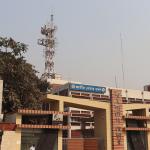
The new state inherited every station in the country, and Dhaka was elevated from a regional station to the national station of the new network. The broadcaster was renamed Radio Bangladesh in 1975 and reverted to the name Bangladesh Betar in 1996. In July 1983, the Dhaka station shifted to the National Broadcasting House at Agargaon in Dhaka, a modern complex that also housed the engineering wing, the central news organisation and specialist units, while the Shahbagh broadcasting house remained part of the organisation. Expansion continued at the edges. Six new regional stations were set up at Thakurgaon, Cumilla, Barishal, Cox's Bazar, Rangamati and Bandarban, each with a 10 kilowatt medium wave transmitter, and 100 kilowatt transmitters strengthened Rajshahi, Khulna and Chittagong. Specialist central units multiplied: an external service, farm broadcasting, a commercial service, education and traffic broadcasting, monitoring and audience research. Bangladesh Betar received the Independence Day Award in 2006, and it remains a member of the Asia Pacific Broadcasting Union. It was the country's sole radio broadcaster until the private station Radio Metrowave began in 1999.
The network today: AM, FM and the regions
The modern Bangladesh Betar is a network rather than a single station. Its published schedules list medium wave, or AM, services from Dhaka and from regional centres including Chittagong, Rajshahi, Khulna, Rangpur, Sylhet, Barishal, Thakurgaon, Rangamati, Cox's Bazar, Bandarban and Cumilla. Dhaka's main channel, Dhaka Ka, broadcasts on 693 kHz from the 1,000 kilowatt transmitter at Dhamrai, with further Dhaka services on 819 kHz and 1170 kHz. Regional stations mix the national programme with their own local output in the mornings and evenings, carrying local news, music and programming in the voices and, in the hill districts, the languages of their own areas.
Alongside AM, the network built an FM layer, first in the capital and then in the regions. Dhaka listeners know services such as FM 100.0, FM 97.6 and the traffic channel on FM 88.8, which broadcasts traffic information for the capital through the day. Regional FM services operate in centres including Chittagong, Khulna, Rajshahi, Rangpur, Cumilla, Thakurgaon, Gopalganj, Cox's Bazar and Mymensingh. Older official summaries described twelve regional stations producing hundreds of hours of programming a day. The count of centres has grown since, as newer FM centres such as Mymensingh and Gopalganj have joined the schedule, but the structure still holds: one national service, a ring of regional stations, and specialist channels.
The voice abroad: the external service
Bangladesh Betar has spoken to the world for almost as long as Bangladesh has existed. Its external service, launched in the early 1970s, in January 1972 according to recent reporting in New Age, was built around powerful short wave transmitters at Kabirpur. Banglapedia records two 250 kilowatt short wave transmitters there, broadcasting five and a half hours of programmes a day for overseas listeners in six languages: Bangla, English, Arabic, Hindi, Urdu and Nepali. The service was aimed at the Bangladeshi diaspora, at neighbouring countries and at listeners in Europe and the Middle East, carrying news, development stories and cultural programmes, and acting, as one official paper put it, as a tool of soft diplomacy.
That short wave story has a difficult recent chapter, and it should be told plainly. The Daily Star reported in January 2023 that the external service's short wave transmission had been off the air since 3 March 2019, when a valve, a major component of the transmitter supplied by the French company Thomson, failed. The service's own current description, quoted in reporting in 2025, lists five hours of daily programming in five languages, Bangla, English, Arabic, Hindi and Nepali, available on short wave on 4750 kHz, by mobile app and on the website. The Urdu service, closed in 2019, was the subject of a formal proposal and official discussions in 2025 about bringing it back, with a final decision still pending at the time of that reporting. In January 2020, Bangladesh Betar's programming also began to be distributed inside India through All India Radio stations in Kolkata and Agartala and through the AIR app.
Radio in national life: farms, storms and classrooms
To understand Bangladesh Betar's place in the country, it helps to look away from Dhaka. For a farmer deciding when to sow or harvest, the farm broadcast unit's advice, built around programmes such as Amar Desh, was for decades the most accessible agricultural extension service in the country. For families in the coastal belt, radio has been a lifeline in the most literal sense. Bangladesh sits in the path of Bay of Bengal cyclones, and warnings of landfall, storm surge and evacuation, broadcast nationally and repeated by regional stations in local voices, are part of the warning system that has helped cut cyclone deaths dramatically since the disasters of 1970 and 1991. A battery radio works when the power grid and the mobile network do not, and in a storm that difference saves lives.
The same reach made radio a classroom and a clinic. Education broadcasting, programmes for women and children, and health output were given dedicated units and daily hours, aimed at listeners whom schools, hospitals and newspapers reached last. Add the cultural weight: hundreds of radio dramas a year in the figures Banglapedia cites, a vast music archive, and generations of performers who learned their craft in its studios.
The digital era
Radio everywhere has had to survive the arrival of television, then the private FM boom of the 2000s, then the smartphone. Bangladesh Betar's answer has been to put its existing services where new listeners already are. Its programmes are streamed live from its official website, betar.gov.bd, including a dedicated live radio service through which the external service can be heard online. Its official mobile app carries the broadcasts to phones at home and abroad, which matters most for the audience the short wave service was built for: Bangladeshis living overseas, who can now hear home in Bangla or English without a short wave set. In that sense the app and the stream have quietly taken over the job that the Kabirpur transmitters did alone for forty years.
The challenges are real. A state broadcaster competes with private FM, satellite television, YouTube and social media. Its short wave external service spent years off the air awaiting a part, and younger listeners everywhere are drifting from scheduled radio. Yet it retains two assets no competitor can copy: reach, through a national network that still covers the whole country, and memory. No other broadcaster in Bangladesh announced the country's independence, carried its war and then became its national radio.
Conclusion
Bangladesh Betar has carried three names in its life: All India Radio Dhaka, Radio Pakistan Dhaka and, since 6 December 1971, Bangladesh Betar, with one brief interruption. Under each name it was the same institution learning the same lesson, that in a delta country of rivers and scattered villages, the spoken voice travels furthest. It began on 16 December 1939 in a rented house with two studios and a transmitter that reached a few dozen miles. It reached its defining moment not in Dhaka at all, but in Kalurghat, Tripura and Kolkata in 1971, when its broadcasters proved that a radio station could help hold a nation together. Eighty seven years after its first broadcast, it is still on air, on AM, on FM and now on the phone in a listener's pocket. The voice that carried a nation is still carrying it.