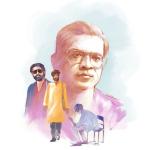
Ferdousi Priyabhashini (19 February 1947 – 6 March 2018) was a Bangladeshi sculptor who built an entire art out of what the world throws away — driftwood, fallen branches, tree roots and bark — and one of the most consequential witnesses of her country's birth. A civilian victim of the Pakistani occupation forces in 1971, she became, decades later, the first woman to publicly announce herself as a Birangona, a "war heroine", breaking a silence that tens of thousands of Bangladeshi women had been forced to keep. Self-taught, she did not hold her first exhibition until she was 44, yet she rose to receive the Independence Award, the country's highest civilian honour, in 2010, and in 2016 the state formally gazetted her as a freedom fighter. Her life joined two struggles that are usually told apart: a woman's fight to be believed, and an artist's fight to make beauty out of discarded things.
Early life
Priyabhashini was born on 19 February 1947 in Khulna, in the south-west of what was then British India, at her maternal grandparents' home. Her father, Syed Mahbubul Hoque, was a teacher, and her mother was Rowshan Hasina; she was the eldest of eleven children. Biographical profiles record her schooling in Khulna, at Pioneer Girls' School and Khulna Girls' School, and a childhood interest in making things that set her apart early. She began earning while still in her teens.
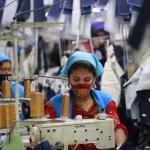
In 1963 she married Kazi Sirajul Islam, an artist, but the marriage was unhappy and the couple eventually separated. To support her mother, her siblings and her three young children — and, by her own account, to help pay for her husband's education — she took a job at the People's Jute Mill in Khalishpur, the industrial belt of Khulna, where she worked from 1966 as a telephone operator. It was an ordinary working life, carried on under gathering strain, and it was the life the war found when it came to Khulna in 1971.
1971 and its aftermath
The Liberation War of Bangladesh reached Priyabhashini not on a battlefield but at her workplace. Separated from her husband and solely responsible for her family, she was taken into captivity by the Pakistani occupation forces. In testimony she gave repeatedly in later years — including a full account published in Shahriar Kabir's 1999 collection Ekattorer Duhsaha Smriti — she described being held from May to December 1971, among other places at Jessore Cantonment, and being repeatedly raped and tortured by Pakistani soldiers and their local collaborators. In her own words, recorded by the historian Anam Zakaria: "For eight months, I was a rape victim… When the war was ending, in November, they threw me in a concentration camp." She was freed only when the war ended in December 1971. In her 1999 account she named at least fifteen Pakistani officers stationed in Khulna and Jessore as the men responsible — an act of documentation almost unheard of from a survivor.
What followed was, for her and for the estimated hundreds of thousands of women assaulted during the war, a second ordeal. The new state had honoured them with the title Birangona, but ordinary society largely turned away. "We were physically assaulted in 1971," she later said, "but after 1971 we were both physically and mentally assaulted." She rebuilt what she could: in 1972 she married Ahsanullah Ahmed, himself a freedom fighter, and the family lived at different times in Jessore, Sylhet and Rangpur; she raised six children, and biographical profiles record that from 1977 to 1998 she worked with development organisations including UNDP, UNICEF, FAO and the Canadian High Commission. Through all of it, what had happened in 1971 went publicly unspoken.
The silence broke in 1999. At a citizens' reception held in her honour at the Bangladesh National Museum, Priyabhashini stood up and described, in public and under her own name, what the occupation forces had done to her — the first Birangona ever to do so. "The truth is tough," she told that gathering, in a phrase the anthropologist Nayanika Mookherjee would later preserve. She became a vice-president of the Ekattorer Ghatak Dalal Nirmul Committee, the movement demanding trials of 1971 war criminals, and in 2000 she carried her testimony to the Women's International War Crimes Tribunal in Tokyo, where she met a Korean survivor of Japan's wartime "comfort women" system who told her, in her recollection, "you, me, we are the same, our pain is the same." The same year, filmmakers Tareque Masud and Catherine Masud featured her in their documentary Narir Kotha (Women and War). She explained her decision simply: the history of the war was being altered and the torture of women forgotten, and if she spoke of her own experience, a space would open for others.
The turn to sculpture
Sculpture came to Priyabhashini slowly, and from the same root as her testimony: abandonment. Isolated by stigma, she withdrew from society and found refuge in the natural world, first making home-decoration pieces and crafts from dry leaves, logs and fallen wood. She had no training — she was, as the art world would repeatedly note with some astonishment, entirely self-taught — and from the mid-1980s the pastime deepened into a vocation. "I work with and sculpt the bark of trees," she explained, "as they signify to me the abandoned, like I was after 1971 — abandoned, ridiculed, humiliated and treated with contempt."
Her first exhibition came in 1991, at Charupith in Jessore, when she was 44 years old. It was jointly inaugurated by two towering figures of Bengali culture, the artist SM Sultan and the poet Sufia Kamal, with the writer Syed Shamsul Haque anchoring the event — a remarkable blessing for a late-beginning, self-taught woman artist from Khulna. Sultan's encouragement mattered in particular: for years, as the Daily Star later observed, she worked with "only SM Sultan and her immediate family and friends to egg her on". From that point she exhibited steadily for a quarter of a century; sixteen exhibitions are recorded between 1991 and 2015, and by 2008 the Daily Star was counting nine solo shows and marvelling that "for a self-taught artist and basically a homemaker, she has come a long way."
Her art and materials
Priyabhashini's medium was refuse. She gathered driftwood and discarded timber, uprooted trees and storm-fallen branches, roots, bark, twigs, dry leaves and waste paper — material that, as she put it, nobody had any use for. "I collect rejected material. I pick up waste. And I turn it into art." Her method was closer to release than to manufacture: she searched each found form for the figure already latent in it — a branch becoming a bird in flight, a stump a seated mother, a root a dancer — and intervened as little as the form allowed. Her works are typically left unpolished, keeping the wood's natural colour, grain and roughness, and she insisted that sculpture should seem to move. Birds, women, trees and lovers recur throughout the oeuvre, images of a natural world that discards nothing.
In this she extended a lineage that runs through modern Bangladeshi art since Zainul Abedin: art made from the materials, and for the people, of the Bengal delta. But her materials carried a private meaning no predecessor shared. The discarded wood was a self-portrait — matter that society had thrown away, taken up, and shown to have been beautiful all along. She showed at the Bangladesh Shilpakala Academy (1996), the Bangladesh National Museum (1999) and Dhaka's leading galleries, with catalogued solo exhibitions at the Bengal Gallery of Fine Arts including In the Deep Days of Monsoon (2004), Branches and Twigs (2007) and Prelude to a Monsoon Evening (2015). She was candid about the fragility of her medium, often explaining to visitors how difficult driftwood sculpture is to preserve. Even her appearance made the same argument as her art: the large round bindi and the distinctive dress she favoured were widely read as a deliberate language of protest and self-possession. In 2014 she published her autobiography, Nindito Nondon.
Recognition
Honours came to Priyabhashini in an order that itself tells her story: for her art first, and for 1971 only at the end of her life. In December 2004 Reader's Digest named her a "Hero" for the courage of publicly acknowledging herself as a war heroine. In 2010 the Government of Bangladesh gave her the Independence Award, the nation's highest civilian honour, in the field of culture. She noted the distinction herself with characteristic dryness: "I am receiving awards till this day, as a sculptor. The government also awarded me the Independence Award for my association with art." Bangla Academy made her an honorary fellow in 2013, and her profile lists further honours including the Chadernath Podok, the Ananya Shirsha Podok and a YWCA Silver Jubilee Award. No Ekushey Padak figures among her recorded honours — the recognition that came to her came through her sculpture, and only at the very end through the war.
The recognition for the war itself took 45 years. Following a High Court order, Parliament resolved in January 2015 to include the Birangonas in the official list of freedom fighters, and the government began gazetting them in phases — the first 41 in the autumn of 2015. Priyabhashini's name was approved by the National Freedom Fighters Council, and on 11 August 2016 the Liberation War Affairs Ministry issued the gazette notification formally acknowledging her as a freedom fighter, with the same state facilities as other freedom fighters; 122 Birangonas had been recognised before her. She dedicated the honour to all the freedom fighters and to the women who had been tortured during the war. Two years earlier, at the 2013 Shahbagh movement demanding punishment of war criminals, she had been a visible, beloved presence — a living link between the generation that had endured 1971 and the young people demanding its history be faced.
Death and legacy
Priyabhashini suffered for years from heart and kidney disease. Admitted to Labaid Hospital in Dhaka on 23 February 2018, she died of cardiac arrest there on 6 March 2018, aged 71, and was laid to rest beside the grave of Jahanara Imam, the "Shaheed Janani" whose own movement for war-crimes trials she had served. The tributes that followed — from fellow artists, activists and the national press — returned again and again to the same point: that she had changed what could be said aloud in Bangladesh.
Her legacy runs along three lines. As a witness, she converted the Birangona from a whispered stigma into a public identity that could be claimed with pride; the state's eventual recognition of the Birangonas as freedom fighters is inseparable from the space her testimony opened. As an artist, she effectively founded a school of sculpture from found natural material in Bangladesh, proving that a self-taught woman beginning at 44 could stand among the country's significant artists — a story the Oxford-based Theatre Folks carried to the stage in their 2015 play Jamuna, inspired by her life and work. And within her own family the line continues: her daughter Phuleshwari Priyanandini and her granddaughter are artists too, three generations of women making art from what her life taught them. Her granddaughter has recalled sitting beside her in the studio as a child, watching her release forms from fallen trees, and understanding even then that her grandmother saw beauty in the driftwood precisely because it had been ignored — as she herself had been. The discarded wood she gathered is still her most eloquent argument — that nothing, and no one, is refuse.