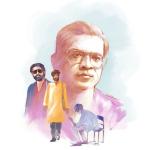
Muhammad Qudrat-i-Khuda (1900–1977) was an organic chemist, educationist and writer whose career touched almost every institution that organised science and schooling in twentieth-century Bengal. He built the Dhaka laboratories from which the Bangladesh Council of Scientific and Industrial Research (BCSIR) grew, wrote science in Bengali when few scientists did, and, in the last decade of his life, chaired the first education commission of independent Bangladesh — the body whose 1974 report still bears his name. Few Bangladeshis have worked at the head of so many different systems: a college, a provincial education department, a national research laboratory, two academies of science, and a national commission on education.
Early life and education
Qudrat-i-Khuda was born in 1900 in Margram, a village in the Birbhum district of the Bengal Presidency, in what is now West Bengal, India. (His exact birth date is not consistently recorded: Bangladeshi textbooks give 8 May 1900, while other references give different dates, and Banglapedia records only the year.) His father, Syed Shah Sufi Abdul Mukid, was a respected religious scholar. The boy received his early schooling at the Margram ME High School and the Calcutta Woodburn ME School, and passed the matriculation examination from Calcutta Madrasa in 1918, in the first division.
At Presidency College, Calcutta, he studied chemistry under Acharya Prafulla Chandra Ray, the founder of the first modern school of chemical research in India. He belonged to the generation of Bengali laboratory scientists formed in Calcutta in the decades after pioneers such as Jagadish Chandra Bose had shown that original research could be done in Bengal itself. In 1924 Qudrat-i-Khuda took his MSc in chemistry from Presidency College, standing first in the first class and winning a gold medal. A Premchand Roychand Studentship then supported his research at Calcutta University, and he went on to London, where he earned the DSc of the University of London in 1929 for research carried out at Imperial College; he also received Imperial College's diploma, the DIC.
The Calcutta years: teacher and principal
Returning to India, Qudrat-i-Khuda joined Presidency College as a lecturer in chemistry in 1931 and rose quickly: by 1936 he was head of the chemistry department. From 1942 to 1944 he served as principal of Islamia College, Calcutta, and in 1946 he returned to Presidency College as its principal, a post he held into the year of Partition. He was also a Fellow and a member of the Senate of Calcutta University. The pattern of his later life was already visible in these years — the laboratory scientist repeatedly drawn into administration, and repeatedly returning to the classroom.
East Pakistan: education administrator
At the Partition of India in 1947, Qudrat-i-Khuda came to East Pakistan and was appointed the first Director of Public Instruction of the new province, serving from 1947 to 1949. The post made him responsible for an entire school system at the moment of its creation as a separate administration: offices, inspections, curricula and teacher supply all had to be organised for a province that had previously been run as the eastern half of undivided Bengal. They were also years in which the politics of language entered education directly — the demand for Bengali as a state language was voiced within months of Partition — and the questions of medium and curriculum that he met as an administrator in 1947–49 stayed with him for the rest of his career. In 1949 he moved to the federal level as Scientific Adviser to Pakistan's Ministry of Defence. From 1952 to 1955 he chaired the Secondary Education Board. These were administrative years, but they gave him a view of the province's educational machinery — its schools, boards, teachers and shortages — that he would bring to the education commission two decades later.
Building a research laboratory: the East Regional Laboratories
In January 1955 Qudrat-i-Khuda became the founding director of the East Regional Laboratories of the Pakistan Council of Scientific and Industrial Research (PCSIR) in Dhaka. The laboratory was his idea: according to Banglapedia, he conceived it and took the initiative to establish it. It began modestly, in the premises of the Dhaka Polytechnic Institute at Tejgaon, and under his direction it grew into the country's principal centre of applied research — the institution Dhaka still knows by the name of its later home, the Science Laboratory. He remained director until his retirement in 1966.
The research programme he set was deliberately practical. His own specialisation was organic chemistry, and the laboratory's work concentrated on the materials East Pakistan actually had: jute, herbals and medicinal plants, salt, charcoal, soil and minerals. He and his co-workers extracted biochemical compounds from local trees and plants for medicinal use, and over his career he and his associates patented eighteen scientific inventions. Banglapedia singles out as his greatest scientific achievement the manufacture of Partex — a particle board — from jute sticks, turning an agricultural waste product into a building material. His other credited innovations followed the same logic of import substitution: malt vinegar from the juice of sugarcane and molasses, rayon made from jute and jute sticks, and paper from jute.
After the independence of Bangladesh, the Dhaka laboratories became the nucleus of a national body: the Bangladesh Council of Scientific and Industrial Research (BCSIR), created by a cabinet resolution of 16 November 1973. The network had already begun to spread in his lifetime — PCSIR laboratories followed at Rajshahi and Chittagong in the mid-1960s — and BCSIR, today the country's largest multidisciplinary public research organisation, still works through institutes across Bangladesh. Popular accounts sometimes go further and call Qudrat-i-Khuda BCSIR's founder or first chairman. The record needs a small correction: BCSIR's first chairman was Professor Mofizuddin Ahmed, who took office in November 1973. Qudrat-i-Khuda's claim is the earlier and more fundamental one — he founded and directed for eleven years the laboratory from which BCSIR directly descended, and BCSIR has recognised the debt since 1978 with a research fellowship in his name.
Language, academies and the Pakistan years
Qudrat-i-Khuda's public life extended well beyond the laboratory, and much of it concerned the Bengali language. Banglapedia credits him with an important role in popularising Bangla for scientific practice — in building, that is, the vocabulary and habits that let chemistry be taught, examined and published in the mother tongue rather than only in English. He served as president of the Bangla Academy in 1964–65, according to the Academy's own list of former presidents. On retiring from the PCSIR directorship in 1966, he became chairman of the Kendriya Bangla Unnayan Board, the Central Board for the Development of Bengali — a post he held until 1968. The board he had chaired was merged into the Bangla Academy in May 1972, after independence. From 1969 to 1972 he was president of the Pakistan Academy of Sciences, of which he was a foundation fellow — the senior scientific honour of the state whose eastern wing he had served for two decades. Banglapedia also credits him with an active role in the liberation movement and in fostering Bengali nationalism during the Pakistan period, a reminder that for scientists of his generation the laboratory and the language movement were not separate worlds.
The Education Commission of 1972 and its report
The work for which Qudrat-i-Khuda is most widely remembered came after independence. In 1972 the government of Bangladesh appointed him chairman of the country's first National Education Commission. The commission studied the system it inherited and travelled to India for a month of comparative study. Its report — some 450 pages — was submitted in 1973 and published in 1974; it has been known ever since as the Qudrat-i-Khuda Education Commission Report.
The report proposed a reconstruction of Bangladeshi education on national lines. Its best-known recommendations were to raise government spending on education to at least 25 per cent; to make primary education free and compulsory up to class eight; to teach in Bengali at every level of education; to give special importance to science and agricultural education; to expand technical and engineering education; to set up a manpower commission to match education with employment; and to recruit the most qualified people as teachers and place their salaries at the highest level. Its reach was concrete as well as general: the report's thirteenth chapter recommended a university for the Khulna region, a proposal later governments returned to when Khulna University was eventually established. Much of the blueprint was never implemented in full, and later education commissions have repeatedly returned to its questions — the place of Bengali, the weight of science, the status of teachers. Its author, who had run East Pakistan's schools in 1947–49, chaired its board examinations in the 1950s and spent the intervening years building a research laboratory, brought to the task a longer view of the country's educational machinery than almost any contemporary could match.
Final years, writings and honours
In 1973 Qudrat-i-Khuda was elected the founding president of the Bangladesh Academy of Sciences, formed by the Bangladeshi fellows of the old Pakistan Academy; he served as its president until 1976 and was one of its foundation fellows. In 1975, at the age of about seventy-five, he was appointed Visiting Professor of Chemistry at the University of Dhaka, and he taught there until his death in Dhaka on 3 November 1977.
Alongside the research and the administration ran a third career: writing science for Bengali readers. Convinced that science in Bangladesh had to be practised in Bangla, he wrote a shelf of Bengali science books, among them Vijnaner Saras Kahini (Interesting History of Science), Vijnaner Vichitra Kahini (Wonderful History of Science), Vijnaner Suchana (Origin of Science), the four-volume Jaiba Rasayan (Organic Chemistry) — his own subject, carried into Bengali at full textbook length — Purba Pakistaner Shilpa Sambhabana (Industrial Potentiality of East Pakistan), Paramanu Parichiti (An Introduction to the Atom) and Vijnaner Pahela Katha (First Word of Science). Two Bengali science magazines, Purogami Vijnan (1963) and Vijnaner Joyyatra (1972), were published under his auspices, and he also wrote works on religious subjects. At a time when Bengali scientific literature was thin, these books put him in a small line of Bengali scientists — stretching back to the generation of his own teachers — who treated writing for general readers as part of a scientist's duty, not a distraction from it.
The honours came from both states he served. The Government of Pakistan awarded him the Tamgha-i-Pakistan and the Sitara-i-Imtiaz. The Government of Bangladesh gave him the Ekushey Padak in 1976, and, after his death, the Independence Day Award in 1984, for his contributions to science and technology. Dhaka University conferred an honorary doctorate on him. Assessments of Qudrat-i-Khuda usually end where his career began: with the idea that a poor, newly formed country needed its own laboratories, its own textbooks and its own language of science — and that one man's working life could help build all three. His education report is still the reference point against which later Bangladeshi education policy is measured, and the laboratory he founded in a polytechnic's premises in 1955 remains, through BCSIR, the centre of the country's public research system.