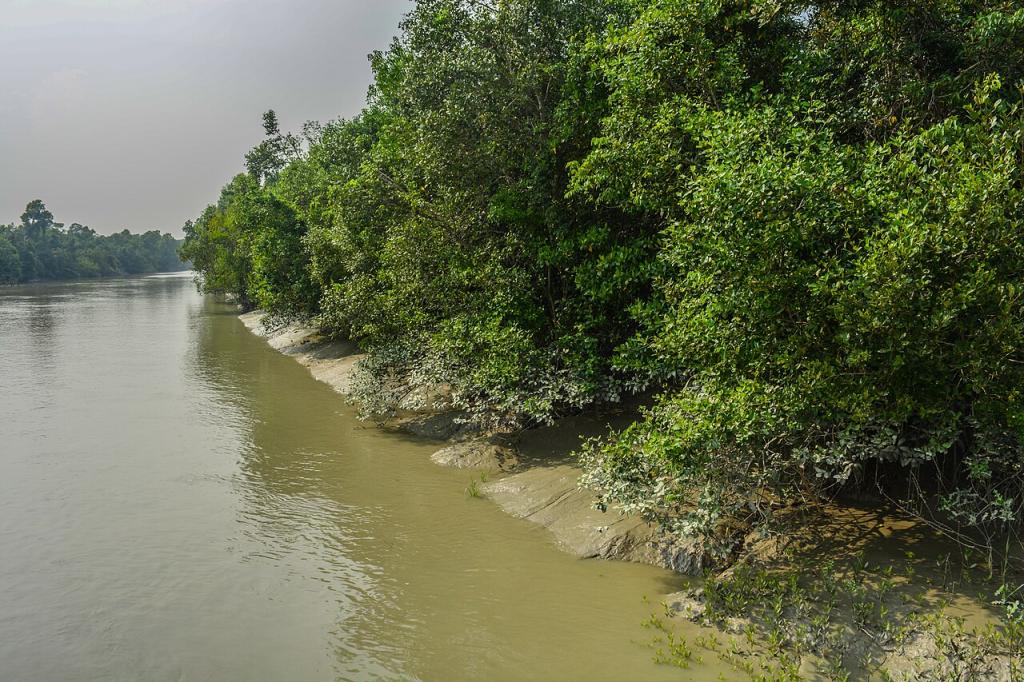
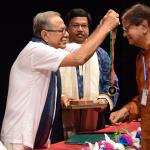
Bangladesh lives closer to its environment than almost any country on Earth. Its rivers carry the meltwater of the Himalayas and the silt of a subcontinent; its coast faces the cyclones of the Bay of Bengal; and its farmland, cities and forests are all being renegotiated, year by year, with a changing climate. It is fitting, then, that the state keeps a medal for the people who defend that environment. The National Environment Award, in Bengali the Jatiya Paribesh Padak, is presented each year by the Ministry of Environment, Forest and Climate Change to a small class of individuals and institutions: a village conservationist and a garment factory, a schoolteacher and a research institute, honoured on the same stage for the same cause.
National Environment Award at a Glance
- Instituted: 2009, by the Ministry of Environment, Forest and Climate Change (an earlier Environment Award was presented in 2007)
- Presented: annually, at the national World Environment Day and Environment Fair inauguration in Dhaka, usually by the Prime Minister or the head of government
- Categories: three, each with an individual and an institutional recipient: Environmental Conservation and Pollution Control; Environmental Education and Awareness; Environmental Research and Technological Innovation
- Recipients: six a year, three individuals and three institutions, chosen by a national committee at the ministry
- The award: the national environment medal and a certificate
- Early recipients: the 2010 class included Chittagong City Corporation, Eco Tex Limited, the movement BAPA and the researcher Humayun Kabir
- Companion honours: the National Wildlife Conservation Award (since 2010) and the National Award for Tree Plantation (since 1993) are presented at the same ceremony
Origins: From a First Experiment to a National Medal
The idea was tried before it was formalised. On World Environment Day 2007 the Ministry of Environment and Forests presented an Environment Award to four organisations, Waste Concern, the Bangladesh Environmental Lawyers Association (BELA), the power company Globeleq and a community water committee, and the Director General of the Department of Environment described it plainly as a beginning: the first time such an award had been started, offered in the hope that it would encourage others to come forward. The choice of recipients was itself a small history of the movement: Waste Concern had pioneered the community-based composting of Dhaka's household waste, turning a municipal curse into fertiliser and income, and BELA had pioneered public interest environmental law, taking the defence of rivers and wetlands into the courts. The award began, in other words, by honouring the two methods, enterprise and litigation, that had built Bangladeshi environmentalism. Two years later the experiment became an institution. The ministry introduced the National Environment Medal in 2009, in recognition of contributions to environmental pollution control and environmental protection, and it has been conferred on the occasion of World Environment Day ever since.
The early editions already showed the award's range. In 2010 the Prime Minister presented the medal to the Chittagong City Corporation for environmental protection, to Eco Tex Limited for pollution control, to the Bangladesh Poribesh Andolon (BAPA), the country's umbrella environmental movement, for education and publicity, and to the researcher Humayun Kabir for research and technology invention. A city government, a factory, a protest movement and a scientist: the four names together announced that environmental defence in Bangladesh would be honoured wherever it was practised, including by those who made their reputation criticising the state itself.
How the Award Works
In its present form the award is made in three categories, and in each category twice over, once to an individual and once to an institution. The first category, environmental conservation and pollution control, honours those who protect ecosystems or clean up their own: the community organiser defending a wetland, the manufacturer who builds with eco-blocks instead of burnt clay bricks, as the Concord Group did in winning the 2022 medal. Concord's case shows what the category is for: the group had set up an eco-friendly brick, block and tile factory as early as 1998, to cut the use of the burnt clay bricks whose kilns ring Dhaka and darken its winter air, and the medal arrived twenty-four years later as the state's acknowledgement that a building materials company could be an environmental actor. The second, environmental education and awareness, honours teachers, campaigners and institutions that change how the public understands the environment. The third, environmental research and technological innovation, honours the scientists and institutes, universities, agricultural and jute research bodies among them, whose work gives the other two categories their tools.
The structure has settled over time. The early medal was given across four fields, separating environmental protection from pollution control and listing education and publicity and research and technology invention alongside them, as the 2010 list shows. The modern award consolidates the fields into three categories and pairs every individual honour with an institutional one, a design that recognises a truth about environmental work in Bangladesh: it is rarely done by heroes alone. Behind the ministry stands the Department of Environment, the regulator whose clearance certificates and effluent-treatment enforcement the award's industry recipients have learned to live with, and whose director general stood on the stage at the award's first experiment in 2007.
Recipients are selected through a national committee process at the ministry, and the medals are presented at the flagship ceremony of the environmental calendar: the inauguration of the World Environment Day observance, the Environment Fair and the National Tree Plantation Campaign, in recent years at the Bangladesh-China Friendship Conference Centre in Dhaka. World Environment Day itself, marked on 5 June since the 1970s under the United Nations, gives the ceremony its date and its theme each year, and Bangladesh's observance has grown around it into a full season of fairs, plantation drives and school programmes, of which the medal presentation is the ceremonial peak. The fair that follows runs for a week, part exhibition, part bazaar of nurseries and green technology, and the tree plantation campaign it launches is the state's annual attempt to put a sapling in every citizen's hands. The same stage hosts the state's other green honours. The National Wildlife Conservation Award, introduced in 2010, honours those who protect the country's wild animals and their habitats; its 2026 recipients included the conservation organisation NACOM and the Department of Zoology at Jahangirnagar University, honoured for wildlife education and research. The National Award for Tree Plantation, running since 1993 and given in seven categories, from educational institutions and local government to private nurseries and rooftop gardens, went to 21 individuals and organisations in its 2025 edition. And the ceremony also distributes profit-sharing cheques to the beneficiaries of the social forestry programme, under which villagers plant and guard trees on roadsides, embankments and public forest land and share the proceeds when the trees are harvested, a scheme that has quietly turned tree planting into rural income across the country. Taken together, the ceremony is the environmental movement's annual durbar: ministry, movement, industry and village on one platform.
The Most Recent Recipients
The National Environment Award 2024, presented in June 2025, went to Md Mahmudul Islam of Tetulia, Panchagarh, for conservation and pollution control, Mohammad Munir Chowdhury of Chittagong for environmental education and awareness, and Professor Dr M Firoz Ahmed for research and technological innovation. The institutional medals went to Snowtex Outerwear Limited of Dhamrai, a garment manufacturer honoured for conservation and pollution control, to the Work for a Better Bangladesh (WBB) Trust for education and awareness, and to the Bangladesh Agricultural Research Institute for research and innovation.
The 2025 award, presented by Prime Minister Tarique Rahman on 9 July 2026 at the World Environment Day 2026 inauguration, went to Assistant Professor Md Hasmat Ali, honoured for conservation and pollution control work, Md Monir Hossain for environmental education and awareness, and Professor Dr Abdus Salam, professor of chemistry and Pro-Vice Chancellor of the University of Dhaka, for research and technological innovation. The institutional recipients were Classical Handmade Products BD Limited for conservation and pollution control, the Institute of Forestry and Environmental Sciences of the University of Chittagong for environmental education, and the Bangladesh Jute Research Institute for research and innovation, a fitting honour for the institute that studies the golden fibre, the delta's own biodegradable answer to plastic.
What the Roll of Honour Shows
Read as a whole, the award's roll of honour is a map of how environmental protection actually happens in Bangladesh. It happens in law, as BELA's presence among the first recipients records; in protest and publicity, as BAPA's medal records; in engineering, in the waste innovators of Waste Concern and the eco-brick makers; in classrooms and union-level campaigns; and in the research institutes that measure the country's air, water and soil. It also happens in places the headlines rarely reach. When the 2024 medal went to a conservationist from Tetulia, the northernmost corner of the country, and the 2025 education medal to the forestry institute that trains the guardians of forests like the Sundarbans' hinterland, the award was doing the quiet work national honours exist to do: telling the rest of the country whose work counts.
The work the medal honours is not abstract. Bangladesh's conservationists defend named places with named instruments: the Ecologically Critical Areas declared under the environment law since the 1990s, among them the Tanguar Haor wetland, also listed under the Ramsar Convention in 2000; the reserved forests and wildlife sanctuaries of the Sundarbans and the hill districts; and the rivers of the Dhaka watershed, where the education and research categories find much of their subject matter. A medal list that moves, over the years, from the lawyers who litigate for those rivers to the teachers who campaign for those wetlands is tracing the real division of labour of a national movement.
The award's limits are the familiar ones of state honours. Six medals a year is a small net for a country of Bangladesh's size and environmental exposure, and the honour carries prestige rather than transformative funding. But its cadence is reliable, its categories are sensibly drawn, and its stage, shared with the wildlife and tree plantation awards at the year's great environmental gathering, gives its recipients an audience no ministry press release could buy. For a nation whose central national project this century is learning to live with its rivers, its coast and its climate, a project the state has written into long-term frameworks such as the Bangladesh Delta Plan 2100, a medal that thanks the people doing that learning, in public, every year, is more than ceremony. It is a statement of what the republic values, renewed annually in green.
Sources
Ministry of Environment, Forest and Climate Change announcements and National Committee decisions (2024, 2025); The Business Standard, The Daily Star, Dhaka Tribune and Financial Express coverage of the 2007, 2010, 2022, 2025 and 2026 ceremonies; BSS reporting on the World Environment Day 2026 inauguration of 9 July 2026.