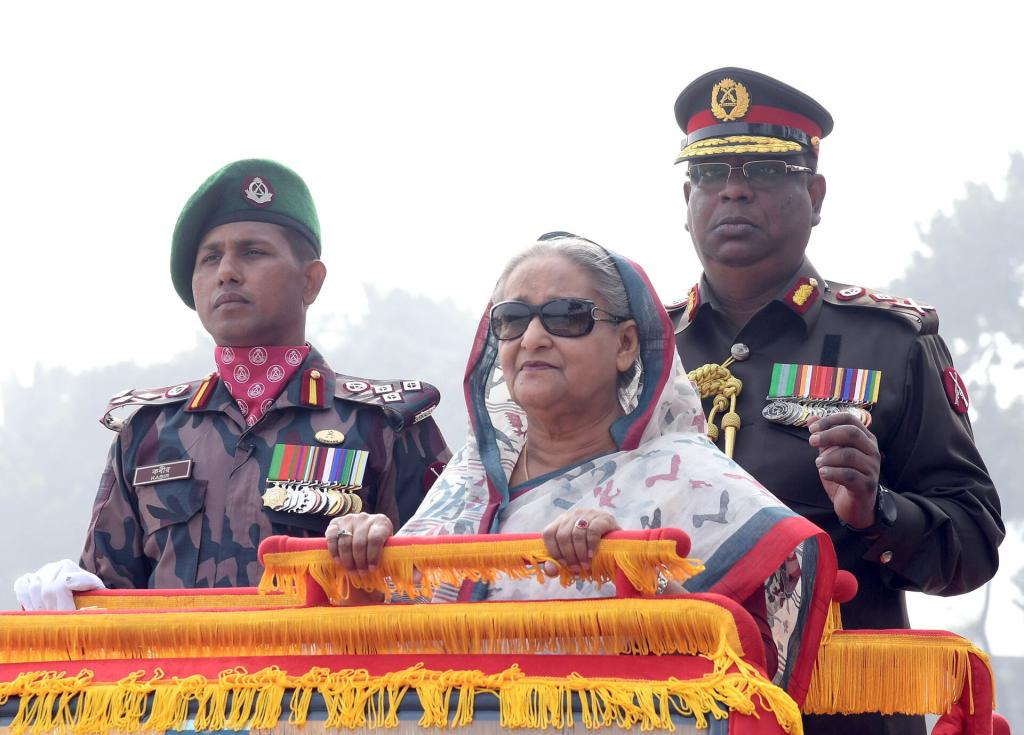
The Border Guard Bangladesh (BGB) is the paramilitary border force of Bangladesh, responsible for guarding the country's land borders with India and Myanmar. It works under the Ministry of Home Affairs, is headquartered at Pilkhana in Dhaka, and is commanded by a Director General drawn from the Bangladesh Army. According to the force's own public history, published on its official website (bgb.gov.bd), the BGB traces its lineage back more than two centuries, to the Ramgarh Local Battalion raised in 1795, which makes it the oldest uniformed force in Bangladesh. Through its earlier names, the Frontier Guards, the Eastern Frontier Rifles, the East Pakistan Rifles and the Bangladesh Rifles, the force has guarded the eastern frontier under successive states, and its members played a documented part in the Liberation War of 1971. This article is an encyclopedic profile compiled only from publicly available sources, which are listed openly at the end.
Origins: From the Ramgarh Local Battalion to the Eastern Frontier Rifles
The lineage most often cited in public reference works begins on 29 June 1795, when the East India Company raised a frontier force at Ramgarh, in the hill country south east of Chittagong, to deal with insurgent activity around the Ramgarh area. A judgment of the Supreme Court of Bangladesh, which summarised the force's history from submissions placed before it, records that this Frontier Protection Force became the Ramgarh Local Battalion, with a strength given in published accounts as 486 personnel, and that it established an early camp at Pilkhana, where the BGB headquarters still stands. The battalion served under that name until about 1860.
In 1861, according to the same public chronology reproduced by the BGB and by The Daily Star, the force was reorganised as the Frontier Guards. It was renamed the Bengal Military Police in 1891, and in 1920 it was restructured again as the Eastern Frontier Rifles, the name it carried until 1946. Reference works note that Pilkhana, a former Mughal elephant stable turned cantonment on the edge of old Dhaka, became the force's headquarters in the later nineteenth century and has remained its home ever since. The details of these early reorganisations vary slightly between published chronologies, but the sequence of names, Ramgarh Local Battalion, Frontier Guards, Bengal Military Police and Eastern Frontier Rifles, is consistent across the BGB's own history page, Banglapedia based summaries and newspaper retrospectives.
The East Pakistan Rifles
After the Partition of India in 1947, the Eastern Frontier Rifles units stationed in the east were regrouped for the new province of East Pakistan. Published histories record that the force was reconstituted in 1949 as the East Bengal Rifles and reorganised in 1958 as the East Pakistan Rifles (EPR). As the EPR, it was the primary border protection and anti smuggling force of East Pakistan, stationed along the province's long frontier with India and its shorter border with Burma, now Myanmar. Its headquarters remained at Pilkhana, and its officers were drawn largely from the Pakistan Army, while its rank and file were recruited in Bengal.
The Liberation War of 1971
The EPR's place in national history was fixed in 1971. When the Pakistan Army launched its crackdown on the night of 25 March 1971, EPR units were among the first Bengali uniformed formations to resist, and the EPR headquarters at Pilkhana itself came under attack that night. Published accounts of the war, summarised in reference works on the force, state that nearly 9,000 EPR members turned against the Pakistan Army and joined the Mukti Bahini, and that 817 EPR personnel were killed in action during the war. Readers can follow the wider conflict in Wiki Bangla's account of the Liberation War of Bangladesh (1971).
Two EPR soldiers received the Bir Shreshtha, the highest gallantry award of Bangladesh, posthumously. Lance Naik Nur Mohammad Sheikh was killed on 5 September 1971 at Goalhati in Jessore district, providing covering fire so that his comrades could withdraw, according to his award citation as reproduced in Banglapedia. Lance Naik Munshi Abdur Rouf was killed in April 1971 in the Chittagong Hill Tracts, where, according to published accounts of his action, he kept firing his machine gun to hold off an attacking force and allow his unit to escape. Both men are among the seven Bir Shreshtha recipients of 1971, and the BGB continues to commemorate them: a public college at Pilkhana carries Nur Mohammad Sheikh's name in its English form, Birshreshtha Noor Mohammad Public College.
Bangladesh Rifles, 1972 to 2009
After independence, the EPR was renamed the Bangladesh Rifles (BDR). Public sources differ on the exact day: several reference works give 29 January 1972, while The Daily Star's retrospective on the force, drawing on the BGB's own history, dates the change to 3 March 1972. What is consistent is that the renaming took place in the first months of 1972, that the force kept its Pilkhana headquarters and border role, and that its commissioned officers were seconded from the Bangladesh Army, an arrangement that continues in the BGB today. For nearly four decades the BDR guarded the border, ran anti smuggling operations and supported the civil administration during elections, natural disasters and internal security duties.
The Pilkhana Mutiny of February 2009
On 25 and 26 February 2009, during the force's annual BDR Week at Pilkhana, BDR soldiers mutinied against their officers. According to The Daily Star's reporting of the event and its aftermath, 74 people were killed, including 57 army officers serving with the BDR, among them the Director General, Major General Shakil Ahmed. The mutiny began at the headquarters and unrest was reported at some other BDR units before the mutineers surrendered. Criminal trials followed in the years after: in November 2013, as widely reported at the time, a Dhaka court sentenced 152 mutineers to death for their part in the killings, with further proceedings in the mutiny cases continuing in later years. The causes of the mutiny were examined by official inquiry committees whose findings were reported in the press at the time; this article records only the established outline above and offers no view on contested claims about the event.
Reorganisation and the Border Guard Bangladesh Act 2010
The government responded with a full reorganisation. Parliament passed the Border Guard Bangladesh Bill on 8 December 2010, and, as bdnews24.com reported, President Zillur Rahman signed it into law on 20 December 2010. The Border Guard Bangladesh Act 2010, Act No. 63 of 2010, reconstituted the force under its new name, Border Guard Bangladesh, with a new flag, monogram and uniform, and it raised the maximum punishment for mutiny from seven years imprisonment to the death penalty, as The Daily Star reported when the bill was passed. The new flag and monogram were formally unveiled at Pilkhana on 23 January 2011, when, in The Daily Star's words, the BGB began its journey afresh. The force marks 20 December, the date the Act came into force, as BGB Day.
Structure and Leadership
The BGB is a paramilitary force under the Ministry of Home Affairs. Its headquarters is at Pilkhana, Dhaka, and it is headed by a Director General of major general rank, a serving Bangladesh Army officer appointed by the government. Below the headquarters, published descriptions of the force describe regional headquarters, sectors commanded at colonel level, battalions and, at the frontier itself, border outposts from which patrols are run. Published figures for the number of regions, sectors, battalions and total personnel vary between sources and years, so this article does not state a single strength figure: readers who need a current establishment figure should consult the BGB's official website, which is the authoritative public source.
As of November 2026, the Director General is Major General Mohammad Ashrafuzzaman Siddiqui. Bangladesh Sangbad Sangstha (BSS) reported that the government appointed him on 30 January 2024 and that he took charge on 5 February 2024 from Major General A. K. M. Nazmul Hasan, having previously served as Director of Military Training at Army Headquarters. His remaining in post through 2026 is confirmed by BSS and press reporting from October and November 2026, which name him as BGB Director General at public events in Dhaka, and by the Shimanto Bank, the bank associated with the force, which lists him as its chairman in his capacity as BGB chief.
Roles and Duties
Guarding the border
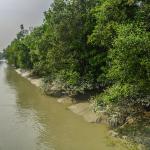
The BGB's central task is the security of Bangladesh's land border. The force publicly states the total border length it guards as 4,427 km. In a sector level press briefing reported in 2026, a BGB sector commander gave the breakdown as 4,156 km with India and 271 km with Myanmar. Indian official sources give the India section alone as about 4,096 km; the difference reflects differing published measurements, and this article follows the BGB's own stated total while noting the variant. Much of the border is riverine, forested or hilly, and it is patrolled from border outposts rather than held as a continuous line.
Anti smuggling and border crime
Alongside guarding the line itself, the BGB runs operations against smuggling of goods and narcotics, human trafficking and illegal cross border movement. Its public releases regularly report seizures and arrests: a 2026 sector briefing from the north east region, for example, reported seizures of smuggled goods and drugs and a series of arrests over a period of months, figures the force publishes through the press rather than in a single annual total. On the Myanmar frontier, the BGB also deals with the security dimension of displacement from Rakhine State, an issue covered in Wiki Bangla's account of the Rohingya refugee crisis in Bangladesh: in October 2026, BSS reported the BGB Director General briefing an international investigative official on the force's measures to prevent illegal crossings.
Border conferences and liaison
The BGB manages the border day to day through formal liaison with its counterparts. With India's Border Security Force (BSF) it holds Director General level border conferences, the senior forum under the two countries' coordinated border management arrangements. The 57th such conference was held in New Delhi from 8 to 11 June 2026, led on the Bangladesh side by Major General Mohammad Ashrafuzzaman Siddiqui, and reporting of the meeting recorded agreement on coordinated patrols, intelligence sharing and action against smuggling, trafficking and illegal migration, with the next conference proposed for Dhaka in November 2026. Below that level, sector and battalion commanders hold regular flag meetings with their BSF counterparts. The BGB maintains similar liaison with Myanmar's border authorities for the shorter south eastern frontier, including meetings on crossings, smuggling and repatriation questions.
Disaster response and aid to civil power
The force's duties extend beyond the border line. BGB units are routinely deployed in aid to civil power when the government calls them out, for example for election security and for public security duties around major festivals: in October 2026 BSS reported BGB personnel providing security at around 1,800 Durga Puja mandaps within eight kilometres of the border. The BGB also takes part in disaster response after floods and cyclones, distributing relief and supporting rescue work in the border districts where its units are already stationed, and it supports internal security operations alongside other agencies when directed by the government. These secondary roles are set out in the force's public descriptions of its duties on its official website.
Sources
- Border Guard Bangladesh, official website (bgb.gov.bd): the force's public history, duties and leadership pages.
- Bangladesh Sangbad Sangstha (BSS), "New BGB DG takes office", 5 February 2024; BSS reporting of October and November 2026 naming Major General Mohammad Ashrafuzzaman Siddiqui as Director General.
- The Daily Star, "BGB starts journey", 23 January 2011, and "BDR set to turn BGB", 21 December 2010: the renaming chronology, the 2010 Act and the 2009 casualty figures.
- bdnews24.com, "From BDR to BGB": passage of the Border Guard Bangladesh Bill on 8 December 2010 and presidential assent on 20 December 2010.
- Supreme Court of Bangladesh, published judgment summarising the history of the Ramgarh Local Battalion, the Frontier Guards and the Eastern Frontier Rifles from submissions before the court.
- Banglapedia, the National Encyclopedia of Bangladesh (Asiatic Society of Bangladesh): entries on the Bir Shreshtha recipients Nur Mohammad Sheikh and Munshi Abdur Rouf and on the East Pakistan Rifles in the Liberation War.
- Press reporting of the 57th BGB and BSF Director General level conference, New Delhi, 8 to 11 June 2026, and of the BGB sector level press briefing of 2026 giving the 4,427 km border figure and its breakdown.
- Shimanto Bank PLC, board of directors page (accessed November 2026), listing the BGB Director General as chairman.
Note: This article has been compiled solely from publicly available sources, including official public releases and the published reference works listed below, for general information only. It is not an official publication of the Bangladesh Armed Forces or the Border Guard Bangladesh.