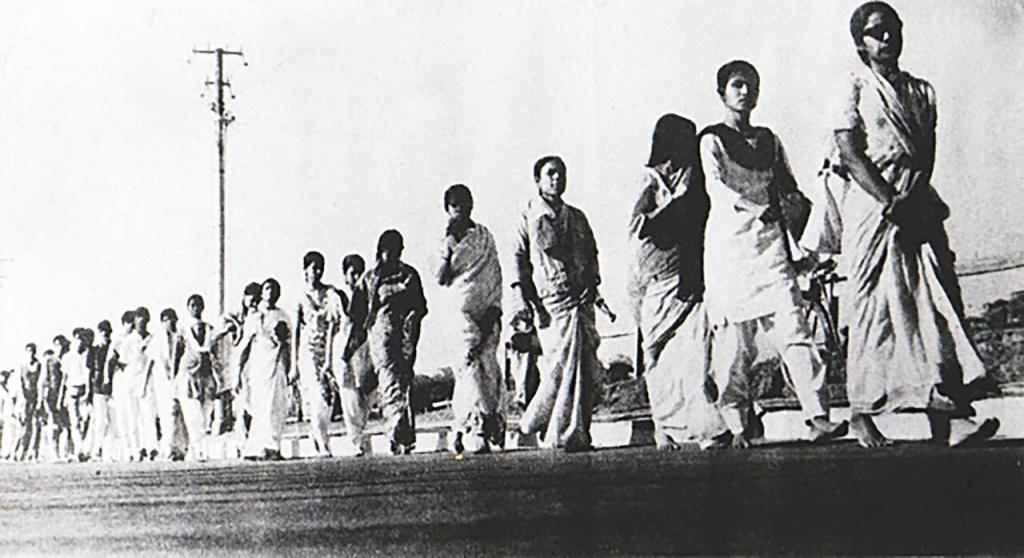
The Mass Uprising of 1969 was the wave of demonstrations, strikes and street protests that swept East Pakistan between January and March 1969 and forced the resignation of President Ayub Khan, who had ruled Pakistan for more than ten years. It began as a student movement built around an eleven point programme. It ended as something much wider: workers, peasants, artisans, teachers and schoolchildren joined the processions, and demands that had started with university fees grew into a call for full autonomy for East Pakistan, the withdrawal of the Agartala Conspiracy Case and the end of military rule. Banglapedia describes the upsurge as the greatest mass awakening in East Pakistan since the creation of Pakistan in 1947. Within two months the government had abandoned its showcase trial and lost its president.
Background: A Decade of Ayub Khan and East Pakistan's Grievances
Ayub Khan, the commander in chief of the Pakistan Army, seized power in October 1958, abrogated the constitution and imposed martial law. His system, later formalised through the Constitution of 1962 and an indirect electoral college known as Basic Democracy, concentrated authority in the presidency and kept parties under tight control. In East Pakistan that system sat on top of deeper complaints. The eastern wing held a majority of Pakistan's population, and its jute exports earned a large share of the country's foreign exchange, yet investment, industrial licensing, senior civil service posts and military recruitment were widely perceived to favour the western wing. Critics argued that the province was treated as a source of earnings, rather than as an equal partner.
Language and culture gave those economic arguments a national frame. The Language Movement of 1947 to 1952, in which students were killed defending Bengali as a state language, had already taught a generation that identity in Pakistan had to be fought for in the street. Banglapedia traces a direct line from that movement to 1969: a sense of separate Bengali identity, built through successive campaigns, combined with anger over economic deprivation and political exclusion.
By 1968 the regime was also celebrating itself. Official events in October 1968 marked a so called Decade of Development, presenting ten years of military led government as a success story. For students and workers facing rising prices, low wages and restricted politics, the celebration sharpened rather than settled the argument. In the east the movement acquired a distinct programme, because it fused the demand for democracy with the demand for provincial autonomy.
The Agartala Case and the Politics of Late 1968
The immediate catalyst was a prosecution. In early 1968 the government filed what became known as the Agartala Conspiracy Case, formally State vs Sheikh Mujibur Rahman and Others. Sheikh Mujibur Rahman, leader of the Awami League and author of the Six Point programme for a federal Pakistan, was named as principal accused, together with 34 others, among them members of the armed forces and civil servants. The prosecution alleged that the accused had conspired at Agartala, in the Indian state of Tripura, to separate East Pakistan from Pakistan by armed means. A special tribunal began hearing the case inside Dhaka Cantonment in June 1968.
The case was intended, in the government's presentation, to discredit the autonomy movement as treason. In East Pakistan it had the opposite effect on a growing section of the public. Mujib was already in detention, and the trial turned him into the central symbol of the province's grievances. Demands for the withdrawal of the case and the release of all political prisoners moved to the top of opposition politics.
Street action built through the last weeks of 1968. On 6 December 1968 the National Awami Party led by Maulana Abdul Hamid Khan Bhasani, together with workers and peasants organisations, observed a Repression Resistance Day at Paltan Maidan in Dhaka, after which a procession surrounded, or gheraoed, the Governor's House. A province wide hartal followed on 8 December, and the Awami League observed its own resistance day on 10 December. Bhasani's party then launched a gherao programme against officials, beginning with the residence of the deputy commissioner of Pabna on 29 December. The opposition was converging, but still lacked a single platform. That arrived in January.
Students Unite: The Sangram Parishad and the Eleven Points
On 4 and 5 January 1969, in accounts that differ slightly on the exact day, leaders of the East Pakistan Students League, the two factions of the East Pakistan Students Union associated with Matia Chowdhury and Rashed Khan Menon, and Dhaka University Central Students Union leaders formed the Sarbadaliya Chhatra Sangram Parishad, usually translated as the All Parties Student Action Committee. One faction of the government aligned National Students Federation also joined. Based at the University of Dhaka and led by figures including Tofael Ahmed, the Parishad became, in Banglapedia's assessment, the pre-eminent organiser of the upsurge, with action committees spreading across the province.
Its charter was the Eleven Points Programme, announced in January 1969. It took the Awami League's Six Points as its political core and built a broader social agenda around them. In summary, the points demanded education reform, including the scrapping of the Dhaka University Ordinance, lower fees and wider access to schooling; parliamentary democracy by universal adult franchise, with press freedom; full autonomy for East Pakistan on the Six Points basis; the replacement of West Pakistan's One Unit province by its former provinces; nationalisation of banks, insurance and large industries, including jute; lower taxes for peasants and a fair minimum price for raw jute; better wages and housing for workers, with the right to strike; flood control in East Pakistan; repeal of Ayub's repressive laws; withdrawal from the SEATO and CENTO alliances and a neutral foreign policy; and, finally, withdrawal of the Agartala case and the release of all detained activists.
The breadth was the point. A Dhaka undergraduate, a jute grower, a mill worker and an Awami League voter could each find their own grievance in the same document, tied to autonomy. On 8 January eight opposition parties, including the Awami League and one National Awami Party faction, formed the Democratic Action Committee to press for a federal government, adult franchise elections and the release of detainees. Some parties in that alliance would not endorse the full Eleven Points, and the students kept the initiative. On 17 January the Parishad met at Dhaka University in defiance of Section 144, the order banning assemblies, and clashes with police followed. It then called a province wide strike for 20 January.
Asad Is Killed and Protest Becomes an Uprising
On 20 January 1969 police opened fire on demonstrators in Dhaka during that strike. Among those killed was Amanullah Mohammad Asaduzzaman, known as Asad, a master's student in history at Dhaka University and a leader of the East Pakistan Students Union (Menon group), shot near Dhaka Medical College. His death is treated by almost every account as the turning point at which a student agitation became a mass uprising. His bloodstained shirt was carried in procession as a symbol of the movement, and the gate near the place where he fell later took his name, as Asad Gate.
The Parishad answered with processions from 21 January, a torch procession on 23 January and a hartal on 24 January. The 24th brought a new level of intensity and cost. In Dhaka, Matiur Rahman Mallik, a class nine student of Nabakumar Institution, was killed by police fire, as was Rustam Ali. In Mymensingh another young activist, Alamgir Mansur Mintu, was also killed, according to contemporary summaries. The army was deployed in Dhaka and an indefinite curfew imposed, yet the movement widened beyond the campuses: industrial workers struck and marched, offices were gheraoed, and in the countryside peasants and students confronted local officials and men accused of corruption. Banglapedia notes that low and middle income groups turned it into a struggle over economic emancipation as well as political rights. 24 January is still observed in Bangladesh as Mass Uprising Day.
Zahurul Haq, Shamsuzzoha and a Province in Revolt
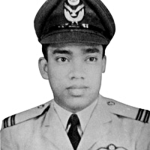
In February the deaths came from inside the state's own custody and from a university campus, and each stripped the regime of room to manoeuvre. Sergeant Zahurul Haq of the Pakistan Air Force was the seventeenth accused in the Agartala case, held under trial in Dhaka (Kurmitola) Cantonment. On the morning of 15 February 1969 a havildar on guard shot him at point blank range at the door of his cell. He was taken to the Combined Military Hospital and died that night, at around 10 pm according to Banglapedia's biography of him. The killing of an unconvicted prisoner by his own guards was, for the movement, proof that the trial had become indefensible.
That evening Maulana Bhasani told a public meeting that if the Eleven Points were not met and political prisoners not released within two months, taxes would not be paid, and he warned that Mujib might be freed from jail by force, invoking the storming of the Bastille. Angry crowds set fire to the State Guest House in Dhaka and other government buildings. The guest house mattered because the men running the prosecution were staying there: Justice S. A. Rahman, chairman of the Agartala tribunal, and the government's chief counsel were resident in the building, and they left in secret as it was attacked.
Three days later, on 18 February 1969, Dr Mohammad Shamsuzzoha, a reader in chemistry and proctor of Rajshahi University, was killed at the main gate of his university. Students, agitating after police action had injured several of them the previous day, were preparing to defy Section 144 on the adjoining highway, where soldiers were deployed. Shamsuzzoha went to the gate, appealed to the officers not to fire and tried to bring the students back inside. He was fatally wounded in the firing that followed: Banglapedia's Mass Upsurge entry describes him as bayoneted to death, while its biographical entry records that he was wounded by a bullet and died in hospital, a difference later accounts have not fully resolved. What is not in dispute is the effect. A teacher killed while shielding his students became a martyr far beyond Rajshahi, and crowds in Dhaka defied the curfew in large numbers. A Rajshahi University hall now bears his name, as a Dhaka University hall bears Zahurul Haq's.
The Agartala Case Is Withdrawn
The observance of Shaheed Day on 21 February, anniversary of the Language Movement killings of 1952, fused the new martyrs with the old ones in a single calendar of remembrance. That period also brought the regime's first open retreat: Ayub announced that he would not contest the next presidential election. Then, on 22 February 1969, the government withdrew the Agartala case altogether. Mujib and the remaining accused were released unconditionally from Dhaka Cantonment, along with a group of political detainees whose number Banglapedia gives as 34.
The release was the movement's clearest victory, and it transformed Mujib's position. On 23 February the Sangram Parishad organised a vast public reception for the released men at the Ramna Race Course ground in Dhaka. At that meeting Tofael Ahmed, presiding, proposed that Mujib be honoured with the title Bangabandhu, meaning Friend of Bengal. A leader whom the state had spent a year trying to convict of treason now stood, by the students' acclamation, as the acknowledged spokesman of the province, and the Awami League's popularity surged on the strength of a release that the street, not a courtroom, had won.
Round Table, Resignation and the Yahya Takeover
Ayub's remaining strategy was negotiation. He had proposed a Round Table Conference in a broadcast on 1 February, and after Mujib's release it went ahead at Rawalpindi from 10 to 13 March 1969. Mujib attended and placed the Six Points, supplemented by the Eleven Points, before the conference as the basis of a federal constitution. Bhasani's National Awami Party and Bhutto's Pakistan People's Party boycotted the talks, so the opposition at the table was already divided. Ayub accepted two demands in principle, a federal parliamentary system and direct elections by universal adult franchise, but he refused provincial autonomy on the Six Point model, treating it as a question for a future elected assembly. For the Awami League that refusal removed the substance of any settlement, and the conference ended without agreement on the issue that had driven the uprising.
Protests continued, and the administration's authority was visibly failing. On 25 March 1969 Ayub Khan resigned the presidency. Instead of handing power to a civilian successor under his own constitution, he passed it to the army commander in chief, General Agha Mohammad Yahya Khan, who proclaimed martial law across Pakistan. The ending was therefore ambiguous. The dictator of eleven years was gone, the Agartala case was dead and adult franchise elections had been promised. But power had moved from one general to another, the autonomy question was untouched, and the new regime's promises would be tested at the ballot box of December 1970 and in the confrontation that followed.
On the Road to 1971
Historians generally place the Mass Uprising of 1969 as the middle term between the Language Movement and the Liberation War of 1971: the moment when the demand for autonomy stopped being a party programme and became the active project of a whole society. Three legacies stand out. First, the uprising proved that the Pakistani state could be forced to retreat by sustained street mobilisation, a lesson neither side forgot in 1970 and 1971. Fear of the police and the bureaucracy, Banglapedia notes, diminished sharply, especially in rural areas. Second, it settled the leadership question in East Pakistan. Mujib emerged from prison with his authority confirmed by the Bangabandhu title, and the Eleven Points, carried into the Awami League's election campaign, helped prepare the landslide of 1970, a connection Banglapedia's entry on the Sangram Parishad makes explicitly. Third, it widened the political nation. Students had led, but workers, peasants and the urban poor had acted for demands of their own, and slogans heard in 1969, including calls for an independent Bangladesh and the cry of Joy Bangla, pointed beyond the federal settlement the Six Points formally proposed.
That last point is also where interpretation divides. In its formal documents the goal remained autonomy within a restructured Pakistan, and Mujib argued for exactly that at the Round Table Conference. Other participants and later historians have read the uprising as, in effect, the rehearsal for independence: the point at which, for many Bengalis, the idea of Pakistan ceased to command loyalty, whatever the negotiating position still said. Both readings can be supported from the record, and the uprising's central lesson, that a united province could not be governed against its will, shaped the far greater test of 1971. Its simplest memorial is its dead of a single month: Asad the student, Zahurul Haq the soldier on trial, Matiur the schoolboy and Shamsuzzoha the teacher who died protecting his students.