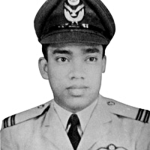
Sepoy Hamidur Rahman (2 February 1953 to 28 October 1971) was the youngest of the seven freedom fighters awarded the Bir Shreshtha, the highest gallantry honour of Bangladesh. He was eighteen years old, a rifleman of the 1st East Bengal Regiment, when he crawled alone through the darkness at the Dhalai border outpost near Sreemangal, silenced the machine gun that was holding up his company's attack with his grenades, and was killed in doing it. His comrades carried his body across the border into India, and there it stayed for thirty-six years. Only in December 2007 did Bangladesh bring him home and bury him, with full state honours, at the Martyred Intellectuals' Graveyard in Mirpur, Dhaka. His story is told in full in accounts of the Liberation War of Bangladesh, but the outline is simple: a village boy from the Jhenaidah border country, a few months of soldiering, one night at Dhalai, and a grave that took a generation to come home.
Early Life in a Border Village
By the account carried in most Bangladeshi sources, Hamidur Rahman was born on 2 February 1953 at Khardo Khalishpur village, in Maheshpur thana of what was then Jessore district and is now Jhenaidah district. The village has since been renamed Hamid Nagar in his honour. He was the eldest son of his family; recent anniversary reporting in the Daily Observer names his father as Akkas Ali Mondal and his mother as Kaymunnesa, though some older listings give his father's name in the variant form Abbas Ali Mandal. The family's own history was shaped by the border it lived beside. When India was partitioned in 1947, the family's property on his father's side fell on the Indian side of the new line, and the family crossed over and settled at Khardo Khalishpur, in the border country of Jhenaidah.
His schooling was modest, as Banglapedia records it: primary education at Khalishpur Primary School, and then study at a local night school. He grew up in a farming border village, within sight in effect of the frontier he would one day cross as a soldier, and cross once more, dead, in the arms of his comrades.
One complication has to be stated plainly, because readers who check the standard reference will meet it. Banglapedia, the national encyclopedia published by the Asiatic Society of Bangladesh, gives a different origin for him: it says he was born in 1945 at Dumuria village in Chapra thana of the 24 Parganas district in West Bengal, and that his family migrated to East Bengal after Partition in 1947 and settled at Khalishpur. That version cannot be reconciled with the 2 February 1953 birth date given by the Daily Star, by Wikipedia and by the anniversary reporting of his own district, nor with his universally reported status as the youngest of the seven Bir Shreshtha recipients, which depends on the 1953 date. This article follows the majority account, 1953 and Khardo Khalishpur, while recording that Banglapedia differs. The discrepancy is unresolved in the published sources.
Joining the East Bengal Regiment
Hamidur Rahman joined the East Bengal Regiment on 2 February 1971, which on the majority dating was his eighteenth birthday. Banglapedia records that he was posted to the East Bengal Regimental Centre in Chittagong cantonment. His service number, as listed in the standard rolls of the seven Bir Shreshtha recipients, was 3943014, and his rank was sepoy, the lowest rank of an infantry soldier. Some later popular accounts say he had joined the army in 1970; the dated enlistment of 2 February 1971 is the version given by Banglapedia and Wikipedia, and it is the one used here.
Seven weeks later the Pakistan Army launched its crackdown of 25 March 1971, and the Bengali regiments were caught inside their own cantonments. Banglapedia records that, faced with the attack, Hamidur Rahman left Chittagong cantonment and made his way back to his village home. From there he joined the liberation forces at Dhalai, on the south-western side of Kamalganj thana in Moulvibazar district, hundreds of kilometres from home, in the tea garden country along the Tripura border. He was enrolled with C Company of the 1st East Bengal Regiment, fighting in what was organised as Sector 4 of the Mukti Bahini. The sector commander was Major General Chitta Ranjan Datta, a detail worth remembering because, thirty-seven years later, it was Datta who would inaugurate the museum built in Hamidur Rahman's memory in his home village.
The Road to Dhalai
Dhalai was a border outpost in the tea country of Kamalganj, in present day Moulvibazar district, close to Sreemangal and facing the Indian state of Tripura. The outpost stood at the eastern end of the Dhalai tea garden, and it mattered out of proportion to its size: border outposts along the Tripura frontier were the doors through which the Mukti Bahini moved between its camps in India and the fighting inside East Pakistan. Banglapedia puts it directly: for its strategic importance, the freedom fighters resolved to capture the Dhalai border outpost, and the task was given to C Company of the 1st East Bengal Regiment, Hamidur Rahman's company.
The attack did not succeed at once. Banglapedia records constant encounters between the freedom fighters and the Pakistani troops from the night of 24 October until the sunset of 27 October, with no tangible result. The outpost was defended by bunkered positions and machine guns, and the attacking troops had to cross open, broken ground cut by the hilly streams and canals of the tea garden. Each night's advance ran into the same problem: a well placed gun that the attackers could neither suppress nor get close to in the open.
The Night of 28 October 1971
On the night before 28 October, three platoons of freedom fighters advanced silently towards the outpost, meaning to surprise it. They were close to the enemy positions, on the verge of the attempt, when a mine exploded. The blast gave them away. The defenders opened indiscriminate fire, and a battle that lasted for hours followed. Banglapedia records that the advance was seriously obstructed by enemy light machine gun fire from the north-east; other accounts describe the decisive gun as sitting in the south-western corner of the outpost. The sources differ on the compass point. They do not differ on what happened next.
Hamidur Rahman volunteered, in Banglapedia's telling he took a vow, to destroy the machine gun post. He separated from his comrades in the darkness with grenades in his hand and crawled towards the gun, in the fuller accounts through the hilly canals that cut the ground in front of the outpost. He reached the post and killed its two operators with his grenades, silencing the gun. Other retellings, including the account drawn from the Prothom Alo report of his homecoming, add that he threw two grenades before he was hit, and that he then got into the machine gun post itself and fought its two crewmen hand to hand before the gun was neutralised. In every version, the end is the same: at the moment the gun fell silent, Hamidur Rahman was struck by an enemy bullet and killed, on 28 October 1971, a few feet from the position he had destroyed. He was eighteen years old.
With the gun gone, the tide of the fight turned. The East Bengal Regiment's advance took the enemy's first line within a short time, and the outpost was captured by the freedom fighters. When his comrades reached the machine gun post, they found Hamidur Rahman's body there.
The Wider Battle for Dhalai
Hamidur Rahman's action was the opening of a larger battle, not the whole of it. The Battle of Dhalai is conventionally dated from 28 October to 3 November 1971. The task of taking Dhalai had first been given to the Mukti Bahini, and after the first assaults the fight drew in regular Indian forces: three infantry battalions of the 61 Mountain Brigade, the East Bengal Regiment battalion and 7 Rajputana Rifles, supported by an artillery brigade, against the Frontier Force troops holding the position. The Pakistani commander on the ground, Major Javed, was killed in the battle, and senior Indian officers, including Brigadier Shiv Yadav and Lieutenant Colonel Devasan of 7 Rajputana Rifles, were wounded. The advancing column finally secured the Dhalai border outpost on 3 November 1971. Published accounts disagree on the number of the Frontier Force battalion involved, naming the 30th in the accounts of Hamidur Rahman's own fight and the 12th in the standard battle summaries, so this article names the regiment without the battalion number. What is not disputed is the cost, or the place of the first night's action within the battle: the sepoy who silenced the gun on 28 October made the capture of the position possible, and he did not live to see it completed.
Buried Across the Border
The freedom fighters carried Hamidur Rahman's body away from the battlefield, some 30 kilometres into India by Banglapedia's account, and buried him at Ambasa in Tripura. The December 2007 reporting in the Daily Star locates the grave more precisely, at East Roypara in Hatimarachara, in the Dhalai district of Tripura; contemporary Indian reporting added that his body had been brought to Hatimarachara, about 40 kilometres inside Tripura, by a man named Rehman Mian and given a proper Muslim burial in a local family's graveyard. A monument was later erected at the Dhalai border, on or near the spot where he fell.
There his grave remained for thirty-six years, in another country, while independent Bangladesh grew up on the other side of the wire. He was not forgotten: his name stood in the roll of the seven Bir Shreshtha recipients, his village took his name, and a stadium, a college and a ferry would all come to carry it. But the man himself lay in Tripura. The push to change that gathered force after the remains of Bir Shreshtha Flight Lieutenant Matiur Rahman were brought back from Pakistan in June 2006; freedom fighters and Hamidur Rahman's own family pressed the government to do the same for him, and researchers working to trace the graves of fallen freedom fighters in India located and identified his burial place at Hatimarachara.
The Bir Shreshtha Award
The Bir Shreshtha, which translates roughly as the Most Valiant Hero, is the highest gallantry award of Bangladesh, and it has only ever been given to seven men, all of them killed in the Liberation War. The list was published in the Bangladesh Gazette on 15 December 1973. Hamidur Rahman is, on the accepted dating, the youngest of the seven, and for thirty-six years his grave lay outside the country he had died to free. The full roll and the tiers below it are set out in the guide to the gallantry awards of Bangladesh. His citation rests on the Dhalai action alone: a single night, a single gun, and a sepoy who decided that the gun would stop firing even if stopping it cost him his life.
Bringing Him Home: December 2007
On 27 October 2007, one day short of the thirty-sixth anniversary of his death, the advisers of the caretaker government decided to bring Hamidur Rahman's remains back to Bangladesh and bury him beside Bir Shreshtha Matiur Rahman. A seven member Bangladesh delegation, led by Humayun Kabir Khan, a joint secretary of the Liberation War Affairs Ministry, travelled to Tripura. On Sunday 9 December 2007 the remains, exhumed from the grave at Hatimarachara, were formally handed over by the Tripura government, and Indian troops presented a guard of honour.
On Monday 10 December the coffin entered Bangladesh by road through the Bibirbazar land port in Comilla, received with a guard of honour, and rested overnight at Comilla cantonment. At dawn on Tuesday 11 December the motorcade set out for Dhaka, and thousands of people lined the route. At the National Parade Square the coffin, draped in the national flag, was received with a 21 gun salute. President Iajuddin Ahmed, as supreme commander of the armed forces, formally received the remains on behalf of the nation and placed a wreath on the coffin; Chief Adviser Fakhruddin Ahmed and the chiefs of the three services paid their respects, the last post was sounded, and a namaz-e-janaza was held. Among those present were his three brothers and two sisters. His youngest sister, Rizia Khatun, told the Daily Star that the family was glad her brother's body had been brought home, and that it would have been better had it happened while their mother was still alive; she had died in 2005, two years too soon to see it.
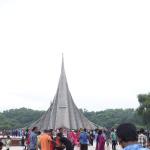
From the parade square the coffin was carried in a ceremonial motorcade to the Martyred Intellectuals' Graveyard at Mirpur, and there, with full state and military honours and a final gun salute as the coffin was lowered, Hamidur Rahman was buried beside Bir Shreshtha Matiur Rahman, in the reserved ground for eminent freedom fighters. Thirty-six years after Dhalai, the youngest Bir Shreshtha was home.
Honours, Memorials and a Name That Travels
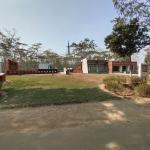
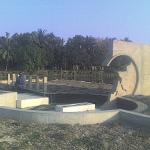
The commemoration began long before the reburial and has continued since. His birth village of Khardo Khalishpur is now Hamid Nagar. The Bir Shreshtha Hamidur Rahman Stadium serves Jhenaidah district. The college at Khalishpur Bazar, founded on 1 December 1999 and made a government college in 2013, bears his name as the Government Birshestha Shahid Hamidur Rahman Degree College. In his village, the Birshreshtha Sipahi Hamidur Rahman Library and Memorial Museum, built by the local government ministry at a cost of Tk 62.90 lakh, was inaugurated on 9 March 2008 by Major General C. R. Datta, his own wartime sector commander; the library is reported to hold more than 5,000 books, many of them on the Liberation War. At the other end of his short life, a memorial stands at Dhalai itself, among the tea gardens along the border, with a museum of photographs and Liberation War material, and every year on 28 October the Kamalganj upazila administration and the Border Guard Bangladesh lay wreaths there.
His name also moves. The ro-ro ferry Bir Shreshtha Hamidur Rahman, built in 2002, has worked the great river crossings of the Padma, on the Paturia to Daulatdia route, carrying buses, trucks and thousands of passengers in the name of a sepoy who died at eighteen. In 2016 the central auditorium of the Islamic University in Kushtia was renamed the Birshreshtha Hamidur Rahman Central Auditorium, and Adamjee Cantonment College in Dhaka counts a student house named after him. He is now commemorated at both ends of the country he died for: at the tea garden outpost where he fell, in the village where he was born, and in the Mirpur graveyard where, at last, he lies among his own.