Sepoy Mohammad Mostafa Kamal (16 December 1947 to 18 April 1971) was a soldier of the 4th East Bengal Regiment who gave his life at Daruin village, near Akhaura in Brahmanbaria, so that his platoon could withdraw under fire. He stayed alone at his light machine gun, firing until his ammunition ran out, and was bayoneted in his trench by Pakistani soldiers who had surrounded him. Bangladesh later conferred on him the Bir Shreshtha, the highest gallantry award of the country, one of only seven given for the Liberation War of 1971. His story is short in years, just 23, but it holds one of the clearest early examples of the choice that defined that war for many Bengali soldiers: to hold a position that could not be held, for long enough that others could live.
Army research published decades later argues that his service record name was Muhammad Mustafa, without the word Kamal. Both forms are now widely used, so this article uses the familiar form in its title and explains the question below.
Early Life in Bhola
Mostafa Kamal was born on 16 December 1947 at Poshchim Hajipur, also rendered as West Hajipara or West Hajipur, a village in Daulatkhan upazila of Bhola district. Banglapedia, the national encyclopedia published by the Asiatic Society of Bangladesh, gives the village as West Hajipara in Daulat Khan upazila of Bhola, and BSS news reports on his birth anniversary give the same district, upazila and date. His home was on Bhola Island in what was then East Pakistan.
His father was a havildar, a non commissioned rank in the army. Sources differ on the father's name, and the difference is worth stating plainly rather than hiding. Banglapedia names him as Mohammad Hafiz, and later reporting in The Business Standard repeats that name. Wikipedia and BSS anniversary reports name him as Habibur Rahman, also described as a havildar or habildar. His mother is named in BSS and other anniversary reporting as Maleka Begum. BSS reports that he was the eldest of five siblings. Because the two father names both appear in reputable reporting, this article does not present either one as beyond dispute.
His schooling was brief. Wikipedia, drawing on Daily Star reporting, says he had education only up to the second grade and spent much of his childhood with his father at Comilla Cantonment. He grew up around soldiers, and he was also known as a boxer, a detail repeated in biographical accounts of his regiment years.
Enlistment in the East Bengal Regiment
On 16 December 1967, his twentieth birthday by the commonly given birth date, Mostafa Kamal ran away from home and joined the East Bengal Regiment. Banglapedia and the other main accounts agree on that date and on the manner of it: he left without waiting for family permission. After training he was posted to the 4th East Bengal Regiment, then based at Comilla. The regiment, often shortened to 4 EBR, was one of the Bengali regiments of the Pakistan Army, raised from Bengali soldiers and stationed in East Pakistan.
By early 1971 he had been given added responsibility. Banglapedia says he was promoted to honorary Lance Naik sometime before the Liberation War began, and Wikipedia says Major Shafayat Jamil verbally declared him a Lance Naik. At Daruin he was a section commander in No. 2 Platoon of Alpha Company, leading a small group within the platoon in the trench line.
The Regiment Revolts: March and Early April 1971
In March 1971, as the political crisis in Pakistan deepened, 4 EBR was moved from Comilla towards Brahmanbaria. Banglapedia records that the Pakistan authorities deployed the regiment in Sylhet and Brahmanbaria as unrest grew. When the Pakistan Army launched its crackdown on the night of 25 March 1971, Bengali units across East Pakistan faced an immediate choice. At Brahmanbaria, according to Banglapedia, Major Shafayat Jamil and a group of Bengali soldiers arrested the commanding officer, Lieutenant Colonel Khizir Hayat Khan, along with other Pakistani officers and soldiers. Under Major Khaled Mosharraf the regiment then took up defensive positions around Ashuganj, Ujanishwar and the Anderson Canal area of Brahmanbaria.
That revolt placed 4 EBR among the regular Bengali units that formed the first organised resistance in what became the Liberation War of Bangladesh. Their positions around Brahmanbaria and Akhaura mattered because Akhaura sits on the railway and road routes between Comilla, Brahmanbaria and the Indian border near Agartala. Holding the area delayed a Pakistani advance in the east in the first weeks of the war.
Gangasagar and the Daruin Position
By mid April the fighting had narrowed to the Gangasagar and Akhaura area. Daruin was a forward village position of the Gangasagar defence post, held by Mostafa Kamal's No. 2 Platoon of Alpha Company. Other accounts describe the platoon digging trenches near a pond in the village, with Mostafa Kamal taking the rightmost position in the line.
Banglapedia dates a major Pakistani attack on the 4 EBR defence post to 14 April, describing a triangular attack supported by helicopter gunships, a naval gunboat and F86 fighter aircraft. That entry describes the wider defence post, not Daruin alone. What is clear is the imbalance: the defenders were infantry with light weapons against a force with heavy artillery and air support.
A Daily Star narrative account, "A Hero's Tale", adds that three days of continuous rain before 18 April had drenched and damaged much of the defenders' ammunition and food. That detail comes from that account rather than from Banglapedia. Even without it, the position was deteriorating: ammunition was finite and the Pakistani force was closing from more than one direction.
The Battle of Daruin, 17 to 18 April 1971
17 April: Heavy Fire and Reinforcement
The Pakistan Army began heavy firing on the platoon position from the early morning of 17 April, according to Banglapedia. Major Shafayat Jamil sent No. 11 Platoon of D Company, headed by Havildar Munir, to strengthen Daruin. The battle continued through the day and the defenders held.
18 April: Encirclement and the Decision to Withdraw
On the morning of 18 April the Pakistani force approached Daruin village. Banglapedia says the main attack began at about 12 noon from the western part of the defence line. A party of Pakistani soldiers worked around behind the defence line and encircled the Mukti Bahini fighters from the rear. Other accounts describe the defenders as surrounded from three sides, with only a narrow gap left open. At that point the choice was no longer about holding Daruin. The village position was lost. The choice was whether the men in it would be lost with it.
The decision was taken to retreat from Daruin towards Akhaura railway station. A withdrawal under fire can only work if someone keeps firing from the old position, drawing fire away from the men who are moving. That covering fire was the task Mostafa Kamal took.
Banglapedia's wording is direct: Mostafa Kamal declared that he would provide the covering fire and ordered his soldiers to retreat to safety. His fellow soldiers asked to be allowed to stay with him, or to follow his lead, and he refused. He was adamant. The Daily Star narrative adds that when Pakistani soldiers later surrounded his bunker and ordered him to surrender, he refused again. The two refusals belong together. He would not leave his post while his men were moving, and he would not surrender the post once they had gone.
The Covering Fire and His Death
From his trench, Mostafa Kamal fired his light machine gun, the LMG that was the section's main source of sustained fire. Banglapedia credits his fire with inflicting 20 to 25 Pakistani casualties and checking the enemy advance. Other accounts give different figures, including a smaller figure of eight in some retellings, and a wider battle toll of 20 to 40 Mukti Bahini soldiers killed at Daruin. Casualty figures from a village battle in April 1971, recorded later from memory and unit accounts, should be read as estimates rather than as a counted roll. What no account disputes is the effect: under cover of his firing, most of the platoon was able to retreat to a safer position.
The Pakistani response concentrated on the one gun still firing. Banglapedia says the Pakistanis turned machine guns and mortars on his position. At some point his ammunition ran out and he was mortally wounded. Pakistani soldiers then entered his trench and bayoneted him to death. The Daily Star's 2009 reporting on the Gangasagar battlefield, based in part on accounts collected by retired officer Qazi Sajjad Ali Zahir, the same historian who wrote the Banglapedia entry, describes a similar end: his gun fell silent, Pakistani troops surrounded him from all sides and bayoneted him. He was 23 years old.
His sacrifice did not save Daruin, which fell. It did save men: a platoon that might have been destroyed in place fell back towards Akhaura and fought again.
His Grave at Daruin
The people of Daruin buried Mostafa Kamal near the place where he was killed. Banglapedia states that plainly, and Banglapedia's district and upazila entries for Brahmanbaria and Akhaura both record that his tomb is at Daruin village in Akhaura upazila. His grave therefore remained in the village he had defended, not in his home district of Bhola, which lies far to the south.
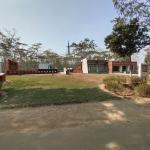
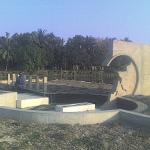
The condition of that grave has been a matter of public concern. In December 2009 The Daily Star reported that a neglected, dilapidated brick foundation and an illegible plaque marked the place near Gangasagar where he had been killed. A mausoleum at Daruin is photographed in later accounts, and a government project reported in 2005 proposed monuments for all seven Bir Shreshtha recipients at their graves. The cover image for this article shows his mausoleum at Daruin, because no freely licensed photograph of Mostafa Kamal himself was found on Wikimedia Commons for this package.
Bir Shreshtha: The Highest Gallantry Award
Bangladesh conferred on Mostafa Kamal the Bir Shreshtha, described by Banglapedia as the highest gallantry award of the country. The award as a whole was published in the Bangladesh Gazette on 15 December 1973, and it was given to seven freedom fighters, all of whom were killed in action in 1971 and are remembered as Shaheed, or martyrs. The seven came from different services and different districts, and their battles span almost the whole war, from April to December 1971. Mostafa Kamal, killed on 18 April, was among the earliest of the seven to die.
Readers can follow this site's guide to the gallantry awards of Bangladesh. A postage stamp was also issued in his honour, a form of recognition noted in the standard biographical accounts. His service number is given in the Bir Shreshtha recipient lists as 3937798, Sepoy Muhammad Mustafa Kamal.
The Question of His Name
No honest biography of Mostafa Kamal can avoid the name question, because it affects what is written on memorials themselves. In 2014 The Daily Star reported the research of Colonel Md Farid Uddin, an army officer from the same Daulatkhan upazila, whose book is titled "Bir Shreshtho Shaheed Sepoy Muhammad Mustafa and Comilla Cantonment at Liberation War". Farid Uddin argued, from the Statement of Service Record, the army citation sent to the government, the government gazette and family accounts including the testimony of the martyr's mother, that the correct name is Muhammad Mustafa, without Kamal. He suggested that Kamal may have been added by a mistaken utterance that was then repeated in media, textbooks and memorials until it became the familiar form.
This article does not rename him: the title of this post, the stadium name and most public references use Mohammad Mostafa Kamal. The research is recorded here so readers understand why some records, including, according to the Daily Star report, the military museum and the memorial library and museum, use Muhammad Mustafa alone.
Places Named After Him
- Bir Shreshtha Shaheed Sepoy Mohammad Mostafa Kamal Stadium, Kamalapur, Dhaka: the football stadium beside Kamalapur railway station in Dhaka, commonly called Kamalapur Stadium. The National Sports Council decided in 2003 to name the newly built Kamalapur stadium after Mostafa Kamal as part of naming seven venues after the seven Bir Shreshtha recipients. Later reporting describes it as a main football venue in the capital, leased to the Bangladesh Football Federation in 2013.
- Bir Shreshtha Mostafa Kamal Memorial Museum and Library, Bhola: a museum and library in Bhola Sadar upazila, in the Alinagar Union area at Moutupi, also spelled Motalipi or Moutopi in different reports, where his family was later settled. Bhola district anniversary programmes are regularly held there, organised with the library and museum and the district administration.
- Bhola launch terminal: The Daily Star name research report notes that the district launch terminal of Bhola is among the places named after him under the fuller Mostafa Kamal form of his name. Bhola is an island district where launch and ferry terminals are central public places, so the naming puts his name in daily travel use.
- Other namings reported in biographical lists: some secondary biographies also list a boxing ring at the East Bengal Regimental Centre named after him, reflecting his reputation as a regimental boxer. That detail rests on weaker sourcing than the stadium and museum and is included here as reported rather than as independently verified.
Family and Later Remembrance
His family remained in Bhola. Local accounts record that after his death the family moved from Hajipur to Moutupi village in Alinagar Union of Bhola Sadar, where the government provided land and where the memorial museum and library now stand. His mother, Maleka Begum, lived to a very advanced age: she gave accounts used by Colonel Farid Uddin in his name research and was photographed with his brother and nephew at his memorial plaque.
In August 2020, when she was reported to be 96, Maleka Begum was admitted to Bhola Sadar Hospital and then airlifted to the Combined Military Hospital in Dhaka for better treatment, according to The Business Standard. That is the latest detailed account of her used here. Anniversary observance in Bhola is continuing: BSS reported his 75th birth anniversary programme in December 2022, and his death anniversary on 18 April is observed each year at the museum and library.
His wider remembrance sits inside the national memory of 1971, which readers can explore at Dhaka's Liberation War Museum and in the records of the seven Bir Shreshtha as a group. What sets Mostafa Kamal apart within that group is the simplicity of the act for which he is honoured. There was no grand manoeuvre and no captured objective. There was a lost position, an order to withdraw, and a young section commander who decided that the gun covering that withdrawal would be his, and that he would not leave it. The men who reached Akhaura because he stayed carried his name forward. Bangladesh, in its highest award, did the same.