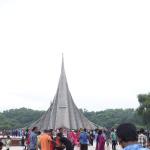
Chittagong University of Engineering and Technology, CUET to everyone in Bangladesh, is the public engineering university of the country's south-east. It stands on a green, hilly campus at Pahartali in Raozan upazila, beside the Chittagong–Kaptai highway about 25 kilometres from the port city of Chittagong, and it carries a history that mirrors the country's own: founded as an engineering college in the Pakistan era, run for seventeen years as a Bangladesh Institute of Technology, and raised to a full university in 2003 after a long campaign by its own teachers and students.
Today CUET teaches engineering, architecture and planning through five faculties, from its founding disciplines of civil, mechanical and electrical engineering to newer fields such as biomedical engineering, mechatronics and water resources. Its graduates staff the power plants, ports, roads and factories of the greater Chittagong region and far beyond it. In 2026 the university also found itself in the headlines for a different reason, a bitter dispute over its vice-chancellorship that shut the campus for weeks, a reminder that CUET's story is still being written.
From Engineering College to University
The institution's origins go back to a decision of the National Economic Council of the Government of Pakistan on 28 August 1962 to establish an engineering college at Chittagong to meet the growing demand for professional engineers. The Engineering College, Chittagong began functioning on 28 December 1968, admitting 120 students in its first academic session as the Faculty of Engineering of the University of Chittagong. For its first seventeen years the college awarded degrees through that university while developing its own campus in the hills of Raozan.
On 1 July 1986, under a government ordinance (Ordinance No. XXI of 1986), the college was converted into an autonomous institution named the Bangladesh Institute of Technology, Chittagong, BIT Chittagong, one of four such institutes alongside those at Dhaka, Khulna and Rajshahi. Autonomy proved partial in practice: the BITs were governed by a central Board of Governors headquartered in Dhaka, and questions of budget, admission and development remained tangled. Teachers and students of the four institutes campaigned through the 1990s for full university status.
The campaign succeeded at the start of the new century. On 1 September 2003, under the Chittagong University of Engineering and Technology Act of 2003, BIT Chittagong became a fully autonomous public university under its present name; the other three BITs were converted the same year into KUET, RUET and DUET. The first of September is still celebrated each year as CUET Day, and the President of Bangladesh is the university's chancellor. The university's motto, "A centre of excellence", dates from this era of self-governance, in which CUET awards its own degrees through its syndicate, academic council and other statutory bodies.
A Valley Campus at Raozan
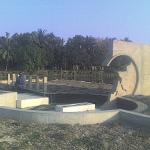
CUET's campus occupies about 171 acres, by the university's own account, older published sources give figures between roughly 163 and 188 acres, of hills, flat land and lakes at Pahartali, on the northern side of the Chittagong–Kaptai highway. Landscaped around a valley and thick with planted and natural tree cover, it is often described as a natural arboretum, and its greenery has earned it a reputation as one of the most beautiful campuses in Bangladesh. The Raozan Thermal Power Plant stands across the highway, and Kaptai, with the country's largest hydroelectric station on the Karnaphuli River, lies about 25 kilometres away, an apt setting for a university whose oldest departments serve the power and water sectors.
Within the boundary wall are the academic buildings, the administration building, an auditorium, workshops and research laboratories, a teachers–students centre, a central mosque, a medical centre, canteens, a bank and a post office. The central library holds more than 52,000 books alongside journals and periodicals. The university runs its own bus service to Chittagong city for students and staff who live there, and it maintains a school and college on campus, originally for the children of its employees and now open to general students as well.
CUET is a substantially residential university. It has nine halls of residence, six for men and three for women. The men's halls include the Dr. Qudrat-E-Khuda Hall, Kabi Kazi Nazrul Islam Hall, Shaheed Mohammad Shah Hall and Shaheed Tareq Huda Hall, alongside the newer Muktijoddha Hall and Shaheed Abu Sayeed Hall, the last two reflecting the renaming and expansion of student housing after 2024. The women's halls are Sufia Kamal Hall, Shamsennahar Khan Hall and Taposhi Rabeya Hall. Hall life, with its dining rooms, sports competitions and cultural programmes, remains central to the CUET experience, as it is at every residential university in Bangladesh.
Beyond the halls, the campus supports a full round of student life: grounds and courts for football, cricket, hockey, volleyball, basketball and tennis, inter-hall and inter-department competitions, debating and cultural societies, and two galleries used for conferences and exhibitions. The two-storeyed central mosque, with a floor area of about 560 square metres, serves the largely residential community, and a university medical centre provides primary care on campus, referring serious cases to hospitals in Chittagong city.
Faculties, Departments and Study
Teaching at CUET is organised in five faculties. The Faculty of Electrical and Computer Engineering groups the departments of Electrical and Electronic Engineering, Computer Science and Engineering, Electronic and Telecommunication Engineering, and Biomedical Engineering. The Faculty of Civil and Environment Engineering covers Civil Engineering and Water Resources Engineering, with postgraduate work in disaster engineering and management. The Faculty of Mechanical and Manufacturing Engineering brings together Mechanical Engineering, Petroleum and Mining Engineering, Mechatronics and Industrial Engineering, and Materials and Metallurgical Engineering. The Faculty of Architecture and Planning teaches Architecture and Urban and Regional Planning, supported by a Department of Humanities, while the Faculty of Science and Technology houses Physics, Mathematics, Chemistry and Nuclear Engineering, which serve the engineering departments and run postgraduate programmes of their own.
Undergraduate admission is offered in twelve departments, the engineering, architecture and planning programmes that school-leavers compete for each year. A bachelor's degree in engineering runs over four levels, and architecture over five; each level is divided into terms, and a student must earn at least 155 credit hours to graduate in engineering. Each level is divided into two regular terms of about eighteen weeks and a short term of about three weeks in which students can clear backlog or incomplete courses, a calendar designed to keep cohorts moving together. Master's and doctoral programmes run across most departments. Like BUET in Dhaka, CUET teaches entirely in English, which is also the language of its examinations.
Published figures for the university's size vary by source and year. The university's commonly cited profile puts the student body at around 4,500, including postgraduates, with about 900 students graduating each year; Times Higher Education's listing counts 5,805 students, and other recent listings put the total above 6,500. Academic staff are numbered at about 455 in recent published profiles. What is not in dispute is the direction of travel: a college that opened with 120 students in 1968 now admits well over a thousand new undergraduates a year across its twelve admitting departments.
Admission: One Test for Three Universities
Entry to CUET is among the most competitive in Bangladeshi higher education. Since 2020 the university has run its undergraduate admission test jointly with RUET of Rajshahi and KUET of Khulna, in a cluster arrangement under which a single written examination serves all three engineering universities; Times Higher Education notes that the combined test attracts around ten applicants for every place. Candidates are screened on their higher-secondary results in mathematics, physics and chemistry before sitting the written test, and architecture applicants take an additional freehand drawing examination. For families in the south-east, a CUET seat is a prized route into the professions, and admission results are reported in the national press each year.
Research, Rankings and Industry Links
Research at CUET is organised through a Directorate of Research and Extension, a Bureau of Research, Testing and Consultation through which departments take on testing and consultancy work for government and industry, and a set of specialised institutes and centres, among them the Institute of Information and Communication Technology, the Institute of Earthquake Engineering Research, the Institute of Energy Technology and the Centre for River, Harbour and Landslide Research, the last three reflecting the seismic, energy and riverine problems of the Chittagong region. The campus also hosts an IT business incubator, inaugurated in 2022 and described at the time as the first of its kind at a Bangladeshi university, intended to turn student and faculty projects into companies. CUET departments run established international conferences, including the International Conference on Advances in Civil Engineering, the International Conference on Mechanical Engineering and Renewable Energy, and the International Conference on Electrical, Computer and Communication Engineering.
Internationally, CUET appears in the 1201–1500 band of the Times Higher Education World University Rankings 2026 and the 1401+ band of the QS World University Rankings 2026, standing 385th in the QS Asia University Rankings 2026, positions that place it among the handful of Bangladeshi engineering universities visible in global league tables. Its professional programmes are recognised by the Institution of Engineers, Bangladesh, the Institute of Architects Bangladesh and the Bangladesh Institute of Planners.
A University in Turmoil: The Vice-Chancellor Crisis of 2026
CUET's recent history cannot be told without its leadership upheavals. Professor Mohammad Rafiqul Alam, the university's long-serving vice-chancellor, resigned in August 2024 amid the student protests that swept Bangladeshi campuses that month. After an interval, Professor Mahmud Abdul Matin Bhuiyan was appointed vice-chancellor on 30 October 2024 for a four-year term. He was removed by government order in July 2026, and on 27 July 2026 Professor Abu Sadat Muhammad Sayem of CUET's own petroleum and mining engineering department took office as vice-chancellor.
Sayem's tenure lasted 56 days. On 21 September 2026 the government removed him and appointed Professor Sheikh Shariful Alam, a professor of electrical and electronic engineering at KUET and himself a CUET alumnus, in his place. Alam joined the post on 24 September by submitting his joining letter, but students, teachers, officers and employees, demanding Sayem's reinstatement, declared a complete shutdown from 22 September and refused to recognise the new vice-chancellor. When Alam first entered his campus office on 12 October, protesters locked the vice-chancellor's building with him inside; he was escorted out by police and district officials after some thirty hours, and for a time conducted university business from outside the campus. The University Grants Commission formed a six-member advisory committee on 18 October to mediate the deadlock.
The academic calendar slowly restarted despite the dispute: classes resumed on 28 October 2026 after a 36-day shutdown, and examinations, suspended since 24 September, resumed on 15 November. As of November 2026 Professor Sheikh Shariful Alam remains the university's vice-chancellor, while the teachers' association and protesting students maintain their demand for Professor Sayem's reinstatement and their non-cooperation with the new administration, an unresolved standoff that has cost the university a term of normal life and remains the defining fact of CUET's present moment.
CUET Today
Measured against its beginnings, CUET's achievement is substantial. A single college of 120 students has become the principal engineering university of Bangladesh's south-east: five faculties, a dozen undergraduate programmes, a growing postgraduate school, and a valley campus that is itself a landmark of Raozan. Its alumni build and run the infrastructure of the port city region, its power stations, highways, water systems and factories, and its research centres address the earthquakes, landslides, rivers and energy needs of the region it serves. The task before it now is the one its 2026 crisis exposed: to match the stability of its academic calendar to the quality of its teaching, so that the university's next chapter is remembered for its laboratories rather than its lockdowns.