Jagannath University (JnU) is a government-funded public university at Sadarghat in Old Dhaka, a short walk from the Buriganga riverfront. It is one of the oldest educational institutions in Bangladesh, founded as a school in 1858, raised to a college in 1884 and converted into a university only in 2005, and one of its most unusual. On the university's published figures it teaches some 19,000 students with about 960 teachers, yet the whole institution is packed onto roughly ten acres of dense old-city land, with no residential halls for men and a single hall for women. Its students, who call themselves Jobians after the university's Bengali initials, commute in each morning from across the capital and disperse again by evening. JnU's motto, Education, Faith, Discipline, belongs to its school origins; its character was formed by a century and a half of making do with very little space in the middle of a crowded city.
Origins: A School on the Buriganga
The university's history begins in 1858, when four Dhaka educationists, Dinanath Sen, Prabhaticharan Roy, Anathbandhu Mallik and Brajasundar Kaitra, founded the Dhaka Brahma School, an institution associated with the reformist Brahmo circle of the city. The school struggled financially, and in 1872 it was taken over by Kishorilal Roy Chowdhury, the zamindar of Baliati in Manikganj, who placed it on a firmer footing and renamed it Jagannath School after his father, Jagannath Roy Chowdhury. The name has survived every transformation since. Under the zamindar's patronage the school grew into one of the leading educational establishments of East Bengal, drawing students from across the region to the southern edge of Dhaka, where the old city meets the river port of Sadarghat.
The College Years, 1884–1949
In 1884 the school was raised to a second-grade college, Jagannath College, and law was among the first subjects it taught. The college opened with just 48 students; within five years the roll had risen to 396. School and college were administered together until 1887, when the school section was hived off as the independent Kishore Jubilee School, today known as K. L. Jubilee School. The college's administration passed to a board of trustees in 1907, and in 1908 it became a first-grade college. Its reach extended beyond Dhaka: in 1910 Raja Manmath Roy Chowdhury, the zamindar of Santosh in Tangail, affiliated his Pramath-Manmath College with Jagannath.
The college's rise was checked by the founding of the University of Dhaka in 1921. Forbidden to compete with the new university, Jagannath stopped admitting degree students and was demoted to an intermediate college, a status that lasted 28 years. Only in 1949 did it reopen degree classes. The episode fixed a pattern that would recur throughout the institution's history: Jagannath's ambitions repeatedly trimmed by decisions taken elsewhere, and repeatedly reasserted by its own teachers and students.
Movements, War and the Postgraduate College
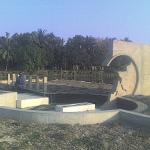
What the college lacked in status it made up in political energy. Its teachers and students took an active part in the Language Movement of the early 1950s, the language martyr Rafiq Uddin Ahmed was among its former students, in the mass movements of the 1960s, and in the Liberation War of 1971; another alumnus, M. Hamidullah Khan, commanded Sector 11 of the Mukti Bahini. A Liberation War sculpture, Muktijoddher Prostuti, still stands at the heart of the campus. In 1968 the government of Pakistan took the college over. Honours and master's programmes opened in 1975, when the government again assumed control and recast it as a postgraduate college; intermediate-level teaching, the last remnant of its school-college hybrid past, was closed in 1982, and evening shifts were introduced in 1992.
The Long Road to a University
For decades, the demand that Jagannath College be made a university was a standing cause of Dhaka's student politics, pressed by successive generations who pointed out that an institution older than the University of Dhaka itself, teaching postgraduate courses in the heart of the capital, remained a "college" in name. The breakthrough came on 2 November 1995, when Prime Minister Begum Khaleda Zia formally announced the college's conversion into a university and unveiled a commemorative plaque on the campus. Legal reality took another decade: the Jagannath University Act was passed by the national parliament on 20 October 2005, and the university began its formal life with Professor A. K. M. Sirajul Islam Khan as its first vice-chancellor, taking office in February 2006. Twenty years on, in January 2026, the university held its first central students' union election since the upgrade, the college had last elected a union in 1987–88, and its second convocation is scheduled for January 2027.
The Sadarghat Campus: A University Without Room to Breathe
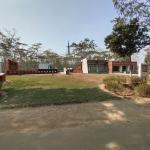
The campus occupies about ten acres at 9–10 Chittaranjan Avenue, hemmed in by the lanes of Old Dhaka: Bahadur Shah Park, with its monument to the martyrs of 1857, on one side, the Sadarghat launch terminal and the Buriganga on the other, and the pink bulk of Ahsan Manzil a short walk west along the river. Its yellow-painted heritage block, academic buildings such as the Shahid Sajid Academic Building, and newer blocks stand shoulder to shoulder with the surrounding city; there is no boundary at which the university ends and Old Dhaka begins. The contrast with Bangladesh's planned campuses is stark, the 1,200 acres of Bangladesh Agricultural University at Mymensingh, or the green, residential campus of Khulna University.
Above all, JnU is a non-residential university, long described as the only non-residential university in Dhaka. For its first sixteen years as a university it had no hall of residence at all. Its one hall, a sixteen-storey building a few minutes' walk from campus, was inaugurated in 2020 and received its first residents, all women, in March 2022; renamed Nawab Faizunnesa Chowdhurani Hall in June 2025, it houses only about 1,200 students, and reporting in 2026 described severe overcrowding inside it. Every other student, all of the men, and most of the women, lives at home, in rented rooms or in the student messes of Old Dhaka, and travels in daily. The consequences shape the institution: there is no hall culture of the kind that defines Dhaka University life, the campus empties after classes, and the cost and grind of commuting through Dhaka's traffic is part of every Jobian's education. Successive student movements have made housing and a real campus the centre of their demands.
Faculties, Students and Study Today
Teaching is organised in seven faculties, Life and Earth Sciences; Science; Business Studies; Arts; Law; Social Sciences; and Fine Arts, comprising 38 departments, from pharmacy, genetic engineering and computer science to theatre, music and printmaking, together with two institutes, the Institute of Education and Research and the Institute of Modern Languages. All departments follow the semester system, teaching honours, master's, MPhil and PhD programmes. Admission is by competitive test, organised in five units aligned to the faculty groups; for the 2026–27 session applications opened on 15 November 2026, with the unit tests scheduled across January 2027, tens of thousands of candidates compete each year for a few thousand places in one of the capital's most accessible public universities. The university's budget for 2026–27 was reported at Tk 186.61 crore. In global league tables it remains a modest presence, the 1501+ band of the Times Higher Education World University Rankings 2026 and the 1101–1200 band of the QS Asia Rankings 2026, though its chemistry department was ranked first among Bangladeshi universities in the SCImago rankings of 2022.
Research and Alumni
Research at JnU has historically been constrained by the same shortage of space and money that constrains everything else, and its output is still uneven; but the university points to growing publication records, research centres and groups showcased on its official site, and a chemistry community with a national reputation. The present administration, in office since March 2026, has publicly committed to raising research funding, forming a dedicated committee to improve international rankings and accelerating the second campus, an agenda the vice-chancellor set out in a July 2026 interview, alongside a new academic building for the old campus and a claim that classes for the 2026–27 session began on schedule.
Student life, compressed into the hours between arrival and the evening commute, is nonetheless busy: the university's calendar carries a Rabindra–Nazrul festival, career fairs and an inter-university business case competition inaugurated in September 2026, and in 2026 the university gave its first Dean's Award, honouring 104 high-performing students across four academic sessions. The university's founding anniversary, 20 October, is observed as Jagannath University Day; the 21st anniversary in 2026 was marked with a rally, discussion and cultural programme in early November.
The old college's alumni roll is out of proportion to its resources. Alongside Rafiq Uddin Ahmed and M. Hamidullah Khan, its former students include Sergeant Zahurul Haq, an accused in the Agartala Conspiracy Case of 1969; the writer Premendra Mitra; the educationist Anisuzzaman; the actor Bhanu Bandopadhyay and, of a later generation, ATM Shamsuzzaman; the swimmer Brojen Das, the first Bengali to swim the English Channel; and Mustafa Kamal, who became Chief Justice of Bangladesh. Few institutions in the country have sent graduates into so many different walks of national life from so small a patch of land.
The Second Campus at Keraniganj
The university's answer to its space crisis lies across the Buriganga at Tegharia in Keraniganj, where 200 acres have been allotted for a second, fully residential campus. The project, formally "Establishment of New Campus of Jagannath University: Land Acquisition and Development", costed at about Tk 1,734 crore, was approved by ECNEC in 2017 after mass student protests the year before. Land transfer then stalled for years: 188.6 acres were handed over in January 2020, but the final 11.4 acres, government khas land in Paschimdi mouza, were transferred only on 3 June 2025, completing the university's possession of the full 200 acres. After students protested in November 2024 demanding that construction be handed to the army, the education ministry assigned implementation to the Bangladesh Army in January 2025. The development phase covers land filling, boundary walls, an engineering building and base camp, deep tube wells, pond ghats and external electrification. By mid-2026, according to the vice-chancellor, land filling, lake excavation and pond-ghat works had been completed, with this phase of the project targeted for completion by 30 December 2026; at the university's 21st founding anniversary in November 2026, the home minister confirmed that construction of the new residential campus was under way. When, and how completely, a functioning campus follows the land development remains the central question of JnU's future.
Leadership, Challenges and Outlook
The university's ninth and current vice-chancellor is Professor Dr Md Rais Uddin, a professor of Islamic Studies who chaired that department and led the university's teachers' association. He was appointed on 16 March 2026, succeeding Professor Md Rezaul Karim, who had held the post since September 2024; his appointment was among a round of vice-chancellor changes at seven public universities announced that month by Education Minister A. N. M. Ehsanul Hoque Milon, and he remains in office as of November 2026, chairing the university's academic council that month. He leads an institution whose problems are plainly stated by its own community: a campus at bursting point, housing for barely one student in sixteen, ageing buildings, thin research funding and rankings its leadership wants to improve. Its assets are equally plain, a 168-year institutional memory, a location in the historic core of the capital, loyal and politically organised students, and, at last, 200 acres of its own land across the river. Jagannath University has survived demotion, takeover and a century of being overlooked; whether the Keraniganj campus finally gives it room to match its history is the story of its next decade.