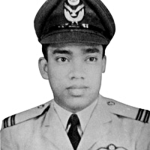
Khan Ataur Rahman (11 December 1928 – 1 December 1997), known to generations of filmgoers simply as Khan Ata, was the most complete film artist of his generation in Bangladesh: actor, director, producer, screenwriter, lyricist, music composer and playback singer in one restless career. He acted in the first Dhaka film to win international honours, composed the music for several of the defining films of the 1960s, sang the song that became the inner voice of a national uprising, and then, after independence, directed the film that asked what the freedom fighters had actually come home to. Few people anywhere have held so many of a young film industry's jobs at once, and fewer still have done all of them well.
Early life in Singair and a bohemian education
Khan Ataur Rahman was born on 11 December 1928 in Ramkantapur village, in Singair thana of Manikganj district, then part of the Bengal Presidency of British India. He was the son of Ziarat Hossain Khan and Zohra Khatun, and his mother called him Tara, the name his family kept for him all his life. The artistic instinct showed early, and it came through music and devotion: relatives on his mother's side served as caretakers of a shrine, and at its gatherings the boy heard religious songs sung with passion. In 1937, while he was a student of class three, he won first prize at the Dhaka Zilla Music Competition with his rendition of the boatman's song Mon paban-er dinga baiyya, an early sign that folk melody would run through everything he later made.
His formal schooling followed a conventional path that he repeatedly tried to escape. He passed his matriculation from Dhaka Collegiate School in 1943 and his Intermediate Science from Dhaka College in 1945, according to Banglapedia, then entered Dhaka Medical College, left it, and read for a Bachelor of Science at the University of Dhaka without settling to the degree. The pull was always cinema. In 1946 he tried to run away from home to join the film industry with only sixty taka in his pocket; his brother-in-law spotted him at Fulbaria railway station and brought him back. In 1949 he ran away again, and this time he got to Bombay. There he slept on pavements, haunted the studios and accepted an apprenticeship offered by Jal Irani, a cameraman at Jyoti Studio, but the work did not satisfy him, and the real education was still to come.
Karachi, London and the making of an artist
In 1950 Khan Ata moved to Karachi and took a job as a news presenter at Radio Pakistan. Karachi gave him two things Dhaka could not yet offer: a professional microphone and a teacher. He began formal music lessons with the renowned sarangi player Jawahari Khan, training that deepened the folk instinct of his childhood into a composer's craft, and he moved in the circle of Bengali media figures such as Fateh Lohani. When Lohani left for London, Khan Ata followed in 1952. In London he sang and acted in Bengali programmes, befriended the painter SM Sultan and, by the well known account in The Daily Star, spent his own savings on art materials for Sultan and helped arrange exhibitions and sales of his paintings.
London also gave him the stage training he had crossed the world to find. In 1953 he enrolled in the drama department of the City Literary Institute, and Banglapedia records that he was elected president of the Pakistan Students Federation in London the same year. In 1954 he received a UNESCO fellowship for a study tour in the Netherlands. On his return he taught for a time and worked with London theatre companies for about two years, an apprenticeship in acting and production that no film school in South Asia then provided. He came back to Dhaka in 1956, trained in theatre, music and radio, and walked almost immediately into film history.
Breakthrough as an actor: Jago Hua Savera
The breakthrough came when the Lahore director A. J. Kardar arrived in Dhaka to shoot Jago Hua Savera (The Day Shall Dawn), a neo-realist drama about the fishermen of the Meghna river, scripted by the poet Faiz Ahmed Faiz from the world of Manik Bandopadhyay's novel Padma Nadir Majhi. Kardar cast the returned Londoner in the lead role of Anis, opposite the noted Indian actress Tripti Mitra, and the young Zahir Raihan served as assistant director on the production, beginning one of the great creative partnerships of Bengali cinema. Shot at the fishing village of Saitnol near Dhaka and released in 1959, the film became Pakistan's first submission for the Academy Award for Best Foreign Language Film and won a top prize at the first Moscow International Film Festival in 1959; Banglapedia's history of the feature film calls it the first film from this industry to receive an international award, with eleven awards in all. A restored version was later screened in the Cannes Classics programme in 2016, proof of how far the young actor's first film travelled.
The same year, 1959, he played the protagonist of his first Bengali film, Ehtesham's Ei Desh Tomar Amar, and acting work followed steadily through the 1960s: Kokhono Asheni (1961), Je Nadi Marupathe (1961), Sonar Kajol (1962) and Kancher Deyal (1963), alongside roles in several of his own productions. In 1960 he and Zahir Raihan together founded the Little Cine Circle, a small institution with a large idea: that Dhaka's filmmakers should think of themselves as artists building a national cinema, not merely as suppliers of entertainment.
The composer: music for the landmark films
It was as a composer, however, that Khan Ata first became indispensable. Ei Desh Tomar Amar (1959) was also his debut as a music director and lyricist, and through the early 1960s he supplied the music for a remarkable run of films that were themselves landmarks: Raihan's Kokhono Asheni (1961) and Kancher Deyal (1963), and Surjosnan (1962), whose song Pathey pathey dilam chhoraiyya rey, sung by Kalim Sharafi, is still cited as a turning point in Bengali film music, a boatman's song that begins with the singer clearing his throat, as a real boatman would. For Kancher Deyal he wrote, composed and himself sang Shyamol baran meyeti, a portrait of Bengali beauty picturised on Sumita Devi. The Daily Star's account of his career records that he won best lyricist and best music composer honours for Surjosnan and Kancher Deyal at the Pakistan Film Festival in 1965. He worked across languages as fluently as across jobs, directing music for Urdu films including Raihan's Bahana (1965), Ehtesham's Saagar, Suroor Barabankvi's Aakhri Station and Mustafiz's Mala, as well as the Urdu Sangam (1964).
The summit of this side of his work came with Raihan's Jibon Theke Neya (1970), the family melodrama that all of East Pakistan read as an allegory of Ayub Khan's dictatorship. Khan Ata acted in the film, in the role of Dulabhai, the husband of the autocratic elder sister who rules the household, and filmographies credit him with its music. Above all he gave it its anthem: E khancha bhangbo ami kemon kore (How shall I break this cage), which he wrote and sang himself. Released into the charged air after the mass uprising of 1969, the song voiced exactly what its audience felt about the cage of Pakistani rule, and it has never left the national memory since.
Director: history, folk tale and the war's aftermath
Khan Ata's directorial debut, Onek Diner Chena, came in 1963, and over the following decades he directed around nineteen films, moving easily between historical epic, folk tale and contemporary drama. Nawab Sirajuddaula (1967), made in Bengali and Urdu versions, retold the fall of Bengal's last independent nawab, with Khan Ata directing, acting and composing. The folk imagination followed in Saat Bhai Champa (1968) and Arun Barun Kiranmala (1968), and he also directed an Urdu feature, Soye Nadia Jage Pani (1968), composing its music as well. During the Liberation War of 1971, according to his family's account, he wrote and composed patriotic songs and helped supply food and medicine to freedom fighters.
His most important film as a director came after independence. Abar Tora Manush Ho (Be Human Again), released on 7 December 1973, follows seven freedom fighters who return from the war to find corruption and moral decay spreading through the country they had liberated, and it asks its title question of the whole society, not only of its villains. Khan Ata directed, produced and acted in the film, and wrote and composed its two enduring songs: Ek nodi rokto periye, sung by Shahnaz Rahmatullah, and Tumi cheyechile ogo jante, sung by Abida Sultana. The film was honoured at the Tashkent International Film Festival in 1974, where it received a best script award and a certificate of merit, and it remains one of the essential films about the disappointments that followed 1971. His folk drama Sujon Sokhi (1975) brought him the Bangladesh National Film Award for Best Screenplay, the first of his national honours as a writer.
Songs and playback singing
Running beneath all the film work was the songwriting. Banglapedia credits Khan Ata with more than 500 songs composed, and notes that he introduced new trends in both lyric writing and composition. His gift was for the unadorned line that stays in the memory: the words are plain, almost conversational, and the tunes draw on the folk and devotional music of his Manikganj childhood. He sang playback himself, most famously in E khancha bhangbo ami kemon kore and Shyamol baran meyeti, and he wrote signature songs for the great voices of the industry: E ki shonar aloy became a defining song for Sabina Yasmin, and Ek nodi rokto periye did the same for Shahnaz Rahmatullah. In an industry that usually divided the work of lyricist, composer and singer among three specialists, he was routinely all three on the same song.
After 1971: a senior figure of the Dhaka industry
In independent Bangladesh, Khan Ata stood as one of the senior builders of the Dhaka film industry: a director whose historical and folk films kept a popular audience for serious subjects, a screenwriter honoured at the National Film Awards for Sujon Sokhi (1975) and Danpite Chhele (1980), and a composer whose songs anchored other directors' films as well as his own. He also made short and documentary films, among them works on the poet Jasimuddin and on the folk singer Abbas Uddin, Ganer Pakhi Abbas Uddin, turning his camera on the cultural figures who had formed him. His family carried the musical line forward: he married the singer Nilufar Yasmin in 1968, their son Agun became a well known singer, and his daughter Rumana Islam, herself a singer, became one of the main keepers of his memory.
His last film gathered every one of his roles into a single production. Ekhono Onek Raat (Still a Long Night), a Liberation War film he had begun planning in 1994 after years away from direction, was produced, directed, scripted, lyricised and composed by Khan Ata himself. His family's account, published in The Daily Star, describes a bruising encounter with the Censor Board, which demanded cuts to seven scenes that he considered unreasonable, and the strain of that fight fell on a man already in poor health. The film was released in December 1997, days after his death, and at the 22nd Bangladesh National Film Awards it won him both Best Music Director and Best Music Composer, a final official recognition that the oldest of his crafts, music, had never left him.
Awards and honours
Banglapedia counts nine awards across his career, among them the Pakistan Film Festival Award, the Nigar Award, international festival awards at Moscow and Tashkent, and the National Film Awards of Bangladesh. The verified national honours include the National Film Award for Best Screenplay for Sujon Sokhi (1975) and Danpite Chhele (1980), and the 1997 music awards for Ekhono Onek Raat described above. In 2003, six years after his death, the Government of Bangladesh awarded him the Ekushey Padak posthumously, the country's second highest civilian honour, for his contribution to film and culture.
Death and legacy
Khan Ataur Rahman died in Dhaka on 1 December 1997, eleven days before his sixty ninth birthday. He left an industry that had not existed, in any organised form, when he first ran away from home to join it. The Dhaka cinema he helped to build learned several of its habits from him: that a film song could carry a nation's politics, that folk material belonged on the big screen, and that one artist could responsibly write, compose, sing, act and direct within a single film. A generation later, filmmakers such as Tareque Masud would take Bangladeshi cinema to the world's festivals by a different, independent route, but they worked in a landscape Khan Ata had already mapped. His songs remain the surest monument: E khancha bhangbo ami kemon kore and Ek nodi rokto periye are still sung, still quoted and still understood by audiences who may never have seen the films they were written for.