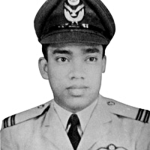
Abbas Uddin Ahmed (27 October 1901 to 30 December 1959), known to listeners simply as Abbas Uddin, was the singer who carried the folk music of North Bengal out of its villages and onto the gramophone record, the radio and the concert stage. Born in Cooch Behar, he became the defining voice of Bhawaiya, the long, yearning song of the cart driver, the mahout and the buffalo herder, and he sang almost every other folk form Bengal had to offer: Bhatiali, Jari, Sari, Murshidi, Bichchhedi, Marsiya, Dehatattwa and Pala Gaan, alongside modern, patriotic and Islamic songs. Banglapedia, the national encyclopedia of Bangladesh, puts the heart of his achievement plainly: no other singer could surpass his emotional, full-throated rendition of folk songs.
His career also crossed a historical divide. He built his name in Calcutta between 1931 and 1947, recording for His Master's Voice and singing the Islamic songs of Kazi Nazrul Islam and the village songs of Jasimuddin. After Partition he moved to Dhaka, joined the Department of Information and Broadcasting, and represented his new country at folk music gatherings in Manila, Germany and Rangoon. He died in Dhaka in 1959, and the honours that followed, all posthumous, confirmed what listeners already knew: a regional singer had become a national institution.
Early Life in Balarampur, Cooch Behar
Abbas Uddin was born on 27 October 1901 at Balarampur, a village in the Tufanganj subdivision of the princely state of Cooch Behar, in what is now West Bengal, India. His father, Zafar Ali Ahmed, was a lawyer at the Tufanganj Subdivisional Court, and his uncle Maziruddin Ahmed sat in the Bengal Legislative Assembly, so the family was respectable and public minded, if rooted in village life. Family accounts name his mother as Hiramon Nesa. The country around Balarampur shaped him first. The Torsha, Dhorla and Kaljani rivers run through this flat northern land below the Himalayan foothills, and its working music was everywhere: the songs of gariyals (cart drivers), mahouts and mahishals (buffalo herders), sung to the dotara at fairs, markets and river ghats.
He was educated at schools and a college in North Bengal, and it was the cultural functions of school and college life, rather than any formal training, that first drew him to the stage. In his autobiography, Amar Shilpi Jibaner Katha (The Story of My Life as an Artist), published after his death in 1960, he remembered his earliest musical education as the sounds of the village itself: birdsong, monsoon water and the ringing of a school bell. He was, by every account, largely self-taught. Banglapedia records a brief period of study with Ustad Jamiruddin Khan in Calcutta, and some accounts add a second short apprenticeship with Ustad Kader Buksh in Murshidabad. Neither period was long, and neither turned him into a classical singer. His real teachers remained the folk singers of Cooch Behar and Rangpur.
The Folk World He Inherited: Bhawaiya and Bhatiali
To understand Abbas Uddin, it helps to understand the two great song families he mastered. Bhawaiya belongs to the north: Cooch Behar, Rangpur and the undivided Goalpara country. Sung in the local dialect, it is built on separation and longing. Its classic voices are working men far from home, the cart driver on a long road, the mahout in the forest, the herder on the grazing grounds, and the women who wait for them. The melody stretches and breaks as it rises, a vocal catch that sounds like a voice giving way under feeling. Within Bhawaiya sit faster or lighter relatives that Abbas Uddin also made his own, among them Khirol (also written Kshirol) and the quick, teasing Chatka.
Bhatiali, by contrast, is the river song of the Bengal delta, sung by boatmen moving downstream, its name drawn from bhata, the ebb tide. Where Bhawaiya looks to the northern plains and forests, Bhatiali drifts: its long, unhurried lines suit a boat carried by the current and a singer with time to let a note travel over water. Abbas Uddin sang both, and the range mattered. He was not a one-district specialist but a collector and carrier of forms, in the same broad Bengali folk world that produced mystic composers such as Hason Raja, whose songs travelled from the haor country of Sunamganj into the common repertoire of Bengal.
Calcutta: Gramophone Records and a New Audience, 1931 to 1947
Abbas Uddin lived in Calcutta from 1931 to 1947, and the city made him famous while also employing him in ordinary government work. He began as a temporary clerk in the office of the Director of Public Instruction, then held a permanent post in the Department of Irrigation, and when A. K. Fazlul Huq was Chief Minister of Bengal he was given a government post as a recording expert.
Family accounts, drawn from his memoir, place his first recording in the late 1920s, made with the help of Bimal Dasgupta of His Master's Voice, whose father had taught at Jenkins School in Cooch Behar, where Abbas Uddin had studied. The first disc carried two modern songs, one by Shailen Roy and one by Jiten Moitra. One detail of that debut became a landmark. In that era, Muslim singers who recorded generally hid behind pseudonyms, because a Muslim name on a record label was thought to limit a singer's welcome in respectable homes. Abbas Uddin insisted on recording under his own name, and he is widely credited as the first Muslim singer in India to do so. The point was not vanity. By singing at functions in villages, towns and cities, and by putting his own name on records issued by His Master's Voice, Megaphone, Twin and Regal, he helped make music an acceptable and popular presence in conservative Bengali Muslim society, a contribution Banglapedia singles out.
Radio carried the voice further than any single record could. He sang for radio audiences in Calcutta through the 1930s and 1940s, and by the 1940s his songs were also playing a political role: Banglapedia notes that they helped raise Muslim public opinion in favour of the Pakistan movement. That second career, as a public voice in a decade of upheaval, explains both his move in 1947 and the welcome that waited for him in Dhaka.
Nazrul, Jasimuddin and the Islamic Song
The most consequential friendship of the Calcutta years was with Kazi Nazrul Islam. Abbas Uddin began by singing Nazrul's modern songs, then pressed the poet to do something new: to write and compose Islamic songs in Bengali, so that Muslim listeners would have devotional music of their own in their own language, as Hindu listeners had songs for their festivals. Nazrul responded, and Abbas Uddin sang and recorded the results in large numbers for His Master's Voice. The best known of them, O Mon Romjaner Oi Rozar Sheshe Elo Khushir Eid, was first recorded in his voice, in 1931 by most accounts, and it has remained the signature song of Eid-ul-Fitr in Bangladesh ever since. He also sang Islamic songs by Golam Mostafa, and the three poets, Nazrul, Jasimuddin and Golam Mostafa, are the names Banglapedia ties directly to his Islamic repertoire.
With Jasimuddin, the Palli Kabi or rural poet, the partnership ran in the other direction: the poet of the village gave the singer of the village some of his most loved material. Abbas Uddin's Bhatiali recording of Jasimuddin's Nodir Kul Nai Kinar Nai Re (The River Has No Bank, No Shore) became one of his signature songs, a boatman's lament that listeners still use to define the genre. The singer and the poet belonged to the same project, the one that fills the life of Jasimuddin, the Palli Kabi who sang rural Bengal: proving that the speech, work and sorrow of ordinary villagers were fit subjects for national art.
The Bhawaiya Breakthrough
For all his success with modern and Islamic songs, the music of home was still unrecorded, and the record companies resisted it. When Abbas Uddin asked His Master's Voice to let him record Bhawaiya in its own dialect, the answer, as his family tells it, was that regional songs would not sell. The compromise that broke the deadlock was a song about his home river: Torsha Nadir Parey Parey O, sung to a Bhawaiya melody but written in standard Calcutta Bengali. It sold so well that the company reversed its position and asked for more. This time the singer set the terms: pure Bhawaiya, in dialect. What followed was the sequence of records on which his reputation still rests, among them Phande Poriya Baga Kande Re (The Heron Weeps, Caught in the Snare), Oki Garial Bhai (O Cart Driver Brother), Ki O Bandhu Kajal Bhomora Re and Oki Ekbar Ashia Shonar Chand.
The breakthrough changed the map of Bengali music. Songs that had belonged to the cart tracks of Cooch Behar and Rangpur now sat beside the other great folk forms on record shop shelves across Bengal, and the gramophone gave them a permanence that oral transmission never could: Abbas Uddin's records became the reference versions against which later Bhawaiya singers measured themselves.
Dhaka After 1947: Radio and the New State
Partition cut his Calcutta career in two, and Abbas Uddin chose the east. Family accounts say he reached Dhaka with his family in July 1947, ahead of independence, and he joined the Department of Information and Broadcasting as an additional song organiser, a post he held for the rest of his life. His house at Purana Paltan in Dhaka became, by his granddaughter Nashid Kamal's account, something close to a cultural centre, where musicians gathered and where his children grew up inside the world he had made.
The family's telling of independence night has become part of his legend, and it is best repeated as the family tells it: that Dhaka Radio marked the birth of Pakistan on 14 August 1947 with a recitation from the Quran, followed by Abbas Uddin's voice singing Shakal Desher Cheye Piara, described as the first recorded song on Pakistan, and that he sang through the city that morning from an open jeep with a microphone. The broad facts of his central place in Dhaka's new broadcasting world are not in doubt, even if the jeep ride belongs to memoir rather than to any surviving programme log. Through the 1950s he was also Pakistan's travelling folk ambassador: he took part in the South East Asia Conference in Manila in 1955, the International Folk Music Conference in Germany in 1956 and the Bengali Cultural Conference in Rangoon in 1957.
Signature Songs and a Distinctive Voice
Estimates of his recorded output vary, and the figure most often repeated, around seven hundred songs, should be read as an approximation rather than a catalogue count. What is certain is the spread. A short list of the recordings listeners still return to shows the range: the Bhawaiya classics Phande Poriya Baga Kande Re and Oki Garial Bhai; the Bhatiali Nodir Kul Nai Kinar Nai Re and Nao Chhariya De (Let the Boat Go); the Jari song Allah Megh De Pani De (Allah, Give Cloud, Give Water, Give Shade), a farmer's prayer for rain with words by Jalaluddin and music by Girin Chakraborty; and the Eid song O Mon Romjaner Oi Rozar Sheshe. Later musicians kept returning to these versions. It is often said, for example, that S. D. Burman learned from Abbas Uddin the art of the breaking voice and carried the tune of Allah Megh De into Hindi film music; the claim is reported rather than documented, but it reflects how widely his influence was felt to reach.
The voice itself is the easiest part of his art to recognise and the hardest to describe without reaching for the words his contemporaries used: emotional and full-throated. Technically, its signature was control of the long line. Bhawaiya asks a singer to hold a melody open, stretching a phrase until it strains, then letting the voice crack, deliberately and musically, at the point of greatest feeling. Abbas Uddin could do this without losing pitch, tune or dignity, and he sang in dialect without softening it for city ears. That combination, classical control in the service of an unpolished village sound, is what made a cart driver's song sound, in his rendering, like high art that had never left the road.
Family: A Musical Household
His gift ran through the family. His eldest son, Mustafa Kamal, became Chief Justice of Bangladesh, serving from June to December 1999, and his daughter by Abbas Uddin, Nashid Kamal, is a singer, writer and professor of demography. His only daughter, Ferdousi Rahman, became one of Bangladesh's best loved singers, at home in folk song, Nazrul Sangeet and classical music, and the first singer to perform when television began in Dhaka in 1964. His youngest son, Mustafa Zaman Abbasi, built his own career as a singer, writer and researcher of folk music, documenting the Bhawaiya tradition his father had carried to the city. Both Ferdousi Rahman and Mustafa Zaman Abbasi received the Ekushey Padak for their contribution to music. One caution for readers tracing the family: the singer's honours are sometimes confused with his children's, and the Ekushey Padak belongs to the children, not to Abbas Uddin himself.
Death and Legacy
Abbas Uddin Ahmed died in Dhaka on 30 December 1959, aged 58. His autobiography appeared the following year, and the state honours followed across three decades, all of them posthumous: the Pride of Performance Award in 1960, from Pakistan; the Shilpakala Academy Award in 1979; and the Independence Day Award, the Swadhinata Padak, in 1981, from Bangladesh. Two states honoured the same singer, which is perhaps the neatest summary of a life that began in a Cooch Behar village, was made in Calcutta and ended in Dhaka.
His deeper legacy is audible rather than monumental. He proved that a regional dialect song could hold a national audience, that a Muslim singer could record under his own name and be welcomed into homes that had kept music at a distance, and that folk song belonged on the same shelf as the modern and the classical. Every later singer who has taken a local tradition to a national stage in Bangladesh has walked a version of his road, from the Bhawaiya singers of Rangpur to the Baul performers who followed figures such as Shah Abdul Karim, the Baul king of the haor country. Each October and December, on his birth and death anniversaries, Bangladesh Shilpakala Academy, Chhayanaut and other cultural bodies still stage the discussions and song programmes that keep his name in the calendar, most recently for his 125th birth anniversary in October 2026. The records themselves, crackling, three minutes at a time, remain the real memorial: a cart driver calls across a northern road, a boatman drifts downstream, and the voice that carries them has not dated at all.